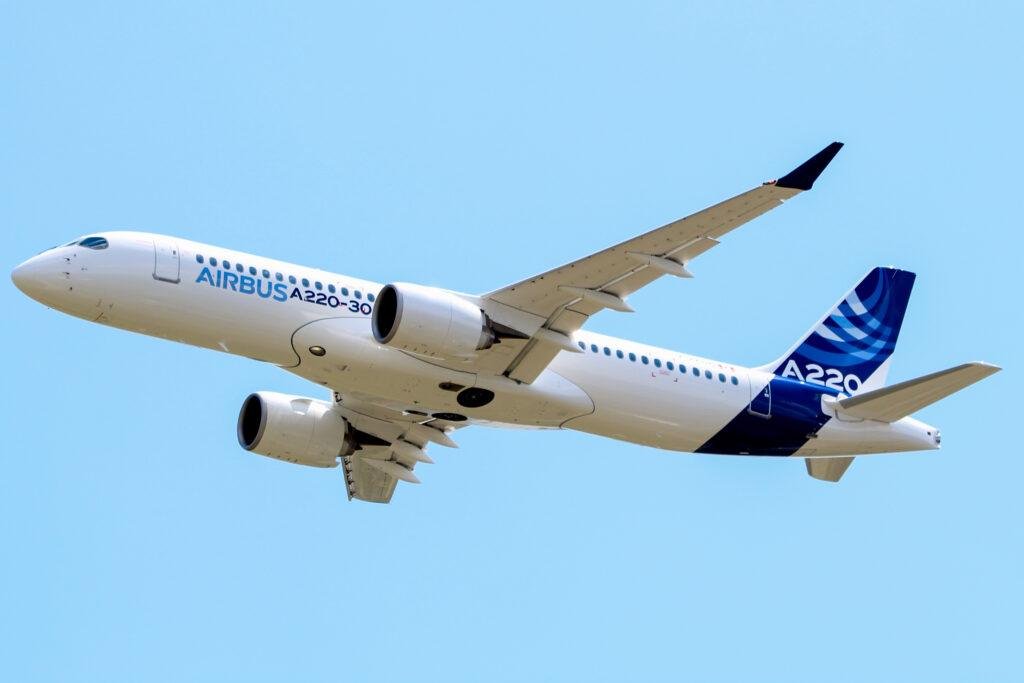
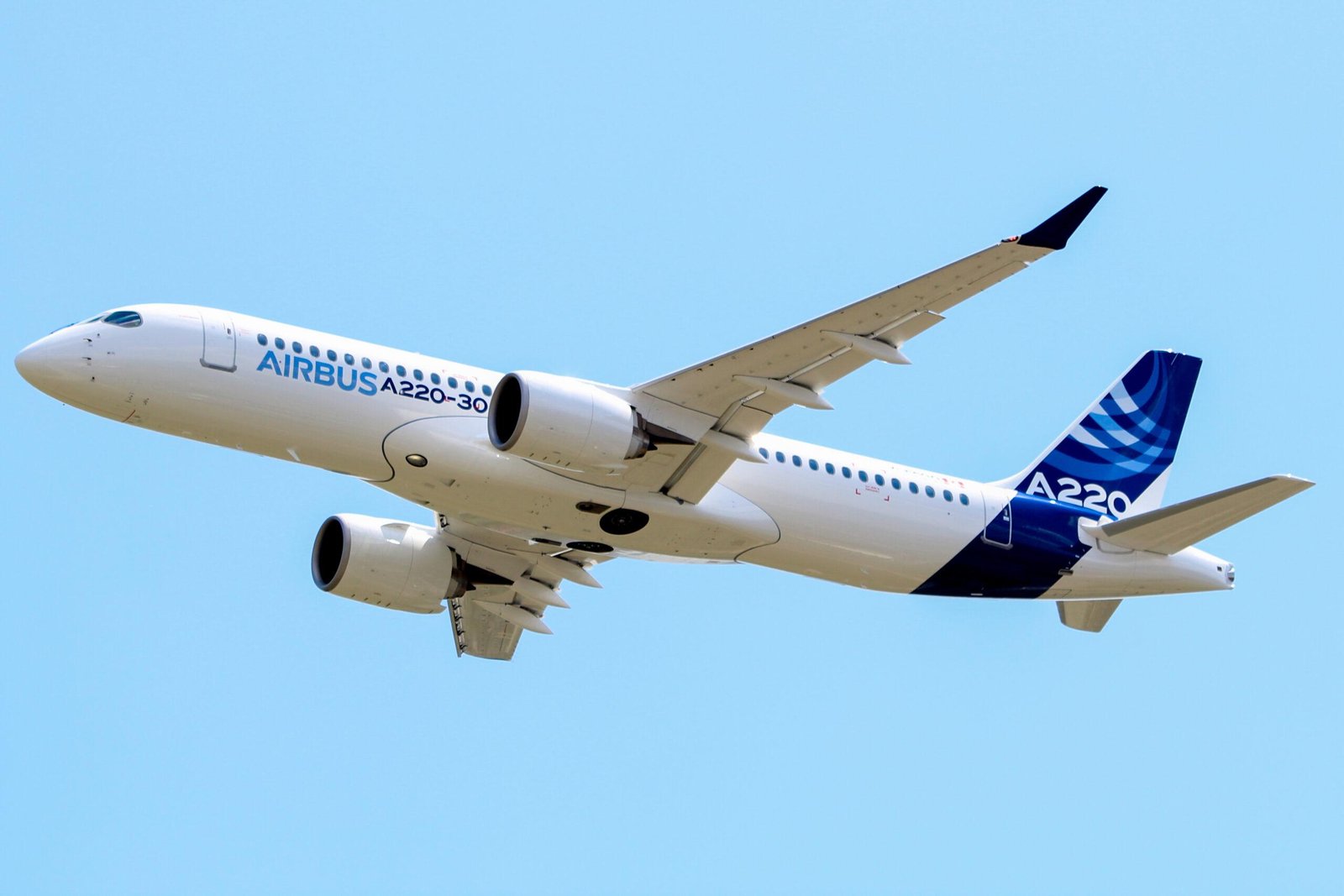
Safran SkyNaute system technology will enter commercial-aircraft service on the Airbus A220, Safran Electronics & Defense announced Oct. 20. The company said its inertial navigation product has been selected for the narrowbody jet after earlier applications involving military aircraft, helicopters and drones. The selection is a supplier and aircraft-program milestone, not evidence that the system is already installed across an operating airline fleet.
Safran says the system combines onboard inertial measurements with satellite-navigation data. That allows an aircraft to continue estimating its position and trajectory when Global Navigation Satellite System signals are unreliable, jammed or spoofed. Navigation resilience is an increasingly relevant issue for crews operating in regions with interference, although no single onboard sensor removes every navigation risk.
Table of Contents
How the Safran SkyNaute System Works
Inertial navigation estimates motion using sensors that measure rotation and acceleration. Once aligned and integrated with other navigation inputs, such equipment can help an aircraft retain useful positional information when external signals are disrupted. Safran describes its SkyNaute architecture as combining this internal reference with GNSS information where satellite data is available. The technology is meant to support continuity rather than depend on uninterrupted reception from space.
The manufacturer identifies its patented hemispherical resonator gyroscope, or HRG, as a central component. Safran says the sensor’s design avoids mechanical wear components and permits compact packaging. Those are manufacturer descriptions of equipment characteristics; they do not establish a published failure rate or guarantee that interference can never create difficulties for operators.
The primary announcement is available at the original source.
Why Satellite Interference Matters for Airlines
Aviation authorities and airlines increasingly discuss signal jamming and spoofing because navigation systems can be affected by external transmissions. Jamming prevents or degrades reception; spoofing attempts to make a receiver accept misleading position or timing information. These mechanisms are different and require careful terminology. Inertial equipment provides an independent reference that can help crews and aircraft systems recognize or manage discrepancies.
The A220 selection illustrates how technology developed for military use can move into civil transport. Safran characterizes SkyNaute as a dual-use product already chosen for certain European military platforms. The civilian application is significant because airliner programs impose demanding safety, integration and reliability requirements, but exact operating benefits will depend on certification and how the equipment works with the aircraft’s other avionics.
Industrial Production and French Engineering
Safran says the gyroscope is developed and industrialized at Montlucon, France. In June 2026, the company announced a 120 million euro modernization and capacity program at that site, with a goal of raising annual HRG output from 10,000 to 30,000 units by 2032. The production investment gives context for the A220 selection, but it is not a direct count of A220 navigation sets ordered.
The announcement does not state how many Airbus jets will receive SkyNaute, when the first equipped aircraft will be delivered or whether existing airline aircraft will be retrofitted. Those are material questions for customers, and readers should not infer fleetwide installation from the supplier saying its technology has been selected for the type.
What the Announcement Does Not Prove
Safran describes improved resistance to interference and reduced size, weight and energy needs, but its release does not provide independently measured airline operating results. There is no disclosed before-and-after comparison for a particular A220 fleet and no independently verified safety statistic. The most accurate headline concerns selection of the system, not elimination of GNSS disruption.
Integration also involves the aircraft manufacturer, regulators, maintenance documentation and operator procedures. An equipment decision is an early step in that chain. Any subsequent certification or retrofit order should be covered as a new, separate event only after a direct announcement confirms it.
FAQ: Safran SkyNaute system
What is the Safran SkyNaute system intended to do?
It provides inertial navigation information that can help maintain trajectory estimates when satellite-navigation signals are disrupted.
Which passenger aircraft will use Safran SkyNaute system?
Safran announced selection for the Airbus A220. It did not specify a full delivery or retrofit schedule.
Does the system make GPS jamming impossible?
No. It supplies an independent navigation capability; Safran did not claim it can remove every source of navigation risk.
Looking Ahead
Attention now turns to A220 integration, certification details and any confirmed deliveries or retrofit plans. Until those milestones are documented, the announcement should be described as a supplier selection with anticipated operational advantages.
For related TAD reporting, see Airbus A320neo aircraft orders.
Sources