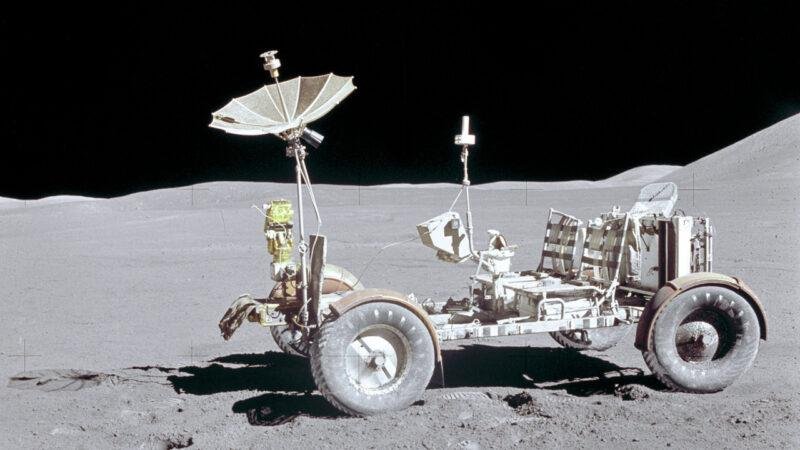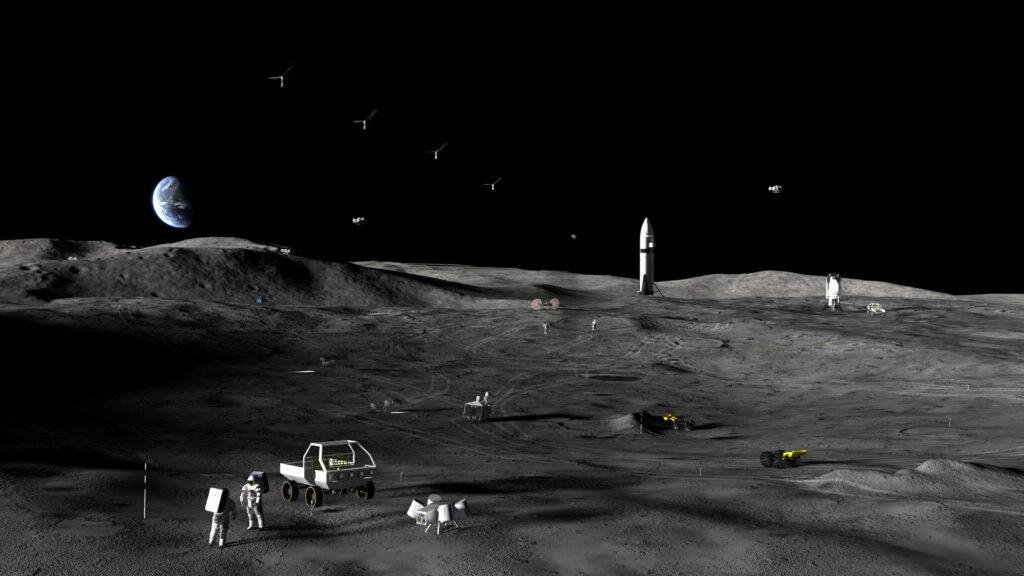
NASA Moon rovers are moving through testing and design milestones as the agency develops robotic and crew-carrying vehicles for its planned lunar base, according to an Oct. 20 update. NASA described work on its VIPER science rover and lunar terrain vehicles from Astrolab and Lunar Outpost, including astronaut mockup trials and upcoming mobility tests. These vehicles serve different missions and should not be confused with one another.
VIPER is intended to investigate the Moon’s south polar environment, while commercial lunar terrain vehicles would ultimately help astronauts drive, carry samples and support field research. NASA outlined prospective deliveries and tests but did not announce that the next generation of crewed vehicles has already landed on the lunar surface.
Table of Contents
What NASA Moon Rovers Will Explore
NASA says VIPER, the Volatiles Investigating Polar Exploration Rover, is intended to travel to the lunar south polar region in 2027 aboard a Blue Moon Mark 1 lander. Its planned mission would investigate water and other resources, including conditions in permanently shadowed craters. Engineers want to understand terrain, temperature and lighting as well as how potentially useful resources are distributed.
The agency says VIPER is fully built and undergoing final testing at Johnson Space Center in Houston before shipment to Kennedy Space Center for launch preparations. Plans call for the rover to travel more than 18 miles on the lunar surface. That is an intended mission distance, not a result already recorded on the Moon.
The primary announcement is available at the original source.
Crew-Carrying Vehicles From Two Contractors
NASA awarded task orders to Astrolab and Lunar Outpost to develop lunar terrain vehicles for a first phase of Moon Base operations. Both companies are working through prototypes and assessments intended to inform later flight hardware. NASA also awarded Blue Origin a task order to deliver the vehicles to the lunar south polar region by 2028 through the commercial lunar delivery program.
The vehicles are designed for use without crews before astronauts arrive, allowing remote driving and terrain mapping. NASA describes a target of about 3.7 miles of remotely operated daily travel for initial work. During crewed missions, their planned roles include carrying tools, collecting geological samples and expanding the areas that explorers can reach beyond walking range.
What Astronauts Have Tested So Far
Astrolab recently supplied a mockup of its Crewed Lunar Vehicle 1 to Axiom Space for assessments involving NASA astronauts wearing simulated Artemis spacesuits. Evaluators examined aspects of the cabin, displays and basic design. Astrolab also plans testing of flexible, airless wheels in NASA Glenn’s simulated lunar operations facilities. These are terrestrial evaluations that help refine a design before a vehicle is launched.
Lunar Outpost delivered another Pegasus mockup to Johnson Space Center for crew evaluations of design and usability. The company is also preparing tests of spring-mesh tire mobility and traction. NASA cites lessons from Lunar Outpost’s earlier MAPP robotic rover mission, but successful experience with one robotic platform does not establish that the larger crewed Pegasus system is flight qualified.
Performance Goals and Delivery Milestones
NASA describes future lunar terrain vehicles as capable of supporting up to three moonwalks per Artemis mission, transporting as much as 176 pounds of samples and tools and traveling about six miles on a single battery charge. Those are planned capabilities, subject to design maturation and the actual conditions encountered on the lunar surface.
The agency says Lunar Outpost expects a preliminary design review in October, while Astrolab targets its review by the end of December. Flight-ready hardware is targeted for delivery to NASA at the end of 2027. These schedules remain dependent on engineering tests, approval milestones and launch arrangements.
FAQ: NASA Moon rovers
Are NASA Moon rovers already on their new missions?
No. VIPER and the new crewed lunar terrain vehicles have announced future mission plans and terrestrial preparation milestones.
What is VIPER intended to investigate?
NASA plans to study lunar south polar water, terrain and environmental conditions relevant to future exploration.
Who is developing the crewed NASA Moon rovers?
NASA identified Astrolab and Lunar Outpost as developers of the initial lunar terrain vehicles, with Blue Origin assigned planned delivery support.
Looking Ahead
The next checkpoints are preliminary design reviews, wheel and mockup tests, VIPER’s remaining prelaunch work and preparations for targeted hardware deliveries in 2027. NASA’s published schedule should be treated as provisional until those events occur.
For related TAD reporting, see NASA lunar cold-weather technology.
Sources