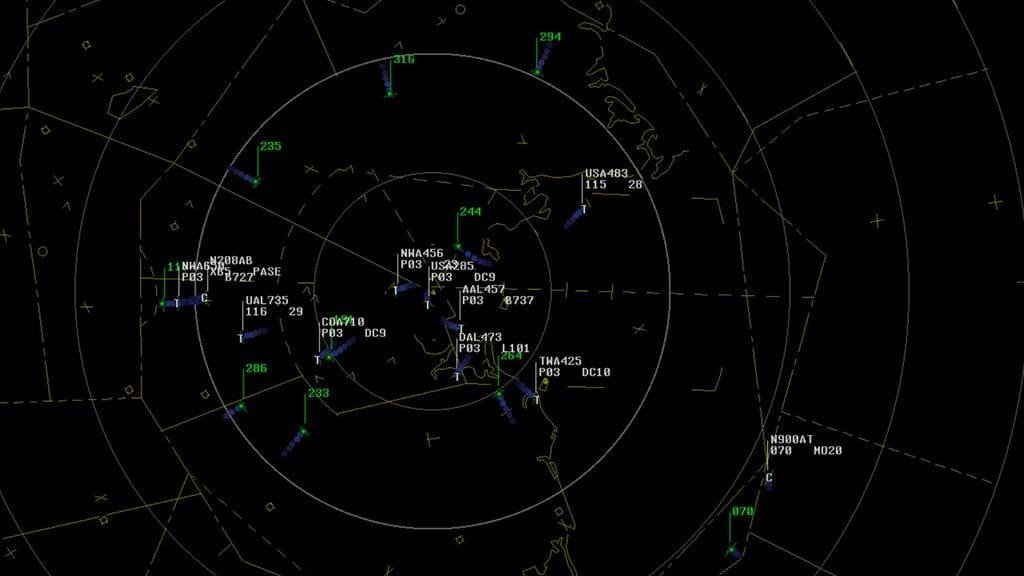
Collins MicroELITE has reached its first announced airport deployment at San Bernardino International Airport in California, RTX said on Oct. 21. The system is a digital surveillance display designed to help air traffic controllers monitor aircraft positions and organize traffic information at towers that may not have conventional certified radar displays.
Collins Aerospace, part of RTX, said its Tower MicroELITE system had received FAA System Design Approval as an Airborne Position Reference Tool. That precise approval classification matters: the company did not say every tower in the United States could install it without further operational arrangements or that it replaces every radar function.
Table of Contents
Collins MicroELITE Goes Live at San Bernardino
San Bernardino International Airport operates from the former Norton Air Force Base site and now handles a mixture of civil aviation activity. RTX identified the airport as the first to deploy Tower MicroELITE, describing the installation as a response to growing operations in airspace served by a federal contract tower. No specific daily traffic count was provided in the Oct. 21 announcement. The original announcement provides the source figures and status.
At smaller airports, controllers may need to combine direct visual observation with communications and available surveillance tools. An integrated aircraft-position display can help organize what is already known about movements beyond a single line of sight. The company’s statement is about increased situational awareness, not about removing the need for trained controllers or conventional procedures. Read also: TAD coverage of air traffic control system reliability.
Collins describes the system as secure and scalable. Those terms reflect the manufacturer’s intended product characteristics; the release did not supply independent cybersecurity test results, availability statistics or a detailed operational performance report from the San Bernardino deployment.
FAA Design Approval and Controller Display Technology
The company says the interface draws on its FAA-certified Standard Terminal Automation Replacement System, commonly known as STARS. That lineage gives the new product design a basis in existing terminal surveillance presentation methods, but it does not automatically mean Tower MicroELITE has the same capabilities or scope as a full STARS installation.
RTX specifically identified FAA System Design Approval under the Airborne Position Reference Tool category. Approval of a system design is different from a general order authorizing unlimited deployments. Eligible contract towers and privately operated air traffic control facilities would still need to follow applicable installation, training and operational arrangements.
Tower MicroELITE uses commercial off-the-shelf computing hardware, according to Collins. The company is targeting an installation that can be proportionate to a regional airport, reliever field, business aviation terminal or heliport. The release did not disclose an installed price or total cost of ownership, so any claim of measured taxpayer or airport savings would be premature.
What Smaller Airports Can Measure Next
The reported San Bernardino deployment is a proof point for commercial availability rather than proof that a large network of airports has adopted the system. RTX provided no list of additional committed customers. The next useful evidence would include documented tower deployments, commissioning dates and the training programs used by controllers.
Airport operators will also want to know how data sources are connected, what coverage is available during equipment faults and how procedures work during a loss of surveillance information. The short manufacturer announcement does not resolve those detailed questions. They should be addressed in operational documentation rather than assumed from a product launch.
The wider significance is the attempt to bring a standard-style surveillance display to facilities that serve growing traffic but lack large-airport infrastructure. For San Bernardino, it is a specific reported installation. For the rest of the market, Collins has outlined an eligible customer category and a product proposition, not a completed nationwide rollout.
FAQ: Collins MicroELITE
What is Collins MicroELITE?
It is a Collins Aerospace surveillance display designed to improve aircraft-position awareness at eligible airport control towers.
Where was the first system installed?
RTX identified San Bernardino International Airport in California as the first Tower MicroELITE deployment.
Does FAA approval make the tool a complete radar replacement?
No. RTX described FAA System Design Approval for an Airborne Position Reference Tool, not an unrestricted replacement for every radar service.
Looking Ahead
Collins has not announced dates for further installations in the Oct. 21 release. A meaningful next update would identify another airport, operational feedback from San Bernardino or more detailed implementation guidance.
Sources