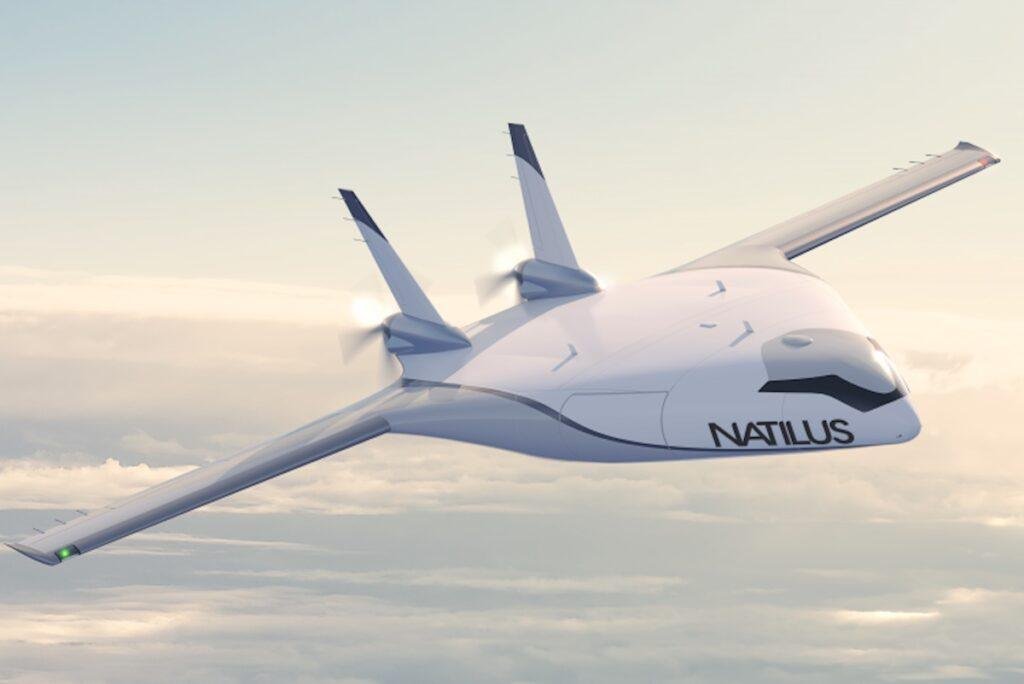
Natilus KONA funding received a $3.5 million U.S. Air Force research and development allocation, the San Diego aircraft developer announced on Oct. 21. The money is intended to move its optionally piloted blended-wing-body freighter toward full-scale flight testing and a military logistics demonstration.
The company described a 3.8-ton regional cargo aircraft aimed at moving smaller loads between operating locations. The award comes through Operational Energy–Innovation and the Department of the Air Force’s energy and installations leadership, according to Natilus.
This is support for development, not a confirmed procurement order for an operational fleet. The company still must complete engineering, testing and demonstrations before the proposed aircraft could enter routine military or commercial service.
Table of Contents
Natilus KONA Funding Targets an Airlift Gap
Natilus KONA funding supports a proposed aircraft that the developer positions between light utility aircraft such as the Cessna Caravan C-208 and larger tactical transports such as the C-130. The proposed niche is moving useful cargo loads without assigning an aircraft with much greater capacity than the mission requires.
The company’s Oct. 21 announcement says the $3.5 million in research, development, test and evaluation funding will help advance full-scale flight testing and an operationally relevant demonstration with the U.S. Joint Force.
Officials are interested in what the company calls contested logistics: supplying dispersed or threatened operating locations where long supply lines and traditional large transport hubs could be vulnerable. This is a prospective role, not proof KONA has already completed military evaluation.
Natilus said the program also draws on private investment. The news release did not publish a definitive total program cost or an Air Force purchase commitment, so the funding award should not be described as the price of building a production aircraft.
Blended-Wing Design Seeks Fuel and Payload Benefits
The Natilus KONA funding plan concerns a blended-wing-body design that merges lifting surfaces and the aircraft’s central body rather than using a familiar tubular fuselage with distinct wings. Natilus argues this geometry could improve the amount of cargo carried per unit of fuel for suitable missions.
The company cites potential improvements in efficiency and cargo volume in its program descriptions. These are design targets and manufacturer claims, not independently certified performance figures for an operational KONA fleet.
Optional piloting is another central feature. The idea is to allow human-crewed operations when needed while developing capabilities that could support other operating concepts. An optionally piloted design does not mean the aircraft has received approval to fly autonomously on civilian routes.
TAD previously covered remote-piloted Caravan testing in New Mexico. That separate program illustrates a broader aviation industry interest in alternative crew arrangements, but it does not certify or validate KONA’s specific technology.
Demonstration Must Precede Any Operational Role
Under Natilus KONA funding, the manufacturer’s development program aims at full-scale aircraft testing before a potential Joint Force demonstration. An independent report from Flying described the goal of reaching a full-scale prototype stage rather than immediate military deployment.
Building a demonstrator can establish whether predicted aerodynamic, propulsion, cargo-handling and operating characteristics hold up in real conditions. The next stages also require integration, safety analysis and test procedures suitable for the chosen operating environment.
The Air Force has an operational interest in saving fuel and extending the reach of dispersed forces. However, a small development award is not a determination that a new aircraft will replace the C-130 or other existing transports.
The commercial logistics market presents a separate set of hurdles, including certification, airline economics, payload handling and maintenance. Natilus has described civilian freight ambitions, but operational use and firm delivery commitments should be evaluated only against later verified milestones.
FAQ: Natilus KONA funding
How much is Natilus KONA funding from the Air Force?
The announced research and development allocation is $3.5 million; it is not an aircraft fleet purchase.
Is the KONA aircraft already in military service?
No. Natilus described full-scale testing and a military demonstration as future development objectives.
Can Natilus KONA fly without a pilot?
The design is described as optionally piloted, but the announcement does not establish operational approval for pilotless commercial service.
Looking Ahead
Natilus says the work should advance KONA toward a full-scale test program and a military logistics demonstration. The company did not announce a confirmed service-entry date or a firm Air Force fleet order in the Oct. 21 funding release.
Sources