HPE Spaceborne Computer-4 is scheduled to travel to the Moon on an Astrolab robotic rover as part of a proposed late-2026 lunar mission, Hewlett Packard Enterprise said on Oct. 20. The company wants to test artificial intelligence and high-performance computing close to where lunar data is collected.
The planned payload is a compact computing system designed for a harsh surface environment. HPE says the demonstration will include computing benchmarks, analysis of images and lidar data, and software tools intended to reduce the need to send every calculation back to Earth.
The mission has not yet launched. HPE described a deployment plan involving a commercial lunar lander and rover, and its statement should be read as a target for future testing, not confirmation that the equipment has operated on the lunar surface.
Table of Contents
HPE Spaceborne Computer-4 and the Planned Lunar Delivery
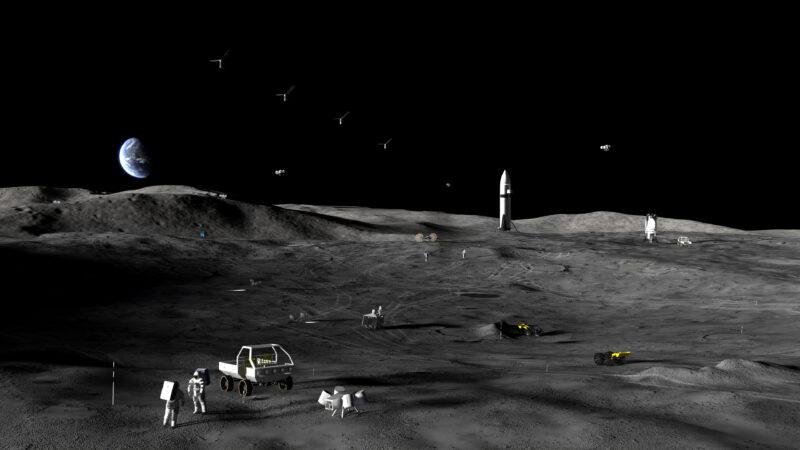
HPE expects its Spaceborne Computer-4 payload to ride aboard Astrolab’s Flexible Logistics and Exploration rover, known as FLIP. Voyager Technologies’ Griffin-1 lander is planned to carry the rover to a site near the lunar south pole as part of NASA’s Commercial Lunar Payload Services initiative.
The Oct. 20 HPE release identifies late 2026 as the mission’s intended launch window. It does not establish a completed launch, touchdown or surface checkout. All three would have to occur before the proposed computing experiments could begin.
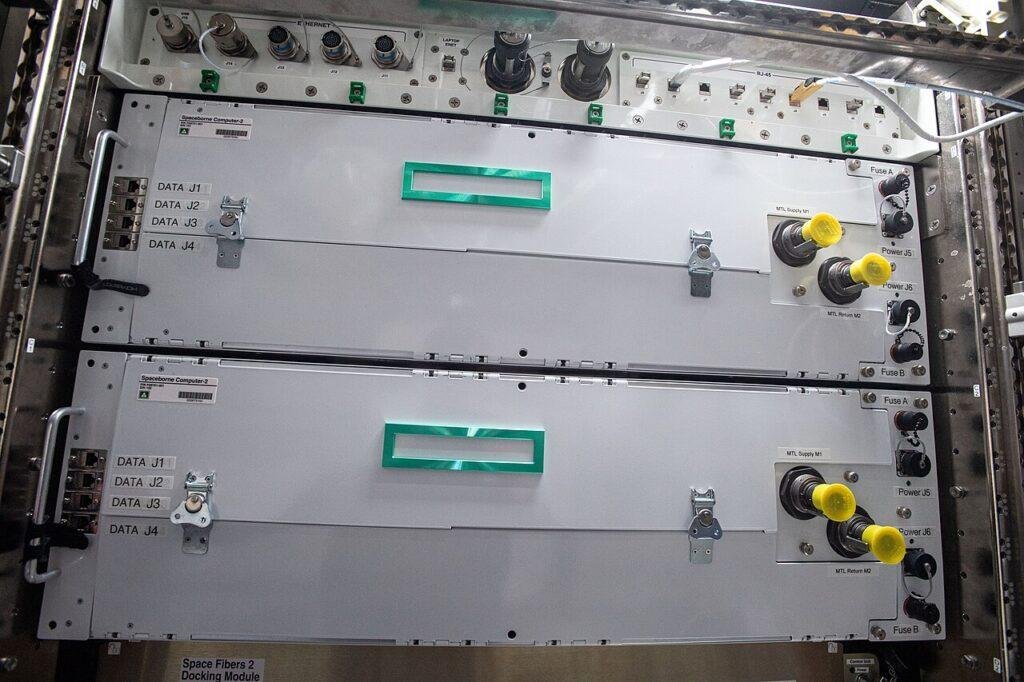
The company describes the hardware as fanless and self-contained, using a low-power central processor and graphics processor alongside solid-state storage supplied by KIOXIA. The design is intended to work with restricted power, radiation exposure and difficult thermal conditions, although actual performance requires testing on the Moon.
AI and Computing Experiments Planned for the Surface
HPE wants to run high-performance LINPACK and high-performance conjugate-gradient benchmarks, standard methods for assessing demanding numerical calculations. The company says these would be the first such benchmarks on the lunar surface under the proposed mission; that first-of-kind claim remains contingent on a successful flight and experiment.
The proposed software tests include image analysis, language-model retrieval and processing lidar measurements used to understand terrain and navigation. Local processing could make surface exploration more efficient when communications with Earth are limited, though this mission is designed to gather evaluation data rather than deliver an operational lunar AI service.
NASA plans to contribute a federated-learning experiment and an onboard language-model demonstration, according to HPE. Deloitte is expected to test intrusion detection and anomaly analysis. These are described as distinct payload applications that share the underlying computing capability, not as completed scientific results.
Rover Infrastructure and the Broader Moon Program
HPE also says it will support Astrolab’s mission control in Hawthorne, California, through private-cloud technology. The proposed architecture combines computing in the rover with systems on Earth, allowing engineers to compare operations, handle data and assess how software behaves under mission conditions.
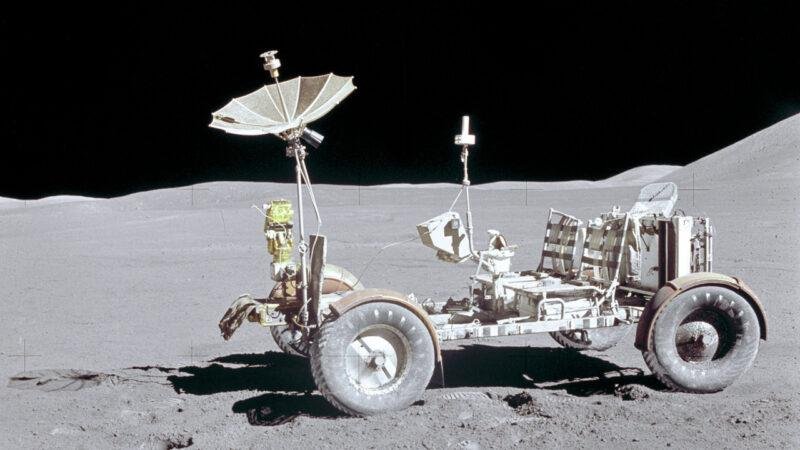
TAD has separately reported on NASA’s lunar rover testing and development plans. The HPE mission is narrower: it involves one planned computing payload on a commercial rover, not the successful delivery of every vehicle now under development for future crewed exploration.
An important distinction is that high-performance computing can help evaluate technical options but cannot itself guarantee safe navigation or a successful landing. Flight schedules, lander performance, rover deployment and power availability will all determine how many of the planned software tests are possible.
FAQ: HPE Spaceborne Computer
Has HPE Spaceborne Computer-4 already reached the Moon?
No. HPE announced a planned late-2026 mission, but the described flight, landing and computing tests had not occurred at the time of the announcement.
Which rover will carry HPE Spaceborne Computer-4?
Astrolab’s FLIP rover is the planned carrier, with delivery by Voyager Technologies’ Griffin-1 lander near the lunar south pole.
What will NASA and HPE test on the surface?
The plans include computing benchmarks, AI retrieval and image processing, lidar analysis and NASA-led experiments in distributed machine learning.
Looking Ahead
HPE Spaceborne Computer-4 must clear launch, lunar landing, rover deployment and hardware checkout before tests can proceed. The company has targeted a late-2026 launch window, but no lunar benchmark or AI experiment should be described as accomplished until mission operators report its results.
Sources