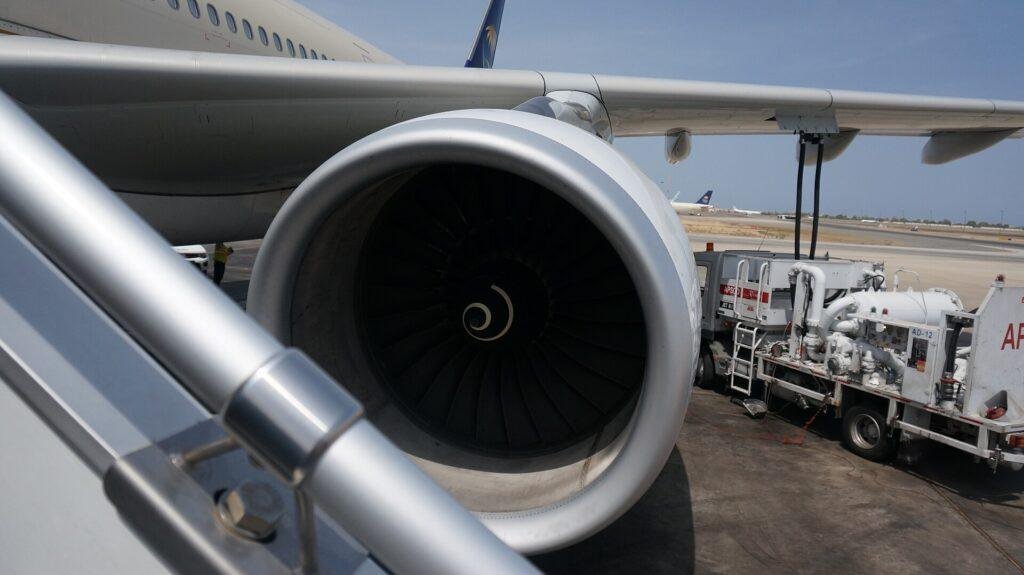
Rolls-Royce engines are at the center of a proposed £2.5 billion, ten-year U.K. research and technology program announced by the government and manufacturer on Oct. 28. The framework focuses on next-generation gas turbines for civil and defense aircraft, including technology intended for the high-volume narrowbody market.
The agreement is a planning framework. The British government explicitly said no new grants were awarded through the announcement and any future funding remains subject to legal, affordability and value-for-money approvals. It is not a firm order for engines or a completed investment of the full headline amount.
Table of Contents
Rolls-Royce Engines and the Ten-Year Proposal
The government statement describes a jointly funded program to pursue more efficient aircraft engine technologies over a decade. Rolls-Royce separately said the work could include an engine demonstrator, which would test components and systems before any potential commercial product is offered.
A demonstrator is not an airliner engine with completed airworthiness certification. It is a research platform for validating designs under controlled conditions. Development of new turbines requires materials, manufacturing processes, temperature management, testing and later integration with an aircraft manufacturer’s requirements.
The company sees an opportunity to compete more extensively for future single-aisle jet engines, a market where fleet sizes and production runs are large. The agreement does not identify an airframer customer, aircraft model or guaranteed delivery commitment for Rolls-Royce hardware.
Industrial Jobs and Funding Caveats
The government said the arrangement could support approximately 3,300 existing jobs by the end of 2029 and lead to more employment in later decades. Those are projections and objectives, not a count of positions already created by the Oct. 28 announcement.
Officials also discussed a potential long-run economic contribution tied to securing a future market position. Forecast benefits depend on research success, airline demand, supplier performance and subsequent orders. An engine research agreement by itself cannot establish that every expected job or investment will materialize.
The government’s release explicitly reserves future support for additional approvals, including subsidy-control compliance and negotiated terms. This qualification is central to the story: a headline program value does not equal immediate funding available to spend or a contract signed for all future work.
Civil and Military Technology Overlap
Rolls-Royce describes the program as supporting civil and defense gas-turbine capability. Some engineering disciplines, such as advanced materials and high-temperature components, can be relevant across aircraft types, even though commercial certification and military mission requirements are different.
In another market, TAD reported Airbus cargo-fleet projections. Aircraft demand forecasts can help illustrate possible future markets, but they are not engine selections and do not establish the financial returns of this proposed British research effort.
The Oct. 28 statements leave important questions open about the participating research sites, final cost sharing, each project’s scope and when a demonstrator might run. The next measure of progress will come from specific approved funding and technical milestones rather than promotional employment projections.
A future narrowbody propulsion program would have to satisfy airframe integration requirements as well as efficiency targets. Research funding can help create technical options, but airlines purchase engines only in connection with aircraft choices, operating economics and long-term support. The October program announcement does not identify a winning aircraft application.
FAQ: Rolls-Royce engines
What is the Rolls-Royce engines research proposal worth?
The announced framework envisages a £2.5 billion program spanning about ten years, subject to further approvals.
Has the UK awarded new grants under this announcement?
No. The government said the framework itself made no new grant awards.
Does this mean Rolls-Royce has won a narrowbody engine contract?
No aircraft customer selection or commercial engine order was announced with the research framework.
Looking Ahead
The next milestones will be approved project funding, negotiated terms and evidence of development work, potentially including an engine demonstrator. Rolls-Royce engines remain an industrial research opportunity rather than an order-backed product outcome under the Oct. 28 agreement.
Sources
Rolls-Royce October 28 press release