Emirates Group profit fell 66% before tax in the first half of its 2026-27 financial year as higher fuel prices and conflict-related disruption affected the Dubai-based aviation company. The group reported AED 4.1 billion in profit before tax for the six months ending Sept. 30.
The figures were released on Nov. 5 and remain important for understanding the financial pressure on a major international airline and airport-services network. Revenue fell 12% to AED 66.2 billion, while the airline itself carried 21.8 million passengers, 22% fewer than a year earlier.
Emirates said it had restored much of its route network but continued to face expensive fuel and intermittent airspace restrictions. The report describes a profitable business operating at reduced scale, not a loss-making group or a complete shutdown of its Dubai hub.
Table of Contents
Emirates Group profit reflects Gulf disruptions
The group's half-year announcement gives profit before tax of AED 4.1 billion, down 66% year on year. Group revenue declined to AED 66.2 billion from AED 75.4 billion. Those are six-month figures, not a full financial-year forecast.
The Emirates airline business, reported separately within the group, posted AED 3.7 billion in pretax profit, down 68%, on revenue of AED 56.9 billion. Airport-services company dnata contributed pretax profit of AED 410 million. The group totals and airline-only totals should not be mixed when describing the changes.
The statement links much of the pressure to increased jet-fuel costs and airspace disruption across the Gulf. Emirates' passenger capacity, measured in available seat kilometers, was down 17%, while passenger traffic measured in revenue passenger kilometers fell 25%. The average seat factor declined to 72% from 79.5% a year earlier.
Passenger numbers fall as cargo revenue rises
Emirates carried 21.8 million passengers in the half-year, down 22%. At Sept. 30 it said its passenger and freight operations served 150 airports across 78 countries and territories and that approximately 91% of its pre-disruption network was operating.
The cargo picture was different. Emirates SkyCargo moved about 1.2 million tonnes, a 1% reduction in tonnage, but reported 52% higher cargo revenue as the market faced reduced airfreight capacity and shipping interruptions. Increased revenue per unit of freight is not the same as growing the physical volume carried.
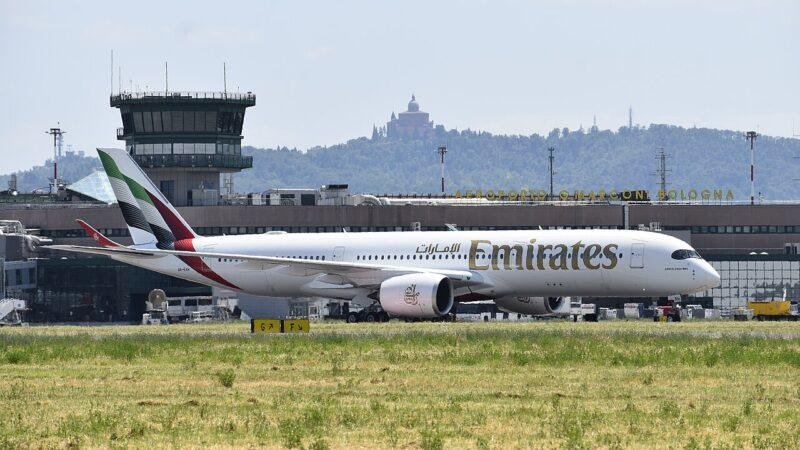
Emirates also reported delivery of nine new A350 aircraft and five Boeing 777 freighters during the half-year. The cargo network added dedicated freighter service to Almaty and Zhengzhou. Separately, TAD has covered Airbus's aircraft production and delivery activity, which provides wider manufacturing context but not the cause of Emirates' earnings change.
Fuel and network recovery remain key variables
The company said fuel was its largest operating cost, accounting for 34% of airline operating costs. It used fuel-price risk management gains to offset some of the increase in expenses. Those hedging gains do not imply that fuel itself became cheaper; the company described a substantially higher underlying fuel bill.
The results also show continuing investment despite disruption. Emirates completed full cabin refurbishment on 12 aircraft and installed high-speed connectivity on 36 more. It said it remained committed to future aircraft and maintenance facilities, including a large planned MRO development at Al Maktoum International Airport.
The company has not stated in this half-year release when every suspended route will return. Passenger demand, operating permissions and airspace risk will remain separate factors in any subsequent schedule recovery. Travelers should use current airline notices for specific routes rather than assuming the half-year network percentage describes today's timetable.
FAQ: Emirates Group profit
How much was Emirates Group profit before tax?
The group reported AED 4.1 billion for the six months ending Sept. 30, 2026, a 66% year-over-year decline.
Did Emirates stop making money in the first half?
No. The group and the Emirates airline business both reported positive pretax profits, although each was well below the comparable prior-year figure.
How many passengers did the airline carry?
Emirates said it carried 21.8 million passengers during the half-year, down 22% from the previous year.
Looking Ahead
The second half will show whether route recovery, passenger traffic and fuel-price developments change the group's results. The November announcement did not include a fixed date for the restoration of every affected service.
Sources