Air Arabia Egypt will begin nonstop flights between Cairo and Al Ain on Dec. 2, the airline announced Nov. 19. It plans two round trips a week between Cairo International Airport and Tahnoun International Airport in Al Ain, United Arab Emirates.
The new flights give people traveling between the two cities a direct option on selected days. The timetable puts the Cairo departures in the evening and the return departures just after midnight in Al Ain, meaning each return appears in the schedule on the following local calendar day.
Table of Contents
How Air Arabia Egypt will schedule the route
The airline’s published timetable shows flight E5 158 leaving Cairo at 6:10 p.m. on Wednesdays and Saturdays and arriving at 11:35 p.m. in Al Ain. Flight E5 159 is scheduled to leave Al Ain at 12:25 a.m. on Thursdays and Sundays and reach Cairo at 2:45 a.m. All the times are local.
The late-night departure matters when reading the timetable. A passenger leaving Al Ain after the Wednesday evening arrival would book the Thursday departure. The same date crossover applies to the Saturday flight from Cairo and its Sunday return. The published departure pattern gives travelers two opportunities per week in each direction.
The carrier lists the December start date alongside the recurring schedule. The announcement establishes the planned first day of service and the advertised frequency. A completed inaugural flight is a separate development that will come after the service starts.
Why the Al Ain airport matters
The destination is Al Ain’s airport, which the airline calls Tahnoun International Airport in its release. Emirates News Agency also described the route between Cairo and Al Ain. The airport choice is the main distinction for passengers whose journey begins or ends in Al Ain, where the new nonstop can replace a separate connection or surface transfer in some itineraries.
Air Arabia Egypt places Al Ain within its wider international network from its Egyptian bases in Cairo and Alexandria. In the same announcement, it lists other destinations across the Gulf and Europe. The new flight uses the Cairo base; the announcement does not include an equivalent nonstop from Alexandria to Al Ain.
The route also differs from an airline partnership that makes existing flights available under another carrier’s code, such as the Qatar Airways and Porter arrangement previously covered by TAD. Here, Air Arabia Egypt published a new operating schedule with its own outbound and return flight numbers.
What the carrier disclosed about aircraft and timing
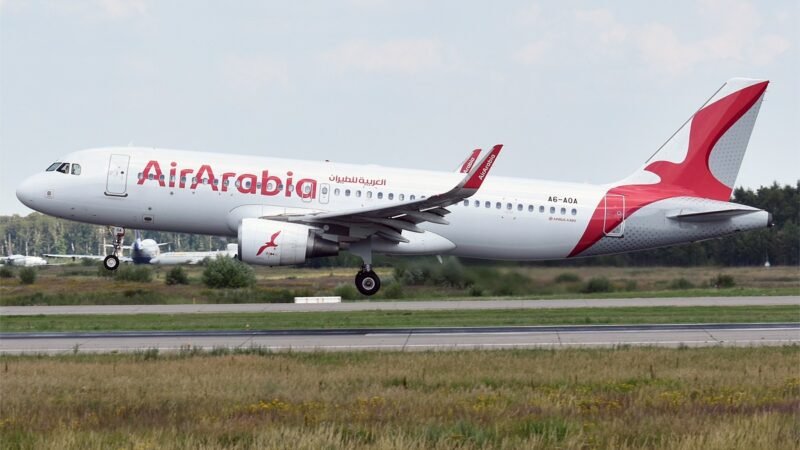
Air Arabia says the group operates Airbus A320-family aircraft. Its route announcement did not identify a specific registration or guarantee a particular variant for the new service. The timetable identifies the route and the planned frequency without committing the airline to one individual aircraft.
At launch, the schedule will give passengers a choice between two days in each direction. The carrier has not announced an increase beyond that initial frequency. The difference between an advertised timetable and flights actually flown will become clear once the inaugural service operates.
FAQ: Air Arabia Egypt
When do Air Arabia Egypt flights to Al Ain begin?
The carrier lists Dec. 2 as the start date for nonstop flights between Cairo and Al Ain.
Which days are available in each direction?
The airline lists Wednesday and Saturday departures from Cairo and Thursday and Sunday departures from Al Ain. The return flights leave shortly after midnight local time.
Which airport serves the UAE end of the route?
The flights are scheduled for Tahnoun International Airport in Al Ain, according to the carrier’s release.
Looking Ahead
The first scheduled Air Arabia Egypt departure from Cairo is on Wednesday, Dec. 2. For this route, the milestones to watch are the inaugural flight and whether the advertised twice-weekly pattern holds after launch.
Sources
- Air Arabia Egypt announcement and timetable
- Emirates News Agency route report
- TAD coverage of Qatar Airways and Porter’s codeshare
- Featured photo credit — Anna Zvereva (CC BY-SA 2.0)