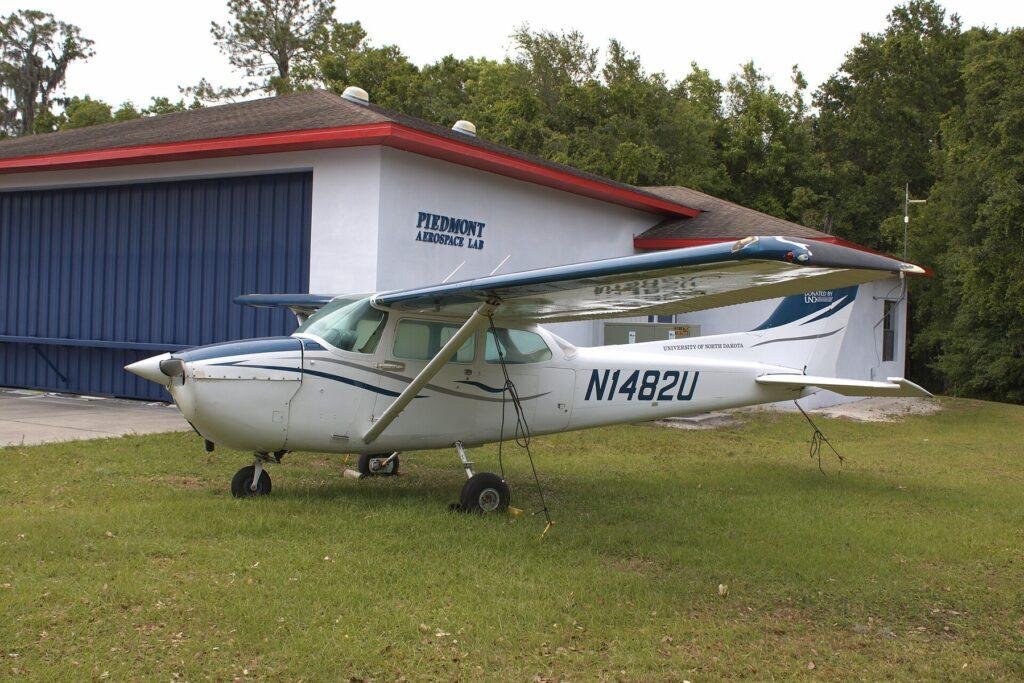
FAA flight school enforcement action announced Oct. 30 proposes a $2,388,500 civil penalty against Stratus Aviation, LLC, which does business as Wings Flight School in Vacaville, California. The Federal Aviation Administration alleges that the operator flew a Cessna 172M after a modification that had not received the necessary approval.
The agency’s notice describes approximately 280 flights that it contends were conducted while the airplane was unairworthy. This is a proposed penalty and set of allegations, not a final adjudication. The flight school has a specified opportunity to respond, and the public statement does not establish how the case will ultimately be resolved.
Table of Contents
FAA flight school allegations cover 280 flights
The FAA said Wings Flight School installed an unapproved temperature gauge on a Cessna 172M Skyhawk in October 2022. According to the regulator, that modification left the aircraft in an unairworthy condition. The FAA alleges that the aircraft was nevertheless operated on approximately 280 flights from February 2023 through September 2024.
The enforcement notice further alleges careless or reckless operation in a way that endangered life or property. That characterization is the FAA’s claim in the proposed civil-penalty action. Reporting should retain the word “alleges” when describing it, because the notice is not a public final finding of wrongdoing after the company’s response process.
The regulator identified the company by both its legal name and operating trade name, which helps avoid confusing the case with other flight-training organizations. The published account concerns a specified Cessna aircraft and period of operation. It does not state that every aircraft in the school’s fleet or every student flight was affected. The source notice or report documents the reported event.
Why approved aircraft modifications matter
Airworthiness depends on an aircraft meeting applicable design and maintenance requirements, including the status of modifications. A seemingly minor instrument change can have regulatory significance when it alters an approved aircraft configuration without the necessary process. The allegation concerns approval status, not an assertion that the temperature gauge visibly failed during any particular flight.
Flight schools often operate high-frequency training schedules, making maintenance controls and documentation important to aircraft availability. An operator must establish that a training aircraft is appropriate for service before dispatching it. If a required approval or inspection is missing, repeated use can multiply the number of alleged violations considered by a regulator.
TAD has previously reported on FAA airworthiness directives affecting Boeing 737 aircraft. An airworthiness directive, a notice of proposed penalty and a technical inspection finding are different regulatory tools. They can all concern aircraft safety, but none should be treated as proof that the same defect or enforcement status exists in unrelated airplanes.
Flight school receives chance to respond
The FAA gave Wings 30 days from receipt of its notice to respond. The response period is an important due-process step that separates the agency’s proposal from a final outcome. The company may dispute factual assertions, explain circumstances or seek resolution through the applicable enforcement process.
The Oct. 30 statement did not report a completed payment, an agreed settlement or a judicial finding. It also did not identify an accident caused by the alleged gauge modification. Such claims would require evidence beyond the FAA’s short notice and should not be added to the public article.
The FAA flight school case may attract interest from aviation training operators because it concerns maintenance authorization over an extended period. However, any broader industry lesson must rest on the facts established through the enforcement process, not a premature assumption that an alleged infraction has already been proven. Read other FAA airworthiness reporting for another, separate development.
FAQ: FAA flight school
Which company faces the FAA flight school proposal?
The FAA named Stratus Aviation, LLC, doing business as Wings Flight School in Vacaville, California.
How much is the proposed civil penalty?
The agency proposed $2,388,500, but its Oct. 30 release did not describe a final payment or settlement.
Can the flight school respond to the allegations?
Yes. The FAA said the operator has 30 days after receiving the notice to respond.
Looking Ahead
The next step is the operator’s response and any subsequent FAA enforcement decision. The agency did not publish a date for final resolution. The proposed penalty must continue to be identified as a proposal unless further official action changes its status.
Sources