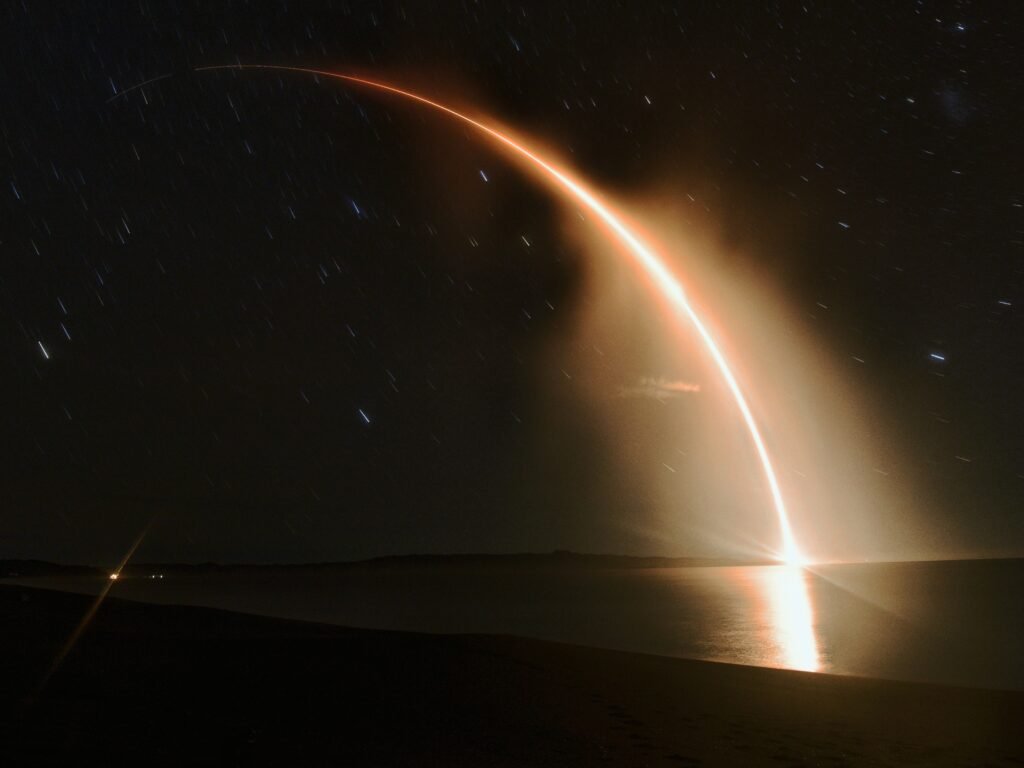
Rocket Lab Electron delivered Synspective’s 14th StriX radar satellite into low Earth orbit on the vehicle’s 101st mission, the launch provider announced. The flight, named Night Owls Never Sleep, departed from Rocket Lab’s Launch Complex 1 in Māhia, New Zealand.
Rocket Lab’s mission announcement says Electron delivered the spacecraft to a 569-kilometer orbit. The flight was the company’s 22nd launch of 2026 and added another spacecraft to the Japanese operator’s Earth-observation constellation.
Table of Contents
What Rocket Lab Electron delivered on its 101st mission
The payload was a single StriX satellite. Rocket Lab reported a completed orbital delivery, following Synspective’s launch schedule notice, which had identified Electron, Launch Complex 1 and the Nov. 27 UTC launch window. The schedule identified the launch site and window. Rocket Lab’s subsequent report supplied the altitude at which it put the satellite into orbit.
This was the next Electron mission after the company reported deploying an iQPS satellite on its 100th flight. TAD’s earlier report on mission 100 recorded that milestone. Both missions carried Japanese radar-imaging spacecraft from New Zealand. The customers were separate operators, with iQPS on the earlier mission and Synspective on this one.
What Synspective’s StriX radar satellite does
StriX satellites use synthetic aperture radar to image Earth’s surface. The technique uses radar measurements to form an image, so observations can be made after dark and through cloud. Synspective can use those observations to track changes on the ground, including at infrastructure sites and across regions affected by disasters.
The mission adds another spacecraft to the system Synspective is building. Rocket Lab’s deployment announcement establishes that the satellite reached the reported orbit. It did not give a date for the first images or for when this particular spacecraft would enter routine service.
In a Nov. 25 report, Synspective described how its earlier StriX satellites tracked the changing shape of new land off Ioto, Japan, after an eruption. The observations included imaging at night.
How this flight fits the companies’ launch agreement
Synspective’s agreement announcement said Rocket Lab Electron had carried StriX payloads for the company since 2020 and that 13 had already been launched. The newly completed flight increases that count to 14 by Rocket Lab’s accounting. The later deployment also provides a concrete marker against the companies’ plans for additional launches.
Rocket Lab said the companies’ agreements cover 47 missions in total, with 33 dedicated flights left on the manifest through 2031 after this launch. Those remaining missions represent the future schedule. The success announcement covers the spacecraft just delivered, while the manifest describes launches still to come.
FAQ: Rocket Lab Electron
What did Rocket Lab Electron launch on mission 101?
Electron deployed the 14th StriX synthetic aperture radar satellite for Japan’s Synspective.
Where did the launch take place?
It departed Rocket Lab’s Launch Complex 1 in Māhia, New Zealand.
How high was the reported deployment orbit?
Rocket Lab reported placing the spacecraft in a low Earth orbit at 569 kilometers.
Looking Ahead
Synspective’s next observable milestone for this spacecraft would be confirmation that it is returning imagery or has entered routine service. Rocket Lab’s success release did not announce a timetable for that step.
Sources
- Rocket Lab’s mission success release
- Synspective’s launch schedule announcement
- Synspective’s 20-launch agreement announcement
- TAD’s coverage of Electron’s 100th mission
- Synspective’s StriX observations at Ioto
- Featured image by Yourong F. Wang (CC BY-SA 4.0)
This article may include links to travel booking partners. If you book through them, The Aviation Diary may earn a commission at no extra cost to you.