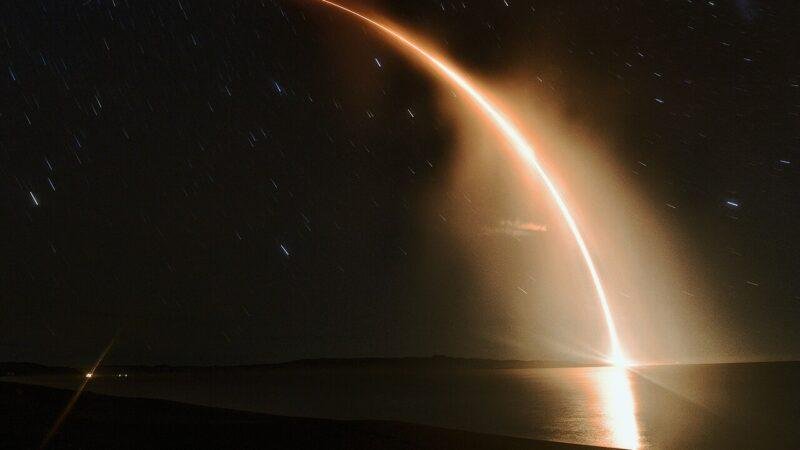
Firefly Synspective launches could expand over the rest of this decade under a new agreement for up to ten Alpha rocket missions announced November 10. Firefly Aerospace said it signed the arrangement with Japan’s Synspective, which builds synthetic aperture radar satellites. The proposed flights would carry two spacecraft per Alpha mission, enabling as many as twenty satellite deployments if the full agreement is used.
The words up to are essential. Firefly announced a multi-launch framework, not ten successful flights or a guarantee that every available mission will occur by 2030. The U.S. launch company described the arrangement as a way to accelerate Synspective’s StriX constellation. Operational outcomes will depend on launch readiness, satellite completion, regulatory requirements and the actual mission schedule as it is confirmed.
Table of Contents
- Firefly Synspective launches use two spacecraft per Alpha
- Why Japan wants more radar spacecraft
- Contract scope and remaining launch risk
- FAQ: Firefly Synspective launches
- How many Firefly Synspective launches are planned?
- What payload will the Alpha rockets carry?
- Where would the rockets launch?
- Looking Ahead
- Sources
Firefly Synspective launches use two spacecraft per Alpha
Firefly said its Alpha vehicle can carry about 1,000 kilograms to low Earth orbit and that the planned deployment configuration would place two Synspective SAR satellites on each flight. Compared with sending one spacecraft on each launch, that arrangement could help build the constellation faster if the rocket and satellites are ready together. The company did not list confirmed flight dates or claim ten vehicles were already on the production line.
The agreement extends through 2030 and includes possible launches from two U.S. coastal sites. Firefly named Pad 0A at Wallops Flight Facility in Virginia and Space Launch Complex 2 at Vandenberg Space Force Base in California. Different launch locations can offer access to different orbital trajectories. However, specific inclinations and destinations for each future StriX mission were not laid out in the announcement.
Why Japan wants more radar spacecraft
Synspective uses synthetic aperture radar imaging to observe changes on Earth. Unlike optical cameras that depend on daylight and clear viewing conditions, radar missions can provide observations during darkness and through many cloud conditions. Firefly said the company wants faster access to useful satellite imagery for assessing disaster areas and monitoring changes in land and infrastructure.
The StriX constellation is intended to improve coverage and revisit opportunities as more satellites join the network. Increasing the number of spacecraft can help operators reduce the interval between observations, although actual service performance also depends on orbital design, payload capability and data processing. The agreement is therefore relevant beyond rocket launch contracts; it may influence the supply of commercially available Earth-observation data.
Contract scope and remaining launch risk
Firefly described its Alpha Block II vehicle as part of the offering and framed the agreement as a vote of confidence in its launch services. The company did not disclose contract revenue, flight-specific pricing or firm dates for the proposed missions. Readers should avoid multiplying a published list price by ten and calling that the value of this agreement. The number is a maximum mission count in the announcement.
Signing a multi-year launch arrangement starts the logistics of assigning payloads, integration work and launch slots. It does not eliminate normal spaceflight risks, including technical changes and schedule delays. The next independent evidence of progress would be hardware preparation and a named manifest assignment. Firefly has stated an ambition to serve a Japanese customer with a repeated launch campaign, not that the campaign is already completed.
For related coverage, read TAD coverage of another commercial aerospace test program. This is a separate development, not evidence that the events are connected.
FAQ: Firefly Synspective launches
How many Firefly Synspective launches are planned?
The agreement covers up to ten Alpha launches through 2030. That is a maximum rather than a report of ten completed missions.
What payload will the Alpha rockets carry?
Firefly says each planned mission will deploy two Synspective StriX synthetic aperture radar satellites.
Where would the rockets launch?
The company identified Wallops Flight Facility in Virginia and Vandenberg Space Force Base in California as planned sites.
Looking Ahead
Future announcements should identify which launch opportunities become assigned flights and when the corresponding StriX spacecraft are ready for integration. Firefly has named the maximum size and end year of the agreement but not a calendar of ten launch dates. The first verifiable operational milestone will be a scheduled Alpha mission carrying Synspective hardware, followed by actual deployment results.
Sources