A South Korea air defense alert briefly went out on Ulleung Island on November 24 after Russian military aircraft entered the country’s air defense identification zone.
South Korea’s Joint Chiefs of Staff said the aircraft stayed outside sovereign Korean airspace. South Korea’s foreign ministry later said it had expressed regret to Russia, while Korean broadcasters reported that the defense ministry summoned the Russian military attaché.
Table of Contents
How the South Korea air defense alert unfolded
South Korean authorities detected Russian military aircraft approaching the area and took measures that included sending up fighters, according to the Joint Chiefs of Staff as reported by Yonhap. Authorities on Ulleung Island sent a public alert and withdrew it about three minutes later. The island lies off South Korea’s east coast, where residents could receive both national and local messages about the incident.
A later alert from provincial authorities incorrectly referred to North Korean aircraft. Officials corrected that message. The Joint Chiefs identified the aircraft as Russian. For residents, the sequence produced two distinct questions, whether they needed to take immediate action and whose aircraft had prompted the military response.
Why an identification zone differs from sovereign airspace
An air defense identification zone is used to identify and monitor aircraft approaching a country. It can extend beyond the limits of the country’s sovereign airspace. The military therefore reported entry into the identification zone and separately addressed whether the aircraft had crossed the national airspace boundary.
That distinction matters when describing the November 24 incident. South Korea’s air forces’ response and the brief civilian warning are confirmed developments. The Joint Chiefs’ account also sets the limit on what can be reported about the aircraft’s position. An earlier TAD story on the Estonia drone alert and NATO aircraft response covered a separate case in which an air alert and the military’s assessment developed on different tracks.
The source of an alert also matters. A civil warning tells residents what to do in the moment, and the military account identifies the aircraft and explains the response. On Ulleung Island, the correction to the civil warning was needed because the original descriptions did not match.
A diplomatic response followed
Yonhap reported that the foreign ministry contacted Russia and pressed it to prevent a recurrence. SBS reported that the defense ministry summoned Russia’s military attaché. Those diplomatic steps came after the immediate air alert ended. They show that the incident continued at the government level even after residents were told the warning had been lifted.
FAQ: South Korea air defense
What triggered the South Korea air defense alert?
South Korea said Russian military aircraft had entered its air defense identification zone near Ulleung Island.
Did the Russian aircraft enter sovereign Korean airspace?
The South Korean Joint Chiefs of Staff said they stayed outside sovereign Korean airspace.
How long was Ulleung Island under alert?
Yonhap reported that authorities lifted the warning about three minutes after it was issued.
Looking Ahead
After the South Korea air defense alert, officials still have to explain why the public warnings gave conflicting accounts. Russia’s response to Seoul’s diplomatic outreach could also clarify how Moscow has characterized the flights. For now, the Joint Chiefs’ statement remains the basis for identifying the aircraft and describing where they flew.
Sources
- Yonhap reports the Joint Chiefs’ account and the island alerts
- Associated Press covers the air defense zone entry
- Yonhap reports foreign ministry outreach
- SBS reports the defense ministry summons
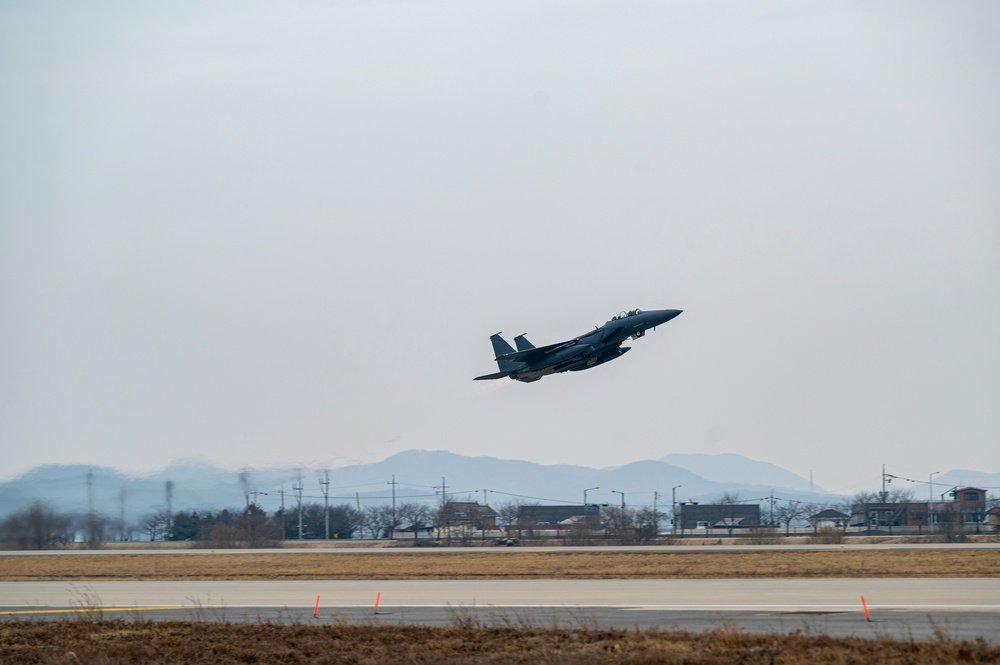
- Featured image — U.S. Air Force photo by Senior Airman Kaitlin Frazier (U.S. public domain).
- Featured image reuse terms
Related profiles