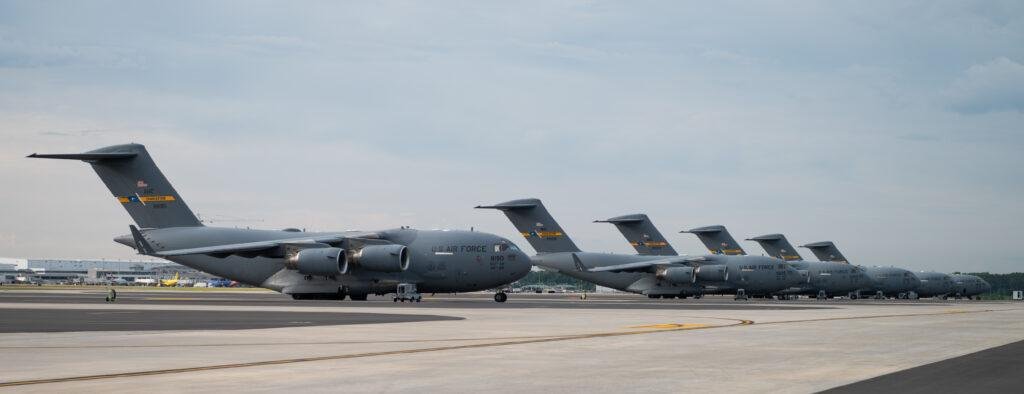
The C-17 Moscow landing is a genuine mystery after flight-tracking data confirmed a U.S. Air Force Boeing C-17A Globemaster III touched down at Vnukovo International Airport on the morning of August 25, arriving from Riga, Latvia. Neither Washington nor Moscow has explained the purpose of the flight, and the Kremlin says it has no information about it.
The visit is highly unusual. Vnukovo is the airport Moscow typically uses for U.S. government and diplomatic arrivals, and the flight comes amid renewed talk of a possible window for American mediation in the Russia-Ukraine war.
Table of Contents
What the Flight Data Shows
Flightradar24 confirmed that the aircraft, operating under callsign RCH4555 and carrying tail number 07-7181, departed Riga at approximately 8:50 a.m. Moscow time and arrived at Vnukovo at around 10:04 a.m. No further movement for the airframe has been logged since.
An unusual visitor to Moscow this morning.
Where the Aircraft Came From
Flight-tracking history for the airframe shows a multi-leg routing in the days before the Moscow arrival:
- Joint Base McGuire-Dix-Lakehurst, New Jersey
- Joint Base Lindsey Graham (formerly Joint Base Charleston), South Carolina — August 22
- Joint Base Andrews, Maryland — August 23
- Riga, Latvia — August 23
- Vnukovo International Airport, Moscow — August 25
The Andrews-to-Riga-to-Moscow sequence is notable because Joint Base Andrews is the installation that regularly handles senior U.S. government and diplomatic air travel, rather than routine cargo taskings.
The Kremlin’s Response
Asked about the flight at a briefing, Kremlin spokesman Dmitry Peskov denied having any information about it and said no meetings with U.S. administration officials were scheduled in Moscow this week.
That denial stands in some tension with separate, unverified reports of a motorcade carrying U.S. diplomatic license plates spotted in Moscow around the same time. No official connection between the motorcade and the C-17 flight has been established.
Why Vnukovo Airport Matters
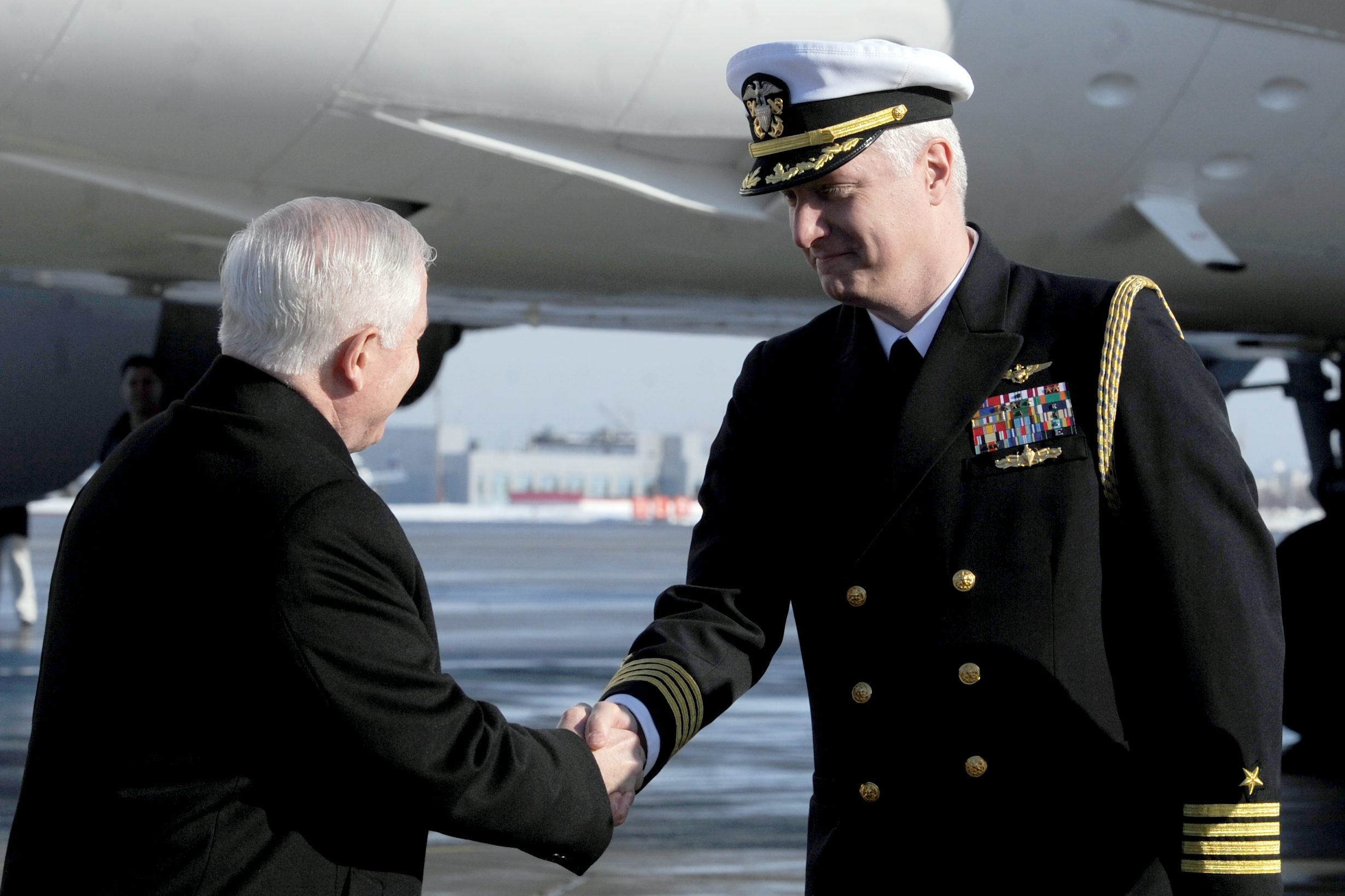
Vnukovo, one of four airports serving Moscow, has a long history as the arrival point for senior American officials visiting Russia. When U.S. envoy Steve Witkoff and Jared Kushner traveled to Moscow in January for talks with Russian President Vladimir Putin, they landed at Vnukovo aboard a U.S. government aircraft. Decades earlier, then-Defense Secretary Robert Gates arrived at the same airport for a March 2011 visit.
That history is part of why the C-17 Moscow landing, rather than a routine cargo run to a NATO country, has drawn so much attention from open-source aviation trackers and Russia-watchers alike.
The Diplomatic Backdrop
The flight comes as Ukrainian President Volodymyr Zelensky has said he has identified a potential new opening for U.S. mediation to help end Russia’s war in Ukraine. At the same time, Russian state news agency TASS reported that Witkoff and Kushner had postponed a planned Moscow visit, with an anonymous source suggesting the two officials were unlikely to travel to Moscow before the end of August.
That combination, a stated envoy visit postponed on one hand and an unexplained military aircraft arrival on the other, is what has fueled speculation without producing confirmation from either government.
FAQ: C-17 Moscow Landing
Why did a C-17 land in Moscow?
The purpose has not been officially disclosed by the U.S. or Russian governments. The Kremlin has denied having information about the flight, and no meetings between U.S. and Russian officials have been publicly confirmed for this week.
Which airport did the C-17 land at?
The aircraft landed at Vnukovo International Airport, one of Moscow’s four major airports and the traditional arrival point for senior U.S. officials visiting Russia, including the January 2026 visit by Steve Witkoff and Jared Kushner.
Is a C-17 landing in Russia normal?
No. A U.S. military aircraft landing in Russia is highly unusual, particularly given the current state of U.S.-Russia relations, which is why the flight has attracted significant attention from aviation trackers and open-source intelligence accounts.
Looking Ahead
As of this writing, neither Washington nor Moscow has offered an on-the-record explanation for the C-17 Moscow landing, and the aircraft’s onward movements had not been logged. Given the current diplomatic backdrop surrounding potential U.S. mediation in the Russia-Ukraine war, any official confirmation of the flight’s purpose would carry significant weight.
The Aviation Diary will continue tracking developments in this story and update as confirmed information becomes available.
Source
- The War Zone — USAF C-17 Makes Extremely Rare Visit To Moscow
- Newsweek — Russia Denies Knowledge of US Military Plane Tracked Landing in Moscow
- NBC News — Mystery as U.S. military transport plane lands in Moscow
- AeroTime — US Air Force C-17 tracked flying from Riga to Moscow