The Iraq helicopter sale approved by the U.S. State Department on August 31 covers two very different aircraft doing two very different jobs: a twin-engine utility helicopter Iraq has never flown before, and an armed scout joining a fleet it already knows well.
Together they’re worth an estimated $800 million, and the timing is not an accident. The sale lands one month before the U.S.-led coalition that has anchored Iraq’s security posture for over a decade is set to formally wind down its mission in the country.
Nothing about this is final yet. What happened is a congressional notification, the required first step in any U.S. Foreign Military Sale, not a signed contract. But the notification itself says a great deal about where Iraq’s rotary-wing fleet is headed next.
Table of Contents
Iraq Helicopter Sale: What the Package Includes
The State Department’s Bureau of Political-Military Affairs notified Congress of the proposed sale on August 31. Bell Textron, headquartered in Fort Worth, Texas, is named as the principal contractor. The State Department did not specify how many aircraft of each type Iraq is seeking, only the equipment and weapons attached to the package.
- GAU-19 three-barrel machine guns
- M260 seven-tube launchers for 2.75-inch (70mm) rockets
- L3Harris Wescam MX-15HDI electro-optical and infrared sensor systems
- AN/AAR-60 Block 2 missile-launch detection systems
- Very High Frequency radios, spare and repair parts, ground support equipment, and technical publications
- Pilot and maintenance training, plus U.S. government and contractor engineering and logistics support
The State Department framed the package in standard language, saying the sale would support U.S. foreign policy and national security interests by strengthening the security capabilities of a “strategic partner.” That phrasing shows up in nearly every Foreign Military Sale notice, so it says less about this specific deal than the equipment list does.
Two Helicopters, Two Different Jobs
The package pairs a twin-engine transport helicopter with a single-engine light attack platform, and the difference between them matters more than the shared price tag suggests.
The Bell 412EPX would be new to the Iraqi fleet. Built on the Subaru Bell 412EPX airframe with a gross weight around 5,535 kilograms, it is a twin-engine utility aircraft designed for troop and cargo transport, medical evacuation, and reconnaissance.
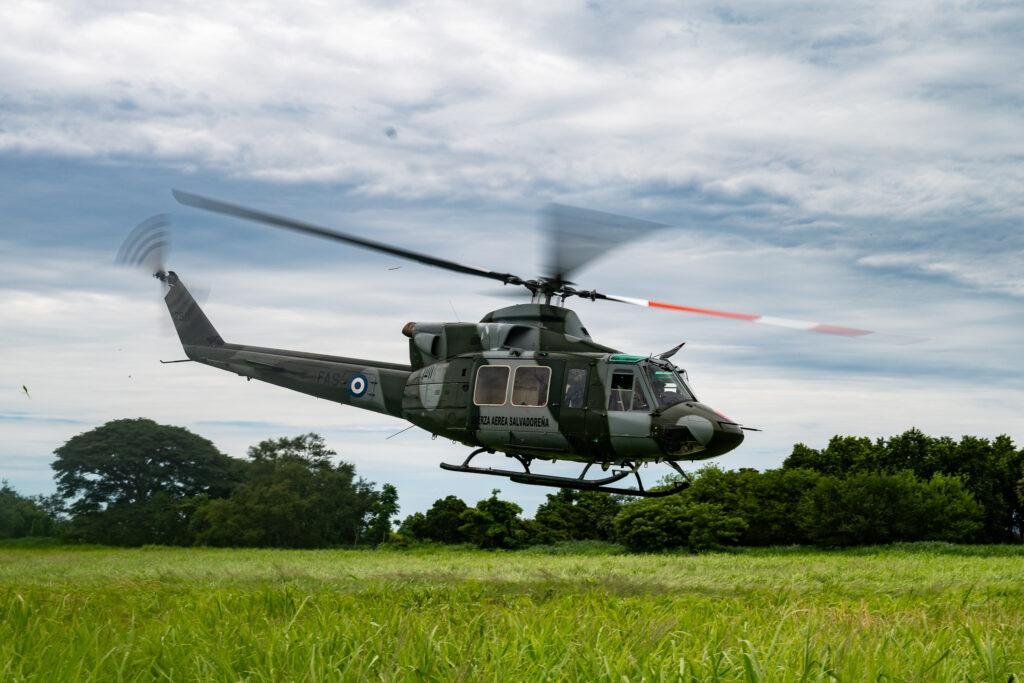
The Bell 407M, by contrast, would join helicopters Iraq already operates. Built on the lighter Bell 407GXi airframe at roughly 2,381 kilograms gross weight, it is configured for armed reconnaissance and light attack, carrying the machine guns, rocket launchers, and sensor pods listed in the notification.
That split lets the sale restructure two separate parts of Iraqi Army Aviation in a single transaction: heavier utility lift on one side, armed scout and strike capability on the other, rather than concentrating the whole package into one aircraft type trying to do both jobs.
Replacing a Russian-Built Fleet
A 2026 Department of Defense Inspector General report on Operation Inherent Resolve gives useful, if unofficial, context for where these numbers might land.
That report said Iraq’s Ministry of Defense had submitted Foreign Military Sales requests for four Bell 412EPX and 16 Bell 412M helicopters to replace Russian-made Mi-17 transports, plus 15 new Bell 407M helicopters to replace the aging 407s already in Iraq’s light-attack fleet.
Those figures should be read as background rather than confirmation. Defense News, which first reported the OIG numbers alongside this sale, was explicit that the earlier reported quantities — and the Bell 412M request specifically, a different variant from the 412EPX named in this notification — should not be assumed to match the configuration or size of the newly announced $800 million package.
What the OIG report does establish clearly is the direction of travel: Iraq has been actively working to move its helicopter fleet off Russian-sourced airframes, a shift that carries its own logic given the sanctions risk and supply-chain uncertainty attached to Russian military hardware since the invasion of Ukraine.
The Timing Is the Real Story
The notification landed on August 31. The U.S.-led coalition mission against ISIS in Iraq, Operation Inherent Resolve, is scheduled to formally conclude by September 30 — one month later. That is not a coincidence worth ignoring.
The proposed sale “will improve Iraq’s capability to meet current and future threats by improving its rotary wing transport, reconnaissance, and air-to-surface targeting capabilities.”
U.S. State Department, Bureau of Political-Military Affairs
The U.S. and Iraq have already agreed on a phased transition away from the coalition framework and toward bilateral security arrangements, and Iraq has said it is willing to formalize that relationship with the U.S. and other coalition members going forward.
A major Iraq helicopter sale approved in the same window reads less like routine procurement and more like a concrete piece of what that bilateral relationship is meant to look like once the coalition’s formal presence winds down.
What Happens Next
Congressional notification opens a mandatory 30-day review window, during which lawmakers can raise objections to a Foreign Military Sale before it proceeds. That review does not guarantee the deal closes on the terms announced — quantities, pricing, and configuration are all still negotiable and routinely shift between initial notification and signed contract in Foreign Military Sales generally.
Bell Textron has not indicated a delivery timeline for the Iraq helicopter sale, and the Iraqi government has not issued its own public comment on the proposed sale. Both are typical at this early stage — a congressional notification is the U.S. government signaling intent to sell, not the finished transaction.
FAQ: Iraq Helicopter Sale
How many helicopters is Iraq buying?
The State Department’s notification does not specify a quantity for either the Bell 412EPX or Bell 407M. A separate 2026 DoD Inspector General report referenced earlier Iraqi requests for four 412EPX, 16 412M, and 15 new 407M helicopters, but those figures predate and may not match this specific $800 million package.
Is the $800 million figure final?
No. The $800 million figure represents the estimated maximum value of the proposed package under U.S. Foreign Military Sale rules, not a final contract price. Quantities, equipment, and cost can all change during the 30-day congressional review and subsequent negotiations.
Why is Iraq buying helicopters now?
The sale was approved about a month before the U.S.-led coalition mission in Iraq is scheduled to formally conclude on September 30, 2026. It also continues a longer-running effort by Iraq to replace Russian-built Mi-17 helicopters with U.S.-made aircraft, reducing exposure to sanctions and supply-chain risk tied to Russian military hardware.
Looking Ahead
The 30-day congressional review window is the next concrete checkpoint for the Iraq helicopter sale, followed by whatever contract negotiations settle the actual aircraft count and final price. Given how routinely Foreign Military Sale figures shift between notification and signature, the numbers worth watching for are the ones that come out of that negotiation, not the $800 million topline announced this week.
The bigger thread to watch is what this sale signals about the shape of U.S.-Iraq security cooperation once Operation Inherent Resolve formally winds down. A helicopter deal alone won’t answer that question, but it’s the first concrete data point in what that post-coalition relationship is going to look like.
The Aviation Diary will continue tracking the Iraq helicopter sale as it moves through congressional review, along with broader developments in U.S. Foreign Military Sales and Iraqi Army Aviation modernization.
Source
- U.S. Department of State — official Foreign Military Sale notification
- Defense News — US Approves Possible $800 Million Military Helicopter Sale to Iraq
- Breaking Defense
- Army Recognition
- AeroTime
- The National