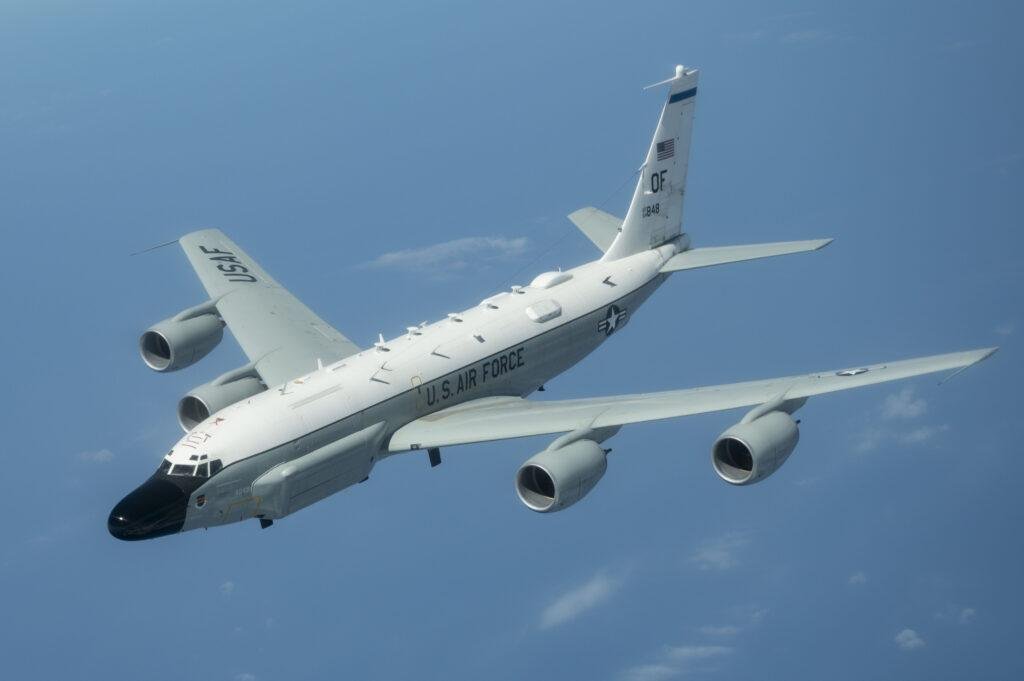
Rivet Joint UK operations resumed from RAF Mildenhall on September 2, 2026, when a U.S. Air Force RC-135W flew a 15-hour mission to the North Cape and Barents Sea area north of Norway — the first Rivet Joint flight from the Suffolk base since September 2025. The yearlong pause had coincided with intensified U.S. air operations against Iran, which pulled the specialized signals-intelligence aircraft away from Europe for the better part of a year.
The aircraft, trackable using FlightRadar24, returned to Mildenhall in the early hours of September 3. Flight data suggests the mission was a joint operation with the Royal Air Force, whose own Rivet Joint was conducting parallel intelligence-gathering from inside Finnish airspace at the same time.
Table of Contents
A Year Without Rivet Joint at Mildenhall
The 95th Reconnaissance Squadron, part of the 55th Wing, has flown regular RC-135 Rivet Joint signals-intelligence missions from RAF Mildenhall since the 1990s. That routine broke down in September 2025, when the ramp-up in U.S. air operations against Iran drew the squadron’s Rivet Joints away from Europe. With the aircraft absent from Mildenhall, USAF intelligence-gathering derivatives of the C-135 flew their Iran-related missions from Souda Bay, Crete, instead.
The gap lasted almost exactly a year. The September 2 mission over the Barents Sea marked the first time a Rivet Joint had flown from Mildenhall since the Middle East surge began.
Who Filled the Gap While Rivet Joint Was Away
Mildenhall wasn’t empty of intelligence-gathering aircraft during the pause. Other 95th Reconnaissance Squadron missions continued from the UK base using the RC-135U Combat Sent, which characterizes foreign air-defense radar systems, and the WC-135 Constant Phoenix, which samples the atmosphere for evidence of nuclear detonations — just not the signals-intelligence-focused Rivet Joint.
The Royal Air Force stepped into part of the resulting gap over Europe itself. With U.S. Rivet Joints absent from the theater, RAF Rivet Joints flew intelligence-gathering missions along Finland’s border with Russia and around the Kaliningrad Oblast, the heavily militarized Russian exclave on the Baltic Sea — part of the broader picture behind the resumption of Rivet Joint UK operations.
A Joint Mission Toward Russia’s Northern Flank
The aircraft that broke the drought didn’t fly alone. Flight-tracking data indicates the USAF RC-135W’s Barents Sea mission coincided with an RAF Rivet Joint conducting its own intelligence-gathering from inside Finnish airspace — the American aircraft operating in international airspace while its British counterpart worked closer to Russian territory.
British Rivet Joints have also been flying from Orland air base in Norway as part of Exercise Arctic Stone, operating alongside Norwegian F-35 fighters. Taken together, the pattern points toward growing NATO attention on Russia’s northern flank even as American reconnaissance assets begin returning to their pre-2025 routine in Europe.
About the Rivet Joint Fleet
The RC-135V/W Rivet Joint is a Boeing airframe carrying L3Harris-built mission systems, tasked with real-time electronic and signals intelligence collection for theater and strategic commanders. The U.S. Air Force’s fleet — roughly eight RC-135Vs, a dozen RC-135Ws and three TC-135W trainers — flies from Offutt Air Force Base, Nebraska, with forward operating locations at Elmendorf Air Force Base in Alaska, Kadena Air Base in Japan, and both RAF Mildenhall and RAF Waddington in the UK.
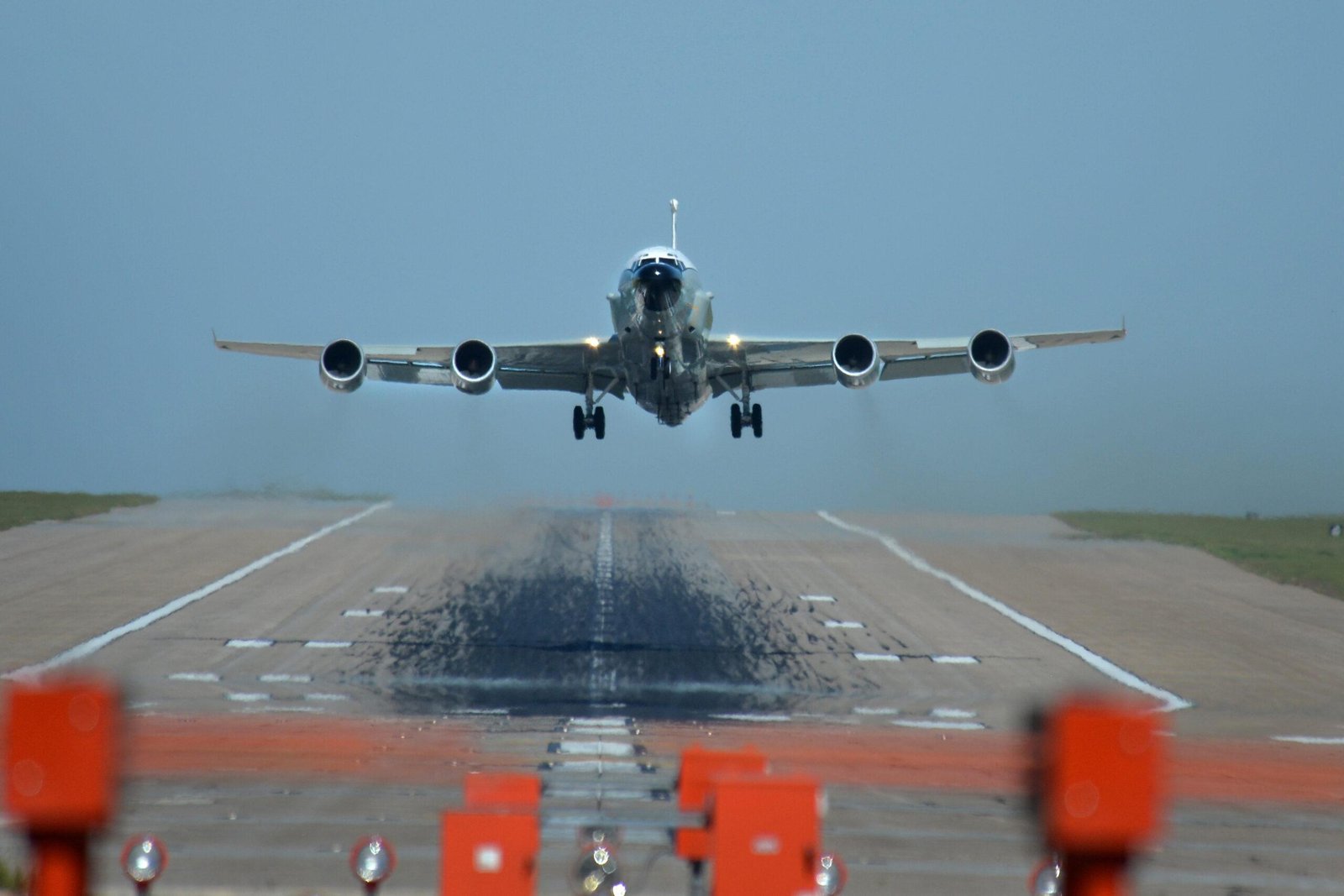
The Royal Air Force operates three of its own RC-135W aircraft, known as Airseeker under Project Airseeker, converted from former KC-135R tankers and co-manned with USAF personnel. The RAF’s Airseekers are based at RAF Waddington under No. 51 Squadron.
FAQ: Rivet Joint UK Operations
Why did Rivet Joint flights stop at Mildenhall?
Intensified U.S. air operations against Iran beginning in late 2025 drew Rivet Joint aircraft away from Europe to support the Middle East campaign, leaving Mildenhall without a Rivet Joint presence for about a year.
Does this mean fewer U.S. aircraft are needed in the Middle East now?
The resumption of Rivet Joint flights from the UK could suggest a scaling back of Middle East reconnaissance demands, though neither the Air Force nor the Pentagon has confirmed a broader drawdown.
What is the difference between Rivet Joint and the RAF’s Airseeker?
They’re effectively the same aircraft. Airseeker is the RAF’s name for its own RC-135W Rivet Joints, converted from former tanker airframes and co-manned with USAF personnel under Project Airseeker.
Looking Ahead
Neither the Air Force nor the Pentagon has said whether the September 2 flight marks a full return to Mildenhall’s pre-2025 Rivet Joint schedule or a one-off mission tied to NATO’s growing focus on Russia’s northern flank. The Aviation Diary will continue tracking Rivet Joint UK operations from Mildenhall in the weeks ahead.
Sources
- Aviation Week — USAF Restarts UK Rivet Joint Operations After Yearlong Hiatus
- Air & Space Forces Magazine — RC-135V/W Rivet Joint
- Royal Air Force — RC-135W Rivet Joint (Airseeker)