B-52 LRASM integration moved closer to a formal contracting stage on October 7, 2026, when Naval Air Systems Command published a notice anticipating a Lockheed Martin award for work on the bomber and its anti-ship missile.
The presolicitation describes software updates, associated testing, test-asset repair and failure-review work for integrating the Long-Range Anti-Ship Missile on the B-52 platform. It is an intention to negotiate, not an announcement of a completed award or an operational weapon capability.
If carried through, the effort would add a maritime-strike option to a bomber better known for long-range conventional and strategic missions. Several development, flight-test and approval steps remain before such a combination could enter service.
Table of Contents
What the B-52 LRASM Integration Notice Actually Says
The Navy notice, identified as N00019-26-RFPREQ-WPM201-0237, says Naval Air Systems Command intends sole-source negotiations with Lockheed Martin’s missiles and fire-control business under an existing basic ordering agreement.
Its described work covers adapting missile software, integration testing and engineering support for problems that arise during trials. Such tasks are common on a new aircraft-weapon pairing because the aircraft’s systems and the weapon must exchange commands and status information reliably.
The notice also explains that submissions from other responsible sources may be considered. It explicitly says the information does not bind the government to issue a contract; the public record therefore does not establish final funding, deliverables or a fielding schedule.
An Air & Space Forces Magazine report separately described the notice and sought comment from defense officials and Lockheed Martin. The public documentation reviewed does not identify the first flight-test date.
What LRASM Would Add to the B-52 Mission
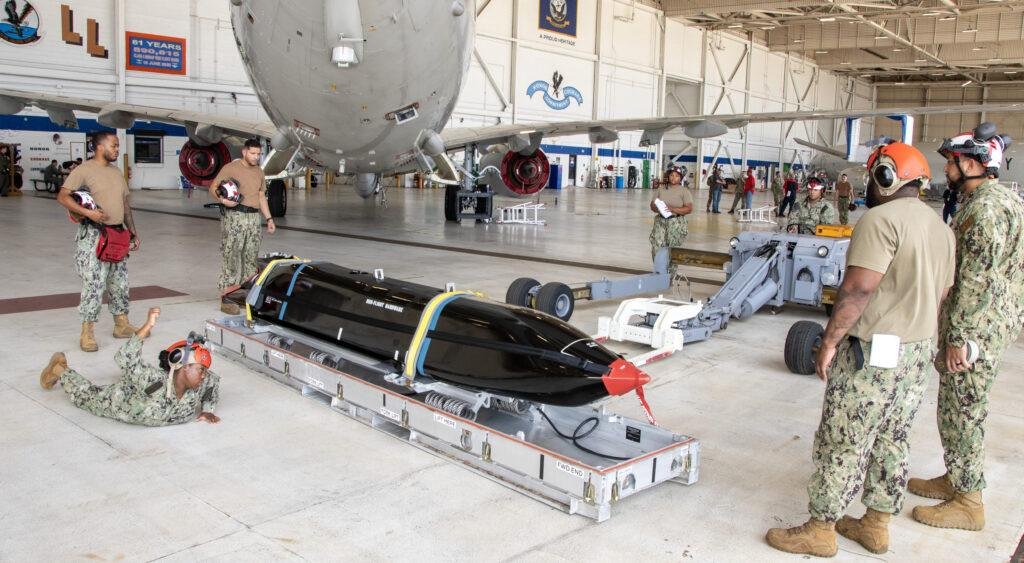
LRASM, also designated AGM-158C, is a long-range anti-ship cruise missile derived from the Joint Air-to-Surface Standoff Missile family. It is intended for engagements against maritime targets rather than the full set of land targets associated with its parent weapon.
Air & Space Forces Magazine notes that B-52s already can carry up to 20 JASSM weapons. That comparison gives an idea of potential carriage capacity, but it does not prove a certified 20-round LRASM loadout for the B-52.
A large bomber could potentially launch maritime missiles from well outside a surface combatant’s immediate surroundings. Actual employment options would still depend on targeting, communications, threat conditions, load limits and command decisions.
The Air Force already uses LRASM on other aircraft, according to the specialist report. Extending the missile to the B-52 would nevertheless require platform-specific engineering and testing.
Why This Is a Program Step, Not a Deployment
There is a difference between seeking a contractor, awarding an integration order, completing tests and declaring an operational capability. The October notice addresses the first steps in that chain.
Lockheed Martin is the missile developer and the named intended contractor. The Navy contracting organization’s role in administering the effort does not turn the B-52 into a Navy-operated aircraft; the bomber remains an Air Force platform.
B-52 LRASM integration deserves coverage because the paperwork reveals an active path toward a new weapon pairing. Its technical success, cost and eventual service availability remain open questions.
FAQ: B-52 LRASM integration
Has LRASM been certified on the B-52?
The notice reviewed concerns planned integration work, not completed certification or operational deployment.
Which contractor is named for the integration effort?
Naval Air Systems Command intends to negotiate with Lockheed Martin.
What work is included in B-52 LRASM integration?
The notice identifies missile software updates, testing, repair of test assets and engineering review work.
Looking Ahead
Watch for a signed order, government announcements of integration testing and eventual flight-test results. B-52 LRASM integration should not be reported as operational until the Air Force explicitly confirms that status.
Sources