Carrier Air Wing 9 concluded a 10-month combat deployment aboard USS Abraham Lincoln (CVN 72) on Oct. 8, the day the carrier returned to San Diego. Carrier Strike Group 3 said the air wing flew 14,037 aircraft sorties and logged 31,460 forward-deployed flight hours after embarking on Nov. 21, 2025; the carrier’s own release gives lower totals.
The deployment’s combat centerpiece was Operation Epic Fury, the U.S. campaign against Iran that began on Feb. 28. According to the air wing’s release, CVW-9 expended 1,499 precision weapons during a 38-day air and sea campaign that ended with an early April ceasefire.
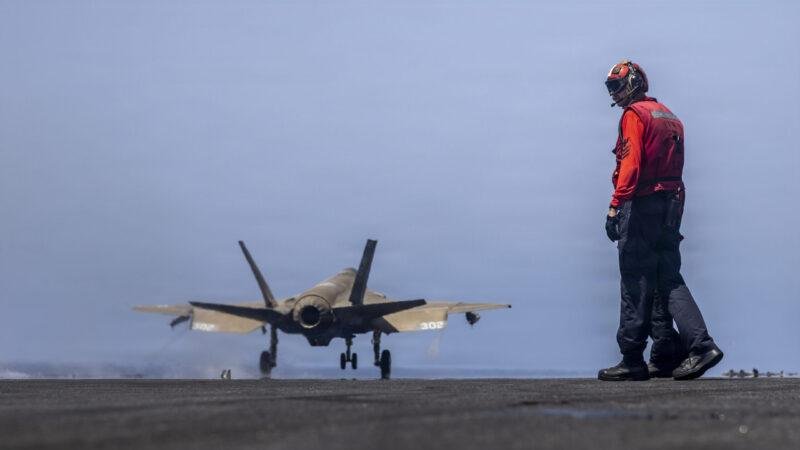
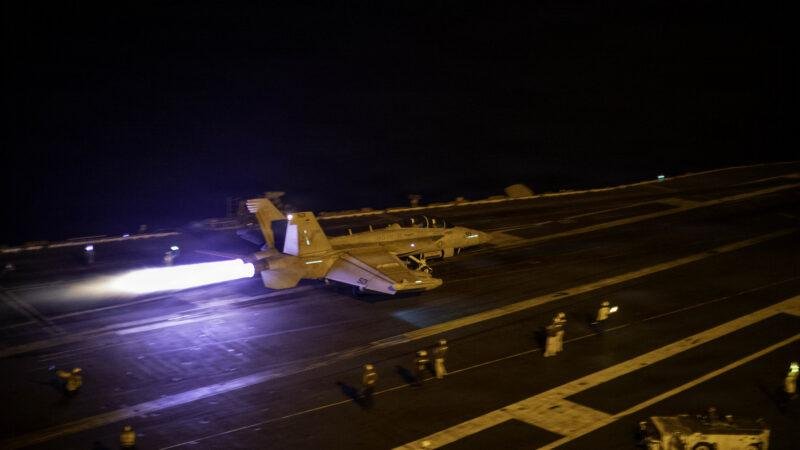
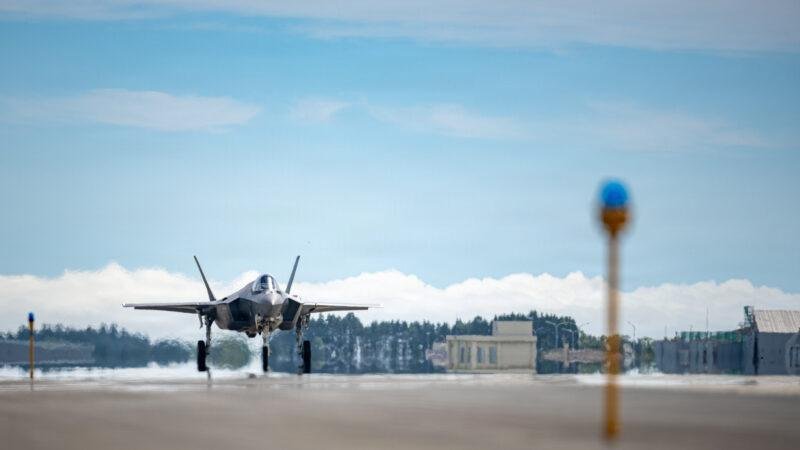
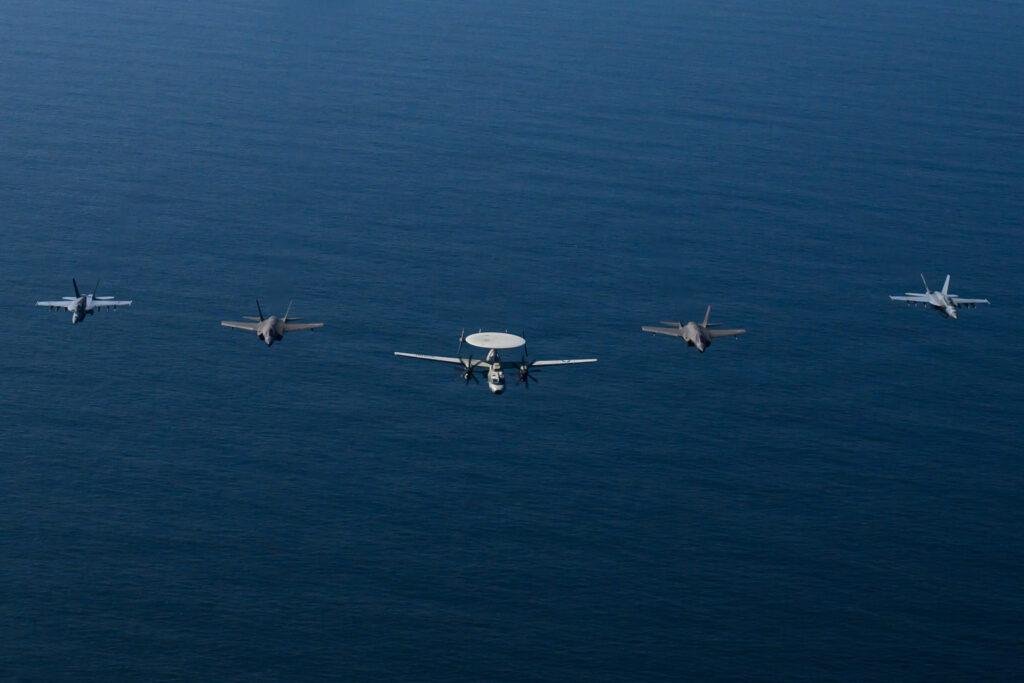
The homecoming closes the deployment TAD followed in August, when USS George Washington arrived in the Middle East to take over Lincoln’s mission. For naval aviation, the Navy is presenting the deployment as combat proof of an air wing that pairs Marine Corps F-35C Lightning II jets with F/A-18E/F Super Hornets and EA-18G Growlers, a mix it calls the “Air Wing of the Future.”
Carrier Air Wing 9’s Deployment by the Numbers
Carrier Strike Group 3’s release with the air wing’s sortie and flight-hour totals, posted to DVIDS on Oct. 9, also credits the air wing’s maintainers with self-sufficiency while operating at sea for more than 310 days.
“Our maintenance teams and aircrew sustained a relentlessly high operational tempo under demanding conditions,” said Navy Capt. Kristen Findlay, the air wing’s deputy commander. “Their performance ensured our aircraft were ready when the mission demanded it most and demonstrated that an aircraft carrier and carrier air wing remain the Navy’s premier team for generating combat power from sea.”
The carrier’s own homecoming release adds the ship-side numbers behind that flying: Lincoln steamed more than 93,000 nautical miles, conducted 72 replenishments at sea and received more than 20.5 million gallons of aviation fuel.
CVW-9’s Role in Operation Epic Fury
The air wing’s release says Operation Epic Fury was initiated under a direct presidential order on Feb. 28. CVW-9 then launched into what the Navy described as a 38-day air and sea campaign to degrade Iranian power projection capabilities, striking offensive missile sites, production facilities, military infrastructure and naval combatants.
The air wing expended 1,499 precision weapons, delivering more than 1.37 million pounds of ordnance against U.S. Central Command priority targets, while also flying defensive missions to protect the strike group.
“Pairing fifth-generation F-35C stealth and sensor fusion with fourth-generation workhorse strike and electronic attack platforms, Team Shogun destroyed Iran’s conventional Navy and secured vital maritime chokepoints in support of our commander’s objectives,” said Navy Capt. J.W. Stigi, CVW-9’s commander.
The carrier’s release says the strike group, operating as Commander, Task Force 50, took the lead role on the southern Iranian coast. It credits CTF-50 units with destroying more than 100 Iranian drone, missile and small-boat attacks against the force. After the April 8 ceasefire, the strike group enforced a blockade of Iranian-flagged vessels in the northern Arabian Sea and Gulf of Oman.
The fighting did not end with the ceasefire. The Navy said that after Iran attacked commercial shipping in the Strait of Hormuz in July, Lincoln and CVW-9 supported strikes against Iranian coastal defense systems and cruise missile storage and launch sites. The strike group then supported a second naval blockade until it left the Central Command area on Aug. 22.
The Nine Squadrons of Carrier Air Wing 9
According to the Navy, CVW-9 deployed with nine squadrons, and the carrier’s release says the strike group carried more than 70 fixed-wing and rotary-wing aircraft:
- Marine Fighter Attack Squadron (VMFA) 314, flying the F-35C Lightning II
- Strike Fighter Squadrons (VFA) 14, 41 and 151, flying the F/A-18E/F Super Hornet
- Electronic Attack Squadron (VAQ) 133
- Airborne Command and Control Squadron (VAW) 117
- Helicopter Maritime Strike Squadron (HSM) 71
- Helicopter Sea Combat Squadron (HSC) 14
- Fleet Logistics Multi-Mission Squadron (VRM) 30
The Navy credits the air wing’s mix of fifth- and fourth-generation aircraft with letting CVW-9 penetrate highly contested airspace. TAD earlier covered VMFA-314 F-35C launches from Lincoln during the blockade.
How the Two Navy Releases’ Totals Differ
The carrier’s homecoming release gives different numbers from the air wing’s: it says Lincoln’s crew supported more than 13,000 aviation sorties from CVW-9 aircraft, totaling 28,500 flight hours. It says the strike group supported 40 days of major combat operations involving nearly 4,000 CVW-9 combat sorties, with the air wing delivering more than 1.5 million pounds of ordnance.
Neither release explains how its totals were counted nor reconciles them with the other’s, so TAD attributes each figure to the release that published it.
USS Abraham Lincoln’s 321-Day Deployment
Lincoln left San Diego on Nov. 21, 2025, and returned 321 days later. Along the way, it crossed the Pacific, passed through the San Bernardino Strait, Surigao Strait and Strait of Malacca, and operated in the South China Sea, Indian Ocean and North Arabian Sea.
The ship made brief overnight supply stops in Guam in December 2025 and September 2026 and in Duqm, Oman, in July 2026, and made a port call in Pattaya, Thailand, from Sept. 2 to 6. The Navy says the ship’s 208 uninterrupted days at sea between Guam and Oman and its 286 consecutive days at sea between San Diego and Thailand are record-breaking marks for modern aircraft carriers. A DoD News report on Secretary of War Pete Hegseth’s visit to the ship put its streak at sea without a port call at 264 consecutive days.
“This team is literally rewriting the book of what an aircraft carrier is capable of,” said Capt. Dan Keeler, Lincoln’s commanding officer. According to a separate DoD News report, Lincoln’s commanding officer also addressed concerns about the crew’s quality of life during the deployment, speaking at a press conference after the ship arrived at Naval Air Station North Island.
FAQ: Carrier Air Wing 9 Deployment
Which aircraft flew with Carrier Air Wing 9?
The Navy names the F-35C Lightning II, F/A-18E/F Super Hornet and EA-18G Growler among the air wing’s aircraft. The F-35Cs belong to Marine squadron VMFA-314, one of the air wing’s nine squadrons.
How many sorties did Carrier Air Wing 9 fly?
The air wing’s release says 14,037 aircraft sorties over the full deployment. The carrier’s release says more than 13,000 sorties, and separately cites nearly 4,000 CVW-9 combat sorties during 40 days of major combat operations in Operation Epic Fury.
How long was USS Abraham Lincoln deployed?
The carrier departed San Diego on Nov. 21, 2025, and returned on Oct. 8, 2026, which the Navy counts as 321 days.
Looking Ahead
The Navy says CVW-9’s sailors and Marines now move into a period of rest and recovery. The strike group’s deployment is not fully over: destroyers USS Spruance and USS Michael Murphy remain underway in the 7th and 5th Fleet areas of operations. Neither Navy release gives a date for the air wing’s next deployment.
Sources
- Carrier Strike Group 3 via DVIDS — Carrier Air Wing 9 completes 10-month combat deployment
- USS Abraham Lincoln (CVN 72) via DVIDS — USS Abraham Lincoln (CVN 72) returns to San Diego after 10-month combat deployment
- DoD News — USS Abraham Lincoln Returns to San Diego After 10-Month Combat Deployment
- DoD News — Hegseth Visits USS Lincoln Ahead of Homecoming After Record-Breaking Deployment
- DoD News — USS Lincoln Leadership Sets Record Straight on Quality-of-Life Concerns
- DVIDS — F-35C Lightning II of VMFA-314 prepares to launch from USS Abraham Lincoln, Oct. 1, 2026 (photo caption)