Artemis II heat shield analysis released by NASA on Oct. 15 found that Orion’s thermal protection performed in line with the agency’s preflight expectations during the crewed spacecraft’s return from the Moon. Engineers reported substantially less char loss than on the earlier uncrewed Artemis I mission.
NASA said its detailed assessment confirmed initial data indicating the heat shield protected the astronauts and spacecraft systems during reentry. The report followed inspections and testing of the returned crew module, including evaluation of the ablative Avcoat material used on the shield.
The findings concern a completed flight and subsequent engineering analysis. They should not be confused with a new Artemis II launch or a claim that all future Orion heat-shield work is finished.
Table of Contents
Artemis II Heat Shield Shows Reduced Material Loss
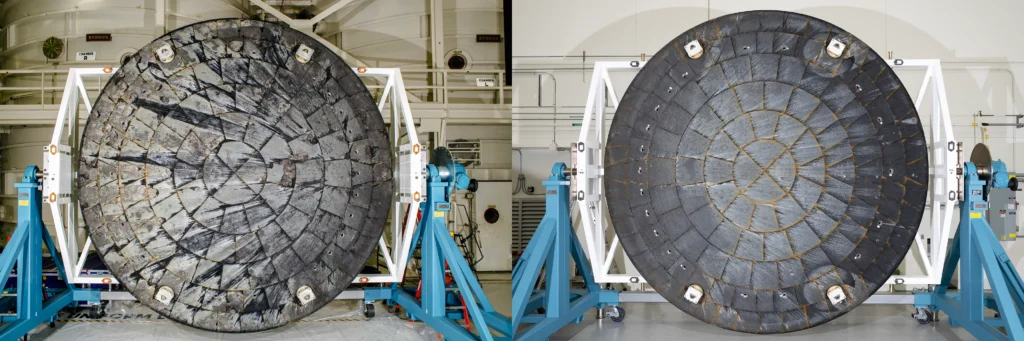
NASA reported nine areas of char loss of varying sizes on the Artemis II heat shield dish, compared with 103 during Artemis I. The agency associated the lower number with changes to the reentry trajectory and said cracking and char loss were reduced by a factor of ten.
Those numbers describe specific post-flight inspection observations, not a simple measure of total risk or a comparison of crew experience. NASA characterized the performance as consistent with its aerodynamic and aerothermal predictions and relevant ground-test work.
The heat shield consists of 186 individual blocks of Avcoat, an ablative material designed to protect the capsule during the high-energy return through Earth’s atmosphere. Ablative protection is expected to change as it absorbs and sheds heat, making inspection of the resulting material condition essential.
NASA said Orion reached speeds up to 39 times the speed of sound during reentry, with peak external temperatures exceeding 4,000 degrees Fahrenheit. The report said cabin temperature remained in the mid-70s Fahrenheit, an indicator of the protective system’s performance under the flight conditions described by the agency.
Engineers Examine Returned Orion Hardware
After splashdown and recovery, the crew module returned to Kennedy Space Center, where thermal protection specialists began additional examination. NASA subsequently moved the heat shield to Marshall Space Flight Center for sample extraction and internal x-ray analysis.
The work began in August, according to the agency, and was intended to help engineers understand how the material behaved below the visible surface. A photograph of the exterior alone cannot establish the internal condition of each Avcoat block, so laboratory inspection contributes evidence beyond the appearance of the returned capsule.
NASA’s assessment also addressed Orion’s backshell, the protective structure around the sloped sides of the crew module. It said the backshell used approximately 1,300 ceramic tiles, and inspections found the features protecting penetrations such as windows and vents had behaved as expected.
The agency reported no signs of overheating in those reviewed areas. That is a specific finding for the completed mission, not a blanket guarantee that every future mission will encounter identical reentry conditions.
What the Results Mean for Future Lunar Flights
The Oct. 15 analysis is relevant because Artemis II carried astronauts around the Moon and back on Orion’s first crewed mission. Demonstrating thermal protection during the actual mission provides a different type of evidence from tests conducted before a spacecraft flies.
The comparison with Artemis I is especially useful because it links changes in reentry approach to measured differences in heat-shield condition. However, interpretation should stay within what NASA disclosed; the release does not provide a complete independent engineering dataset for every area of the spacecraft.
For future Orion missions, NASA and its contractors will use post-flight findings as part of broader vehicle assessment and preparation. The published report does not itself announce an additional test flight, manufacturing redesign or revised launch date.
Readers following TAD space reporting should distinguish the heat-shield findings from separate Artemis III booster assembly news, which concerns ground preparations for another mission.
FAQ: Artemis II heat shield
Did the Artemis II heat shield protect the crew?
NASA said its post-flight analysis confirmed thermal protection performance consistent with expectations during the crewed return to Earth.
How much char loss did the Artemis II heat shield show?
NASA reported nine spots of char loss compared with 103 on Artemis I, and attributed improved results to the revised reentry trajectory.
Was the analysis based only on photographs?
No. NASA described physical inspections, sample extraction and x-ray work in addition to broader review of flight data.
Looking Ahead
The Oct. 15 release did not set a date for a new shield qualification milestone. Subsequent NASA engineering and mission-readiness updates will show how the Artemis II findings inform preparations for later Orion flights.
Sources