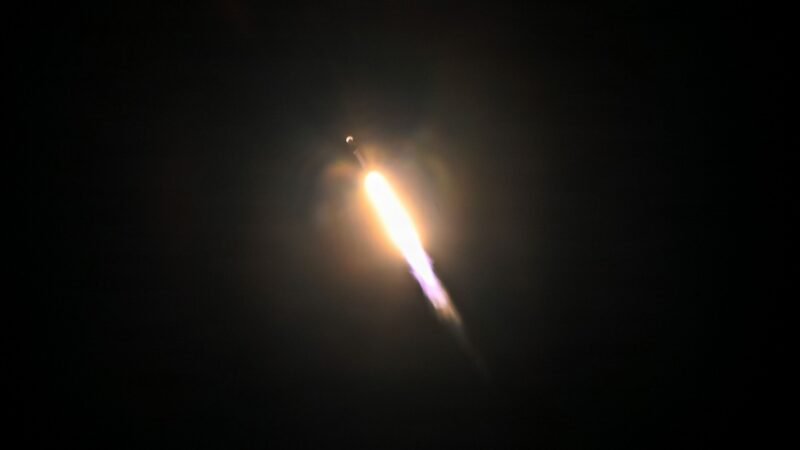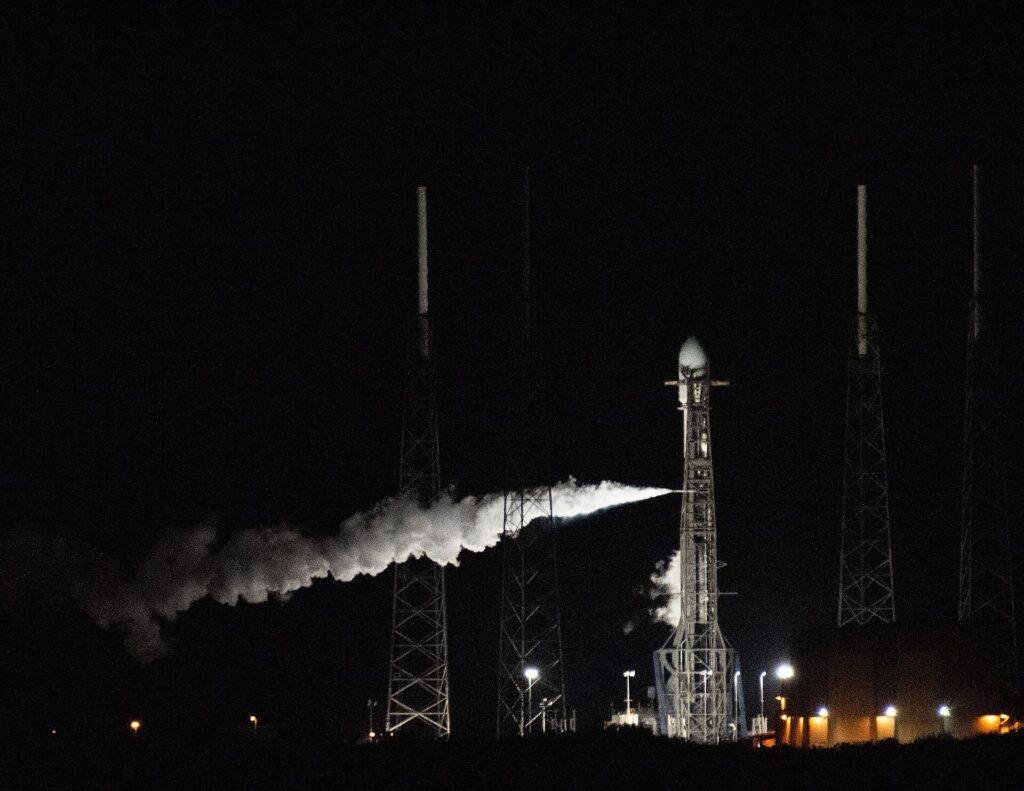
Rocket Cargo researchers at the Air Force Research Laboratory used a SpaceX Starfall reentry capsule during an October 20, 2026, test to collect information about how sensitive supplies might withstand rocket launch and atmospheric return. AFRL described the activity as a research demonstration intended to inform possible future rapid-delivery logistics for military users.
The announcement should not be confused with an operational cargo route or a launch that occurred October 27. The demonstration involved representative items and instrumented pods, not a declaration that routine point-to-point rocket delivery is available to commanders. The work is an experiment in transporting equipment through demanding flight environments.
Table of Contents
Rocket Cargo Test and the Starfall Capsule
AFRL’s official announcement describes the Rocket Cargo technology effort and the use of a SpaceX Starfall reentry vehicle. The program is exploring whether launch and return vehicles could eventually carry important supplies more rapidly than conventional long-distance transport under particular circumstances. The October event focused on collecting technical evidence, not validating a finished logistics service.
The research included pods equipped to measure conditions experienced by cargo. Data from the flight may help engineers understand the mechanical and thermal environments for items carried by rocket and reentry systems. The presence of instruments does not, by itself, prove that any type of military equipment can be delivered safely without added design or packaging work.
What the Instrumented Cargo Was Measuring
Rocket launch introduces accelerations, acoustic loads and vibration that can differ sharply from those encountered in aircraft cargo holds. Reentry also creates heat and dynamic forces that must be managed by the vehicle and its payload containers. A credible rocket-logistics program needs measured data about all of these conditions before it can establish cargo limits.
AFRL identified representative payloads including communications-related items, batteries, medical equipment and water-processing technology. The purpose was to examine stresses and survivability during the test sequence. The list is not evidence that the military placed an operational resupply order for any of those items or that a receiving unit used them in the field.
Why Rocket-Based Logistics Is Being Studied
Conventional military logistics depends on aircraft, ships, road vehicles and established supply chains. A rocket-based method could theoretically deliver some cargo across long distances on a different timeline, but its utility would depend on launch availability, payload size, handling requirements, landing locations and overall cost. It would complement rather than automatically replace all existing delivery systems.
Speed alone is insufficient to prove operational value. Planners must account for time to prepare a launch, restrictions around reentry and recovery, and the ability to move supplies from a landing site to the people who need them. earlier TAD coverage has covered a separate Rocket Lab satellite launch, demonstrating the difference between access to space and a sustained cargo-delivery service.
Limits of the October Demonstration
The October flight provided experimental observations, not a complete commercial or military service certification. The public release does not specify a routine delivery cadence, an approved network of landing sites or an inventory of operational Starfall cargo missions. Those details are important because a successful research flight cannot be generalized into a proven logistics system.
AFRL will need to interpret the instrumented data and identify which cargo classes can tolerate the measured conditions. Technical refinements to packaging, interfaces or recovery procedures may follow. For now, the supported conclusion is that researchers used a Starfall reentry test to gather evidence relevant to future military cargo-delivery concepts.
FAQ: Rocket Cargo
When did the Rocket Cargo trial occur?
AFRL described the Starfall research demonstration on October 20, 2026.
Was this an operating cargo-delivery service?
No. It was a test involving representative payloads and sensors, not a regular military supply network.
What was the main purpose of the flight?
Researchers sought data about launch and reentry conditions affecting potential cargo, including vibration and other stresses.
Looking Ahead
The next milestone will be analysis of the collected flight data and any further system trials AFRL and its partners announce. No public schedule for routine SpaceX Starfall cargo deliveries was established in the October research report.
Sources
afresearchlab.com — original announcement