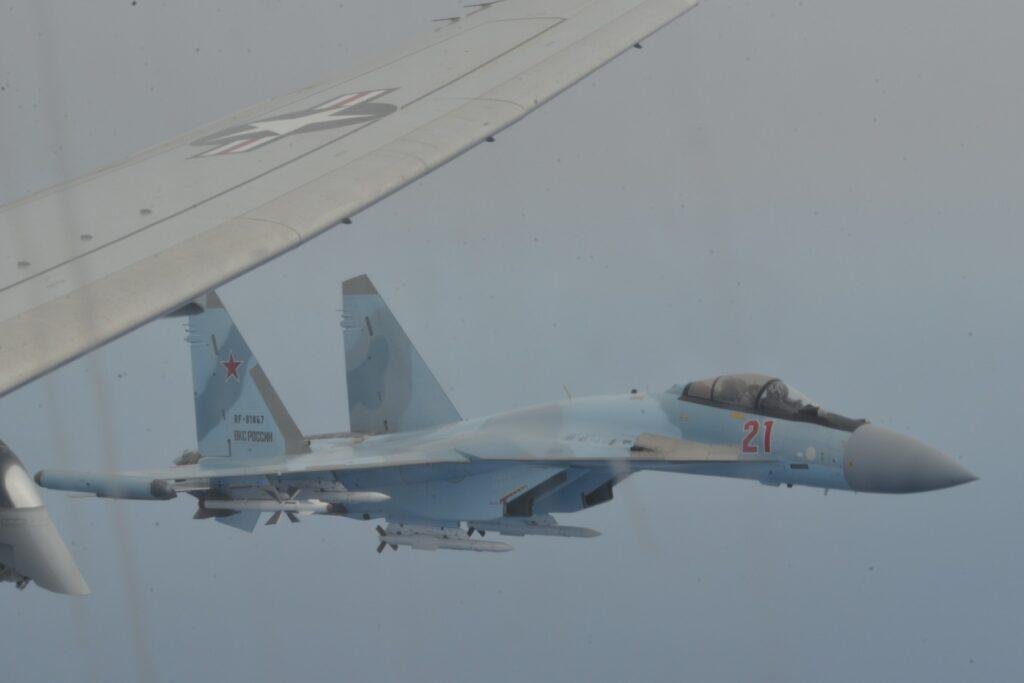
Ethiopia Su-35 fighters have been delivered under an agreement with Russia, but public accounts differ over the number received on Oct. 28, 2026. Ethiopian Prime Minister Abiy Ahmed announced that 12 jets had been delivered, while Russian state arms exporter Rosoboronexport told Reuters that the first batch consisted of two aircraft. The discrepancy remains unresolved in the sources available to TAD.
Abiy also said Ethiopia would receive four batteries of Russia’s S-400 air-defense system at a later stage. He did not disclose the value of the agreement, the location of the aircraft or a delivery date for the missile systems. The reported aircraft handover and the promised ground-based air defenses are therefore separate milestones, not one completed package.
Table of Contents
Ethiopia Su-35 Fighters: Two Delivery Accounts
The Ethiopian News Agency relayed Abiy’s statement that the country had taken delivery of its first 12 Su-35 fighters. The prime minister said Russia brought the transfer forward by about one year under a previous agreement. The official Ethiopian account described the move as part of a military modernization effort aimed at strengthening deterrence and defense of national airspace.
The primary announcement provides the source details behind this report.
Reuters reported a narrower account from Rosoboronexport, the Russian state arms exporter, which said the first two fighters were delivered to Ethiopia that day. It is possible that the two statements refer to different interpretations of the schedule, but neither source reconciles the numbers publicly. TAD is not treating the 12 as independently verified aircraft present in Ethiopia.
S-400 Batteries Remain a Future Acquisition
Abiy’s accompanying statement concerned four S-400 batteries, describing them as equipment the country is set to receive. Neither a publicly verified delivery date nor a location for those batteries was provided. As a result, the S-400 announcement should be recorded as an intended or agreed future transfer rather than a completed delivery.
Long-range ground-based air defenses and fighter aircraft address different roles within a national air-defense network. They can be discussed as complementary systems, but the announcement did not disclose training, radar integration, basing or a combined operational concept. Those details would be required to evaluate how quickly the acquisitions could affect day-to-day readiness.
Why the Fighter Delivery Matters in the Region
The Su-35 is a twin-engine multirole fighter developed from the Russian Flanker family. Its acquisition gives Ethiopian officials a potential route toward newer sensors and weapons than those on legacy aircraft, although the exact weapons and support package have not been publicly itemized. Announcement of a platform does not itself prove that crews have completed conversion or that all support equipment is in-country.
The development comes amid serious security tensions in the Horn of Africa. Reuters cited renewed fighting in northern Ethiopia and deteriorating relations with neighboring Eritrea. Those conditions provide context for Abiy’s deterrence language, but the government announcement did not identify a specific operation for the Su-35 or establish that the newly delivered aircraft have flown combat missions.
Contract Terms and Readiness Are Unclear
Neither Ethiopia nor Russia has published the contract price, payment mechanism, basing plan or full delivery timetable in the cited reports. Readers should also avoid confusing a public handover ceremony with delivery of every aircraft covered by an agreement. Photographs of a small number of jets cannot settle a fleet-wide total without corresponding official acceptance information.
The dispute over counts is important for the record because one account is from the recipient’s prime minister and the other from the exporting organization. A responsible article must preserve both, not silently select the more dramatic figure. Until the parties provide an inventory or a reconciled schedule, operational conclusions should be limited.
For relevant background, TAD separately reported the first two Canadian CF-35A aircraft reaching a U.S. training base.
FAQ: Ethiopia Su-35 fighters
How many Ethiopia Su-35 fighters were delivered?
Abiy Ahmed said 12, while Rosoboronexport told Reuters the initial batch contained two. The difference has not been reconciled.
Have Ethiopia’s S-400 batteries arrived?
No verified report in the cited material confirms delivery; Abiy described four batteries as a future transfer.
Has the contract price been announced?
No. The sources did not publish a price, basing locations or a complete delivery schedule.
Looking Ahead
Ethiopia Su-35 fighters will remain a major reporting subject until Ethiopia and Russia clarify the delivered total and provide more detail on training and service integration. TAD would treat an official acceptance record, aircraft arrival at Ethiopian bases or a new exporter statement as a substantive follow-up. The S-400 delivery schedule is still unannounced.
Sources
- Ethiopian News Agency — Prime Minister on Su-35 acquisition
- Reuters — Su-35 deliveries and exporter confirmation
- Aviation International News — two initial fighters