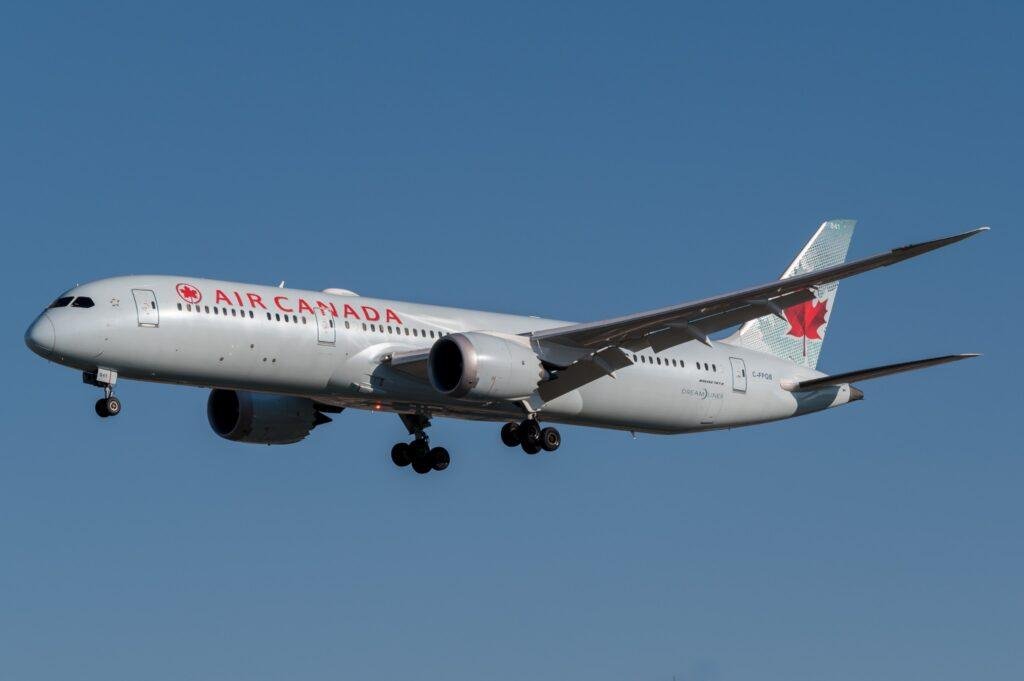
Boeing 787 sealant inspections will become mandatory for certain Dreamliner aircraft under a Federal Aviation Administration airworthiness directive published on Nov. 2. The rule covers specified 787-8, 787-9 and 787-10 aircraft after required production checks of some fuel-tank sealant installations could not be documented.
The directive, AD 2026-22-05, takes effect on Dec. 7, 2026. Operators must carry out detailed examinations and sealant adhesion testing in identified areas of the center wing fuel tank, with repairs when the findings require them. The FAA is addressing a possible ignition risk, not reporting that an explosion has occurred.
According to the agency’s cost analysis, approximately 60 U.S.-registered aircraft are affected by the rule. The number is an FAA regulatory estimate, not the size of the entire global 787 fleet or a claim that every Dreamliner has defective sealant.
Table of Contents
Boeing 787 sealant inspections target production oversight gap
The FAA said some sealant installations inside the center wing fuel-tank volume lacked evidence of the visual and adhesion inspections required during manufacturing. It identified areas around the left, right and center wing side-of-body structure, including locations between the side-of-body rib and rib two.
A missing inspection record is not, by itself, proof that a sealant joint has failed. The regulator requires operators to examine the installation and perform adhesion tests so that any defects can be detected and corrected. The distinction explains why the directive calls for work on specified airplanes rather than declaring an immediate grounding of the worldwide 787 fleet.
The FAA linked the unsafe condition to the possibility of an ignition source in a fuel tank during a lightning-strike event. Aircraft fuel-tank safety rules are intended to prevent combinations of flammable vapor and ignition energy. The directive addresses that potential chain of events before it causes a reported accident.
Inspections, adhesion tests and possible repairs
The rule incorporates Boeing Alert Requirements Bulletin B787-81205-SB570053-00 RB, Issue 001, dated Nov. 5, 2025. It specifies detailed visual checks for sealant and surface depression defects and adhesion tests in the identified structural locations. Operators must also perform the associated on-condition actions when inspections identify a problem.
Those follow-on actions may require approved repair instructions from Boeing and completion of the repair. The rule includes compliance provisions and recognizes alternative methods of compliance subject to FAA approval. Operators should use the exact regulatory and service information, not a simplified public news description, to determine maintenance scheduling.
The final rule follows a proposal and public comments. Airlines, Boeing and safety advocates offered feedback on technical details, including how the required adhesion test should be understood and whether other repair methods could be permitted. The FAA issued the final directive after considering those comments.
FAA cost estimate and implications for operators
The FAA estimated 34 work-hours for the required inspection and adhesion test, using an $85 hourly labor rate. That produces an estimated $2,890 per aircraft and $173,400 across the 60 U.S.-registered airplanes in the agency’s calculation. Those figures exclude any repairs that may become necessary after the inspections.
The FAA said it had insufficient data to estimate the cost of on-condition repairs. It also noted that manufacturer warranties may cover some expenses, so the regulatory estimate should not be read as a confirmed charge to each airline. Actual maintenance time and commercial effects will depend on individual aircraft configurations and findings.
The Aviation Diary has also covered a separate FAA inspection directive affecting Boeing 737NG aircraft. That earlier rule addresses a different aircraft and unsafe condition; the two should not be combined into one compliance claim.
FAQ: Boeing 787 sealant inspections
Which models are covered by Boeing 787 sealant inspections?
The FAA names certain 787-8, 787-9 and 787-10 airplanes identified in Boeing’s referenced requirements bulletin, not every aircraft of those models.
When does the new directive take effect?
AD 2026-22-05 becomes effective Dec. 7, 2026, with compliance times specified through the directive and incorporated Boeing instructions.
Does the rule say a Boeing 787 fuel tank exploded?
No. The FAA is addressing a potential ignition risk from possible sealant defects; the directive is preventive regulatory action.
Looking Ahead
Airlines and maintenance organizations will determine applicability for their individual aircraft and plan work to the formal deadlines. Inspection results, any repair findings and future FAA revisions could refine the operational impact. No new fleet-wide grounding was announced by this final rule.
Sources