Starship Flight 15 reached orbit and deployed a group of Starlink satellites on Nov. 13, 2026, but SpaceX’s planned recovery demonstration did not unfold as intended. The Super Heavy booster was lost after a problem prevented the intended tower catch, leaving the upper-stage spacecraft to continue a separate sequence in orbit.
The launch from Starbase, Texas, was intended to advance two related goals: demonstrating the next step in booster reuse and preparing the spacecraft for an orbital recovery attempt. The successful payload deployment and the booster loss must be assessed separately rather than treating the mission as either a complete success or a complete failure.
Table of Contents
What Starship Flight 15 achieved in orbit
According to launch coverage, the Starship upper stage reached the planned orbital phase and deployed 26 Starlink satellites. Deployment is evidence of progress in the vehicle’s ability to carry payloads into space. It does not establish that every element of the vehicle’s reusability and controlled-return program has been demonstrated successfully.
The distinction matters because Starship’s long-term economic and operational case depends on more than launching a payload. SpaceX seeks to operate a reusable two-stage system in which both the booster and the spacecraft can be recovered. Achieving orbit and releasing satellites addresses one mission objective, while the recovery sequence tests another.
Why the Super Heavy booster was not caught
SpaceX had planned to return the Super Heavy booster to the launch tower for a catch using the pad’s mechanical arms. During the Nov. 13 mission, the planned catch could not be completed. Reports described a booster failure that ended with the vehicle falling into the Gulf rather than being recovered at the tower.
The publicly available accounts at the time did not provide a final engineering investigation of the failure. A cause should not be assigned to a particular engine, control surface or subsystem merely because the booster was lost. SpaceX’s subsequent technical review, if released, will be needed to distinguish an observed outcome from its underlying mechanism.
Orbital recovery remained a separate objective
A different aspect of the demonstration concerned the upper-stage Starship. The mission profile called for the spacecraft to remain in orbit before a planned recovery operation on Nov. 14. At the time of the initial Nov. 13 reporting, that sequence had not yet occurred, so its outcome could not be described as confirmed.
This longer-duration profile differs from test flights that focused on suborbital or shorter flight sequences. Time spent in orbit provides an opportunity to evaluate systems before attempted return, but the duration by itself does not prove a safe reentry or recovery. Successful descent requires a later, independently observed milestone.
What the flight means for SpaceX development
Starship is designed as a large launch system supporting satellite delivery and SpaceX’s broader exploration ambitions. Its test program has progressed through demonstrations of propulsion, separation, reentry and attempted reuse, with each flight producing different evidence about the vehicle. A mixed result may still advance development while leaving key capabilities unproven.
TAD previously covered Starship Flight 14’s orbital milestone. Flight 15 adds another orbital and payload-deployment result but also another booster recovery question. Comparisons between the missions should distinguish what was planned, what was observed and what remains subject to review.
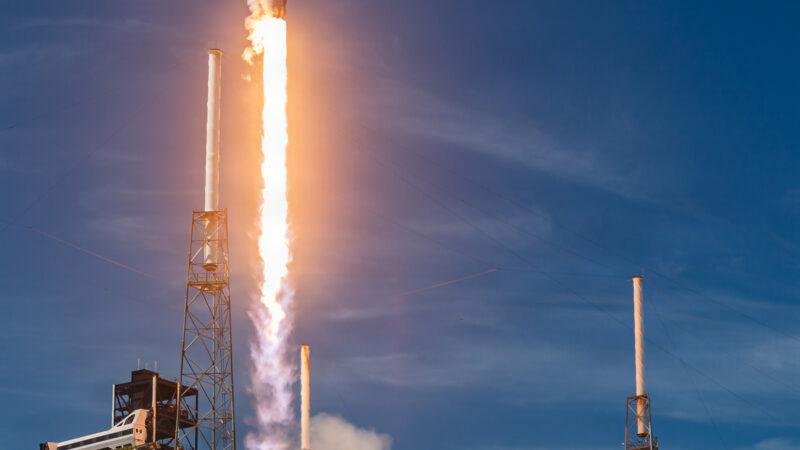
One detail also matters when using photographs: the licensed launch image selected for this story depicts an earlier Starship mission, not Flight 15. The file photograph can illustrate the launch vehicle, but it cannot establish what happened to the Nov. 13 booster or upper stage. Those mission results come from SpaceX statements and contemporary launch reporting.
FAQ: Starship Flight 15
Did Starship Flight 15 reach orbit?
Yes. Reporting on the Nov. 13 launch says the upper stage reached orbit and deployed 26 Starlink satellites.
Was the Super Heavy booster recovered?
No. The planned tower catch did not take place, and the booster was lost after the launch.
Did the Starship spacecraft return on Nov. 13?
Its separate return demonstration was planned for Nov. 14. The launch-day reporting did not establish the result of that later operation.
Looking Ahead
SpaceX’s next technical disclosures will determine how the booster-loss event is classified and what additional tests are needed. Any claim about the planned Nov. 14 upper-stage recovery must be updated only after its actual outcome is verified from the company or independent tracking.
Sources