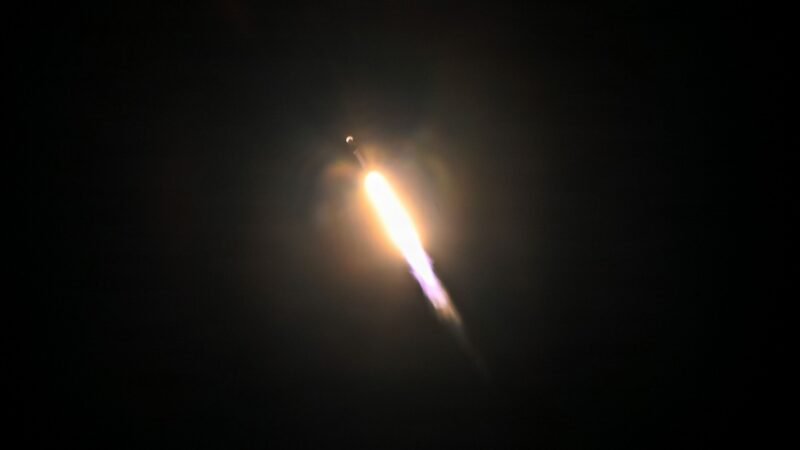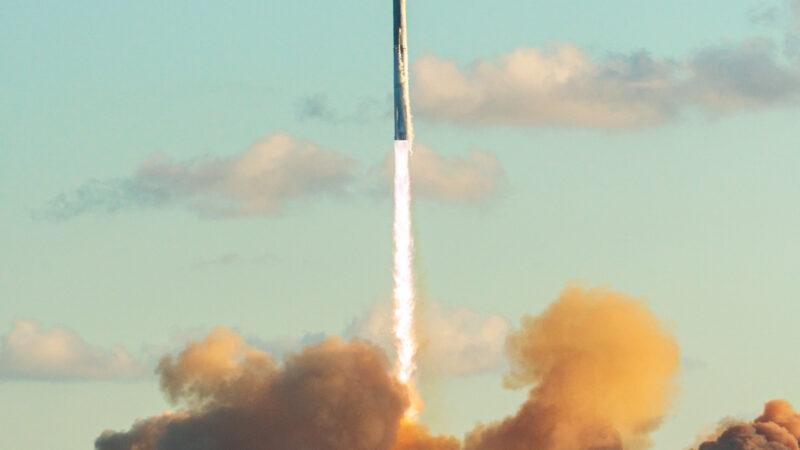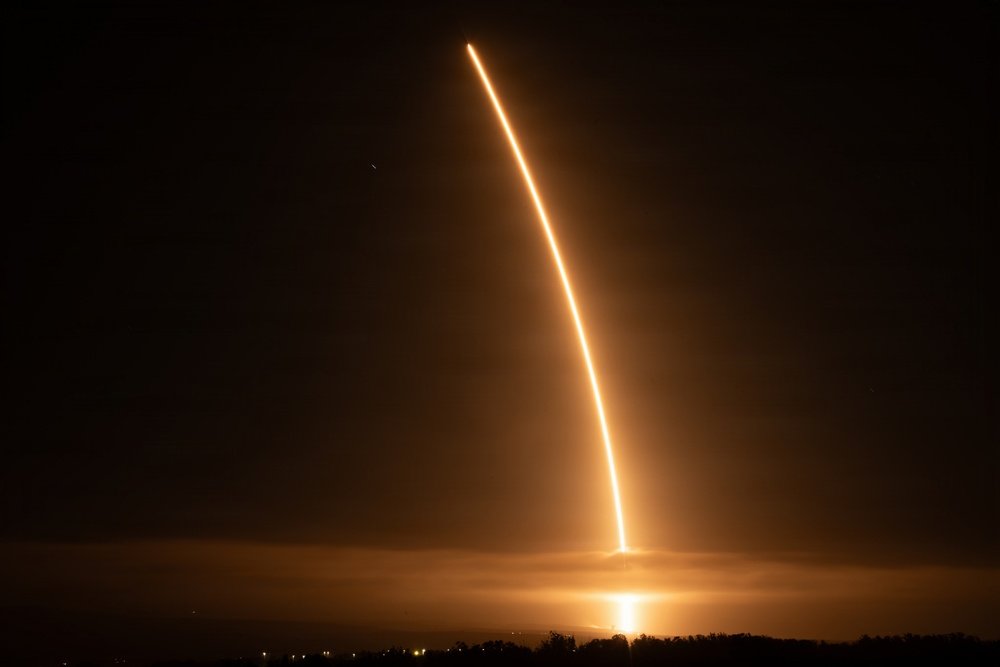
The NROL-136 launch took off from Vandenberg Space Force Base on Sunday, November 22, sending another National Reconnaissance Office mission into orbit on a SpaceX Falcon 9. Liftoff from Space Launch Complex 4 East came at 4:23 a.m. Pacific time, according to Spaceflight Now’s live coverage. The first stage returned to Vandenberg after separating from the upper stage.
The launch came about 32 hours after another national-security flight, USSF-317, lifted off from the same pad. TAD covered the earlier USSF-317 launch from Vandenberg. Sunday’s flight added a second closely spaced departure to that timeline and used a booster with 13 previous flights.
Table of Contents
NROL-136 launch follows USSF-317 from the same pad
The Friday and Sunday missions came from the same Falcon 9 launch complex and carried separate government mission designations. The roughly 32-hour interval measures liftoffs from USSF-317 to the NROL-136 launch. The first stage used Sunday had its own flight history, and its landing belongs to a different set of milestones from the launch complex reopening for another flight.
Spaceflight Now reported that the 32-hour interval set a new turnaround record for the pad. Its previous mark, set in June, was nearly 56 hours. The comparison describes the time between liftoffs at this particular launch complex. Other Vandenberg launches use separate facilities, so the number gives a closer look at one pad than a count of launches across the entire base.
Falcon 9 booster makes its 14th flight
Spaceflight Now identified the first stage as B1097 and counted Sunday’s departure as its 14th flight. It returned to Landing Zone 4 at Vandenberg, allowing the launch and landing to take place at the same spaceport. After separation, the upper stage continued the mission while the booster turned back.
A landing is a milestone for the first stage. It can be observed separately from the upper stage’s work and tells readers something different about the flight. Spaceflight Now reported that the booster touched down about seven and a half minutes after liftoff. Public coverage offered much less detail about the payload itself, as is common for missions whose customers disclose only limited information.
Public coverage gives a broad mission description
Spaceflight Now and Space.com described NROL-136 as a launch for the NRO’s proliferated architecture, the agency’s term for a network built around multiple satellites. That description identifies the program to which the mission contributes. The reports gave no public satellite count for this launch.
For readers following the pace of U.S. space operations, the clearest comparison with the preceding mission is the tight spacing between departures. The available record documents the launch site, liftoff time and booster recovery, while leaving the details of individual spacecraft open.
FAQ: NROL-136 launch
When did the NROL-136 launch lift off?
The Falcon 9 lifted off at 4:23 a.m. Pacific time on Sunday, November 22, from Vandenberg.
What happened to the first stage?
Booster B1097 landed at Vandenberg’s Landing Zone 4 after its 14th launch.
How many satellites were carried?
The public launch reporting supplied no satellite count for NROL-136.
Looking Ahead
Vandenberg’s next published launch schedules will show whether the weekend’s close spacing repeats. For NROL-136 itself, any additional payload details depend on what the agency chooses to release.
Sources
- Spaceflight Now live coverage and launch account
- Space.com report on the NROL-136 mission
- Featured image — U.S. Space Force / 2nd Lt. Andrew Taller (U.S. public domain).
- Featured image reuse terms
Related profiles