Boeing has reached a major milestone in sustaining America’s F/A-18 fleet, completing its 1000th F/A-18 modification at the company’s Jacksonville, Florida, facility.
The milestone highlights a less visible but increasingly important side of military aviation: keeping existing combat aircraft operational, capable and relevant long after they originally leave the production line.
Table of Contents
Boeing’s 1000th F/A-18 Modification Milestone
Boeing announced that its Jacksonville team had delivered its 1,000th modified F/A-18, marking a major milestone for the Florida operation.
The number represents modified aircraft processed through the Jacksonville facility rather than 1,000 newly manufactured fighters.
That distinction matters.
Boeing has not publicly identified the specific F/A-18 variant represented by the milestone aircraft. The 1,000 figure refers to Jacksonville’s cumulative F/A-18 modification work across the fleet, and it should not be read as 1,000 F/A-18E/F Super Hornets specifically.
F/A-18 aircraft can return to maintenance and modification facilities during their service lives for structural work, upgrades, inspections and other changes designed to keep the aircraft operational.
Boeing identifies Jacksonville as one of its major complex maintenance, repair and overhaul facilities supporting U.S. military aircraft.
What Happens to an F/A-18 During Modification?
Aircraft modification can encompass considerably more than routine maintenance.
Military aircraft operate for decades, during which their missions, threats, technology and structural condition can change substantially.
Modification programs can address structural condition, replace aging components, incorporate updated systems and prepare aircraft for continued operational service.
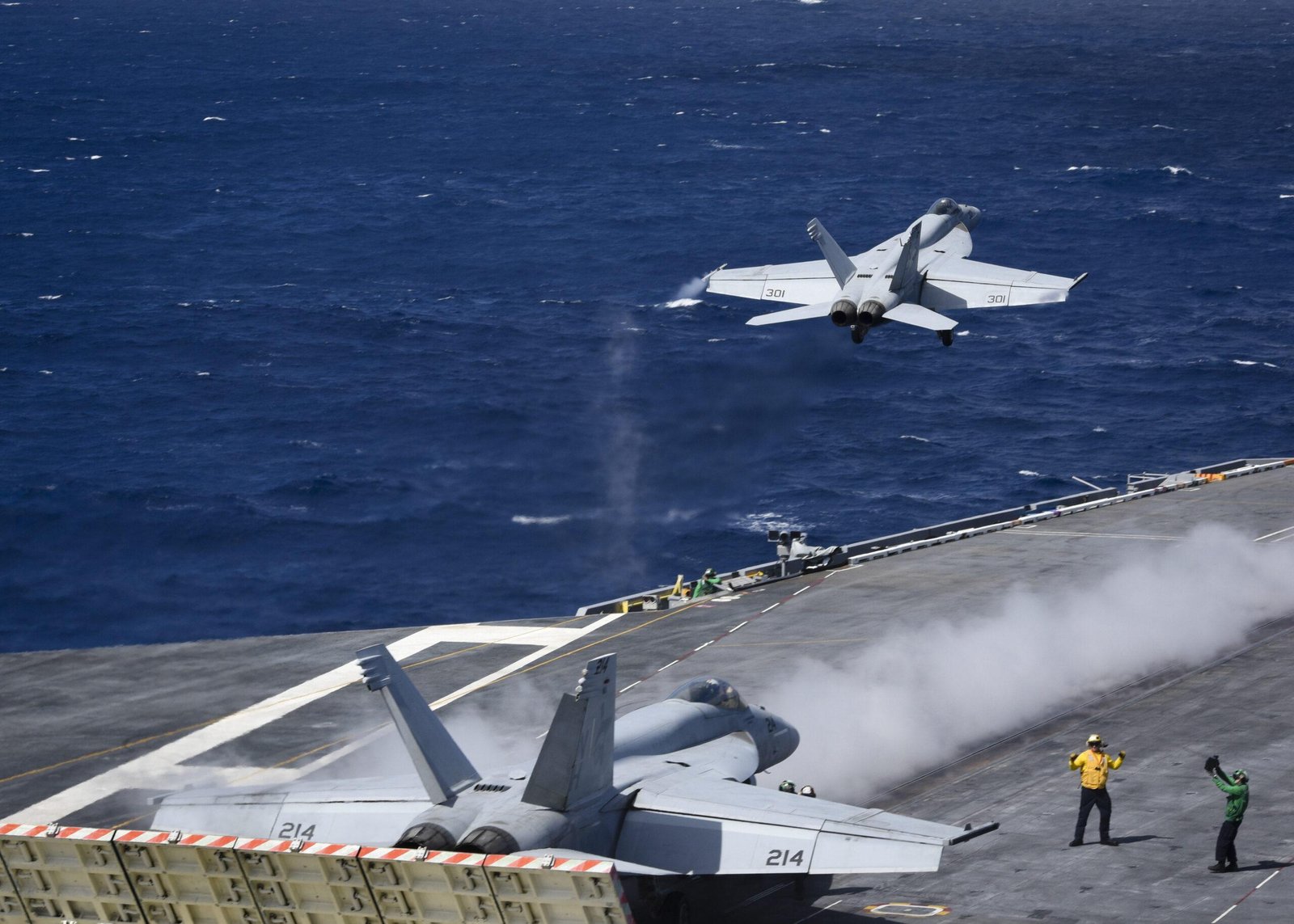
For fighters such as the F/A-18, sustaining the existing fleet becomes particularly important as individual aircraft accumulate thousands of flight hours and repeated carrier launches and arrested landings.
- Structural inspections and repairs
- Replacement of aging or fatigued components
- Integration of updated avionics and mission systems
- Corrosion prevention and treatment
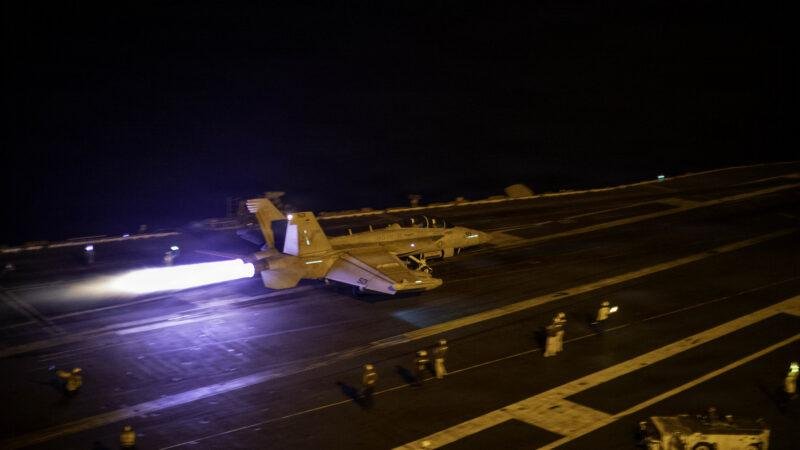
Carrier aviation creates especially demanding conditions. Every catapult launch and arrested landing places significant loads on the aircraft’s structure, while operations at sea expose fighters to a harsh saltwater environment.
Keeping those aircraft flying therefore requires an extensive sustainment infrastructure behind the frontline squadrons.
Jacksonville Has Become an Important Boeing MRO Center
Boeing’s Jacksonville operation is located at Cecil Airport, a former naval air station that has developed into a major aviation maintenance and aerospace center.
The company has maintained a presence there for decades. Boeing identifies Jacksonville, Florida, and San Antonio, Texas, as its two complex maintenance, repair and overhaul facilities.
The Jacksonville operation supports military aircraft modification and sustainment work rather than new-aircraft final assembly. That role is becoming increasingly significant as the U.S. military keeps aircraft in service for longer periods and modernizes existing fleets alongside purchases of new platforms.
A thousand modified fighters is a reminder that naval aviation’s readiness depends as much on the maintenance hangar as it does on the production line.
The Jacksonville Aviation Authority described the 1,000th F/A-18 milestone as another indication of Cecil Airport’s growing role in aircraft maintenance, repair and overhaul.
The F/A-18 Family Remains Central to Naval Aviation
The F/A-18 has served as one of the defining aircraft families of modern U.S. naval aviation.
The original F/A-18 Hornet entered operational service in the early 1980s and was followed by the substantially larger and more capable F/A-18E/F Super Hornet.
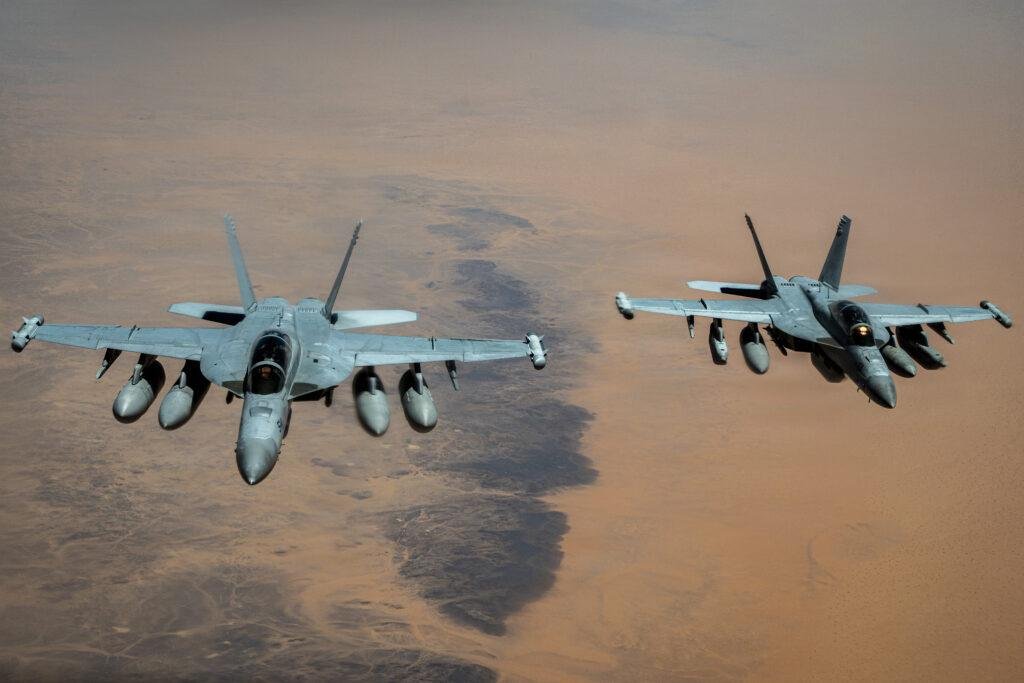
Today, Super Hornets remain a core component of U.S. Navy carrier air wings. The single-seat F/A-18E and two-seat F/A-18F perform missions ranging from fleet air defense and strike operations to aerial refueling and reconnaissance support.
The related EA-18G Growler provides airborne electronic attack capability and is also based on the Super Hornet airframe.
Even as the Navy introduces the fifth-generation F-35C Lightning II, the Super Hornet is expected to remain an important part of carrier aviation for years. That makes sustainment and modernization increasingly important.
Why Service-Life Work Matters
Combat aircraft do not necessarily reach the end of their usefulness simply because they reach their originally anticipated service life.
Engineers can inspect aircraft structures, identify fatigue or corrosion, replace components and perform modifications that allow suitable airframes to continue operating safely.
For the Super Hornet fleet, Boeing has developed a Service Life Modification, or SLM, program intended to extend aircraft service life while also creating opportunities to incorporate newer capabilities.
The broader objective is straightforward: extract more operational life from aircraft the Navy already owns. That can be especially valuable while the Navy balances existing Super Hornets, new-build aircraft, F-35C procurement and development of future carrier-based combat aircraft.
More F/A-18 Sustainment Work Is Moving Toward Jacksonville
The 1,000th modification milestone arrives as Boeing prepares to reshape where some of its F/A-18 sustainment work is performed.
Boeing announced in 2025 that it would begin transitioning Super Hornet Service Life Modification work away from the St. Louis region beginning in 2026.
Jacksonville and San Antonio were among the locations evaluated for additional work. Boeing already conducts F/A-18 modification activity in Jacksonville, while other Service Life Modification work has been performed in San Antonio and in partnership with the Navy at Fleet Readiness Center Southwest in San Diego.
That means Jacksonville’s importance to the F/A-18 program could continue growing even as new Super Hornet production approaches its eventual conclusion.
The story of the F/A-18 is increasingly becoming not just one of manufacturing new fighters, but of sustaining and upgrading the aircraft already in the fleet.
From Hornet to Super Hornet
The F/A-18 program has evolved considerably since the original Hornet entered service.
McDonnell Douglas delivered the 1,000th production F/A-18 in April 1991, years before the company merged with Boeing.
The later F/A-18E/F Super Hornet represented a major redesign, featuring a larger airframe, increased fuel capacity, greater range and updated systems.
The Super Hornet is powered by two GE Aerospace F414 engines. Those engines have themselves achieved major production and operational milestones while supporting both the Super Hornet and EA-18G Growler fleets.
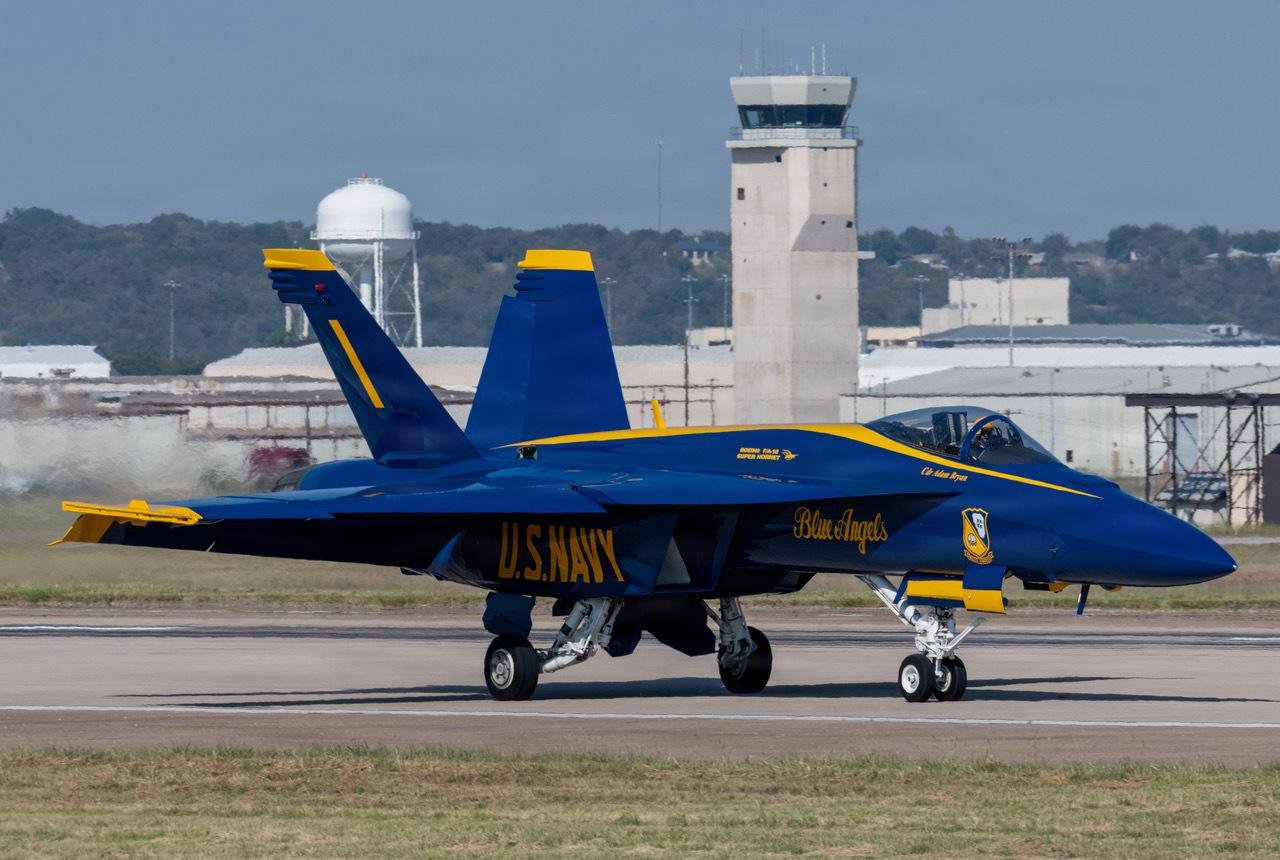
Together, the aircraft and their sustainment network represent decades of continuous evolution in U.S. naval aviation.
The People Behind the 1,000-Aircraft Milestone
The Jacksonville milestone also highlights the workforce behind military aircraft sustainment.
Maintenance and modification work requires technicians, engineers, inspectors, planners and numerous other specialists to evaluate and return aircraft to service.
Jacksonville’s aerospace sector has strong ties to the military, reflecting Cecil Airport’s history as Naval Air Station Cecil Field. That legacy continues today through the maintenance and aerospace operations located at the former naval installation.
While new fighter programs often receive most of the attention, these sustainment operations are what allow existing aircraft to continue flying day after day. The 1,000th F/A-18 modification is therefore as much a workforce and maintenance milestone as it is an aircraft milestone.
FAQ: Boeing’s 1,000th F/A-18 Modification
Did Boeing build its 1,000th F/A-18 in Jacksonville?
No. The milestone represents the 1,000th F/A-18 modification completed by Boeing’s Jacksonville operation, not the 1,000th newly manufactured F/A-18. The 1,000th production F/A-18 was delivered by McDonnell Douglas in 1991.
Why are F/A-18s being modified?
Modifications can address structural condition, aging components, new equipment and capability upgrades while helping suitable aircraft remain operational for longer. This becomes increasingly important as Super Hornets accumulate flight hours and demanding carrier operations.
Is the F/A-18 Super Hornet still in service?
Yes. The F/A-18E/F Super Hornet remains a major component of U.S. Navy carrier air wings alongside aircraft including the F-35C Lightning II and EA-18G Growler.
Looking Ahead
Boeing’s 1,000th F/A-18 modification in Jacksonville represents more than a numerical milestone. It illustrates how the story of a military aircraft continues long after it leaves the factory.
As the Super Hornet fleet ages, maintenance, structural refurbishment and modernization will become increasingly important to maintaining the U.S. Navy’s carrier aviation capability.
Jacksonville’s role in that mission may grow further as Boeing reorganizes its F/A-18 sustainment footprint and the Navy continues extending the useful lives of aircraft already in service.
For the F/A-18, the next chapter is increasingly being written not on the production line, but inside the maintenance and modification hangar.
Sources
For additional information about this story:
- Boeing Government Services
- Boeing: F/A-18 Service Life Modification Work Transition
- Defensehere: Boeing Completes 1,000th F/A-18 Modification at Jacksonville Facility