The U.S. Navy is pursuing a Navy surrogate CCA arrangement, looking to bring existing uncrewed combat aircraft on board to learn how to operate the systems while its own Collaborative Combat Aircraft program is still taking shape, Aviation Week reported September 3, 2026. The move follows an August 31 request for information the Navy published for the first increment of its own CCA effort, coming after the Air Force has already entered production on its version of the program.
Rather than wait for its own aircraft to mature before building operational experience, the Navy appears to be borrowing a page from the Air Force’s playbook: fly something that already exists to work out concepts of operation, command-and-control questions and carrier-integration challenges in parallel with the formal acquisition process.
Table of Contents
What the Navy Actually Asked For
On August 31, Naval Air Systems Command released a request for information seeking industry input on a large, carrier-capable fleet of Collaborative Combat Aircraft. The solicitation describes the goal as an affordable, highly capable, risk-tolerant, carrier-capable, weaponized, extended-range autonomous unmanned air vehicle able to deploy from and recover to a carrier deck as part of normal flight operations.
The RFI also surfaces a command-and-control problem the Navy wants vendors to help solve as part of the broader Navy surrogate CCA effort. Its CCA fleet is required to work with the joint Air Force/Navy government reference architecture, but the Navy’s existing MD-5 Unmanned Carrier Aviation Mission Control System — built to operate the Boeing MQ-25 Stingray tanker drone — predates that architecture. Reconciling the two systems is now an open question the Navy has put to industry rather than one it has already solved internally.
Why a Surrogate Aircraft First
Building a new autonomous carrier-based aircraft from scratch takes years, but the operational and doctrinal questions around flying uncrewed wingmen alongside crewed fighters don’t have to wait for that hardware to exist. A surrogate aircraft lets Navy squadrons and program offices start building institutional knowledge now — how to command multiple aircraft with one operator, how autonomy behaves during carrier launch and recovery, how a CCA fits into an existing air wing’s workflow — while the formal Increment 1 competition plays out separately.
The Navy is overseeing this Navy surrogate CCA work through the Future Advanced Capability program office, designated PMA-268, which Naval Air Systems Command stood up in February 2026 specifically to lead the service’s Collaborative Combat Aircraft development.
The Surrogate Already Flying: BQM-177A
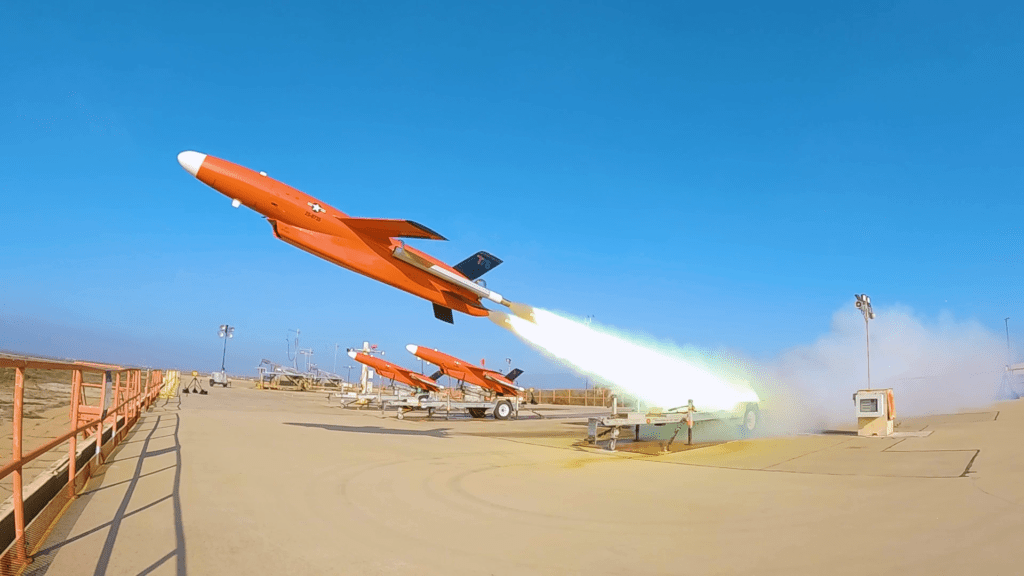
The Navy isn’t starting from zero on the surrogate concept. It has already flown BQM-177A subsonic aerial targets — ordinarily used as threat-representative drones for weapons testing — retrofitted with Shield AI’s Hivemind mission-autonomy software under a project called the Experimental Platform for Intelligent Combat (EPIC).
An initial flight on August 5, 2025, at Point Mugu Sea Range in California validated Advanced Vehicle Control Laws and integrated foundational autonomous behaviors on a single BQM-177A. A capstone event on December 11, 2025, went further: Hivemind flew two BQM-177As simultaneously inside a Live-Virtual-Constructive environment that included a virtual F/A-18 and constructive adversary aircraft, testing multi-platform coordination rather than just single-aircraft autonomy. The December event also advanced implementation of Autonomy Government Reference Architecture interfaces meant to improve interoperability across future uncrewed platforms.
“This demonstration is an important step toward advancing autonomous capabilities for the fleet,” said Rear Adm. Tony Rossi, Program Executive Officer for Unmanned Aviation and Strike Weapons. “Integrating AI-enabled autonomy across manned and unmanned platforms will be critical as the Navy develops next-generation air wing concepts and prepares for more complex operational environments.”
Where This Fits Among the Other Services
The Navy’s move comes as the other services are considerably further along. The Air Force has already entered the production phase of Collaborative Combat Aircraft Increment 1, building General Atomics’ YFQ-42A and Anduril’s YFQ-44A designs. The Marine Corps, meanwhile, is expected to order a follow-on batch of Kratos MQ-58 Valkyries in the same broad category.
By its own account, the Navy has trailed the Air Force and Marine Corps on CCA development, having focused more of its uncrewed-aviation attention on the MQ-25 Stingray tanker program and its supporting carrier infrastructure. The August 31 RFI and the surrogate-aircraft approach both suggest the service is now moving to close that gap.
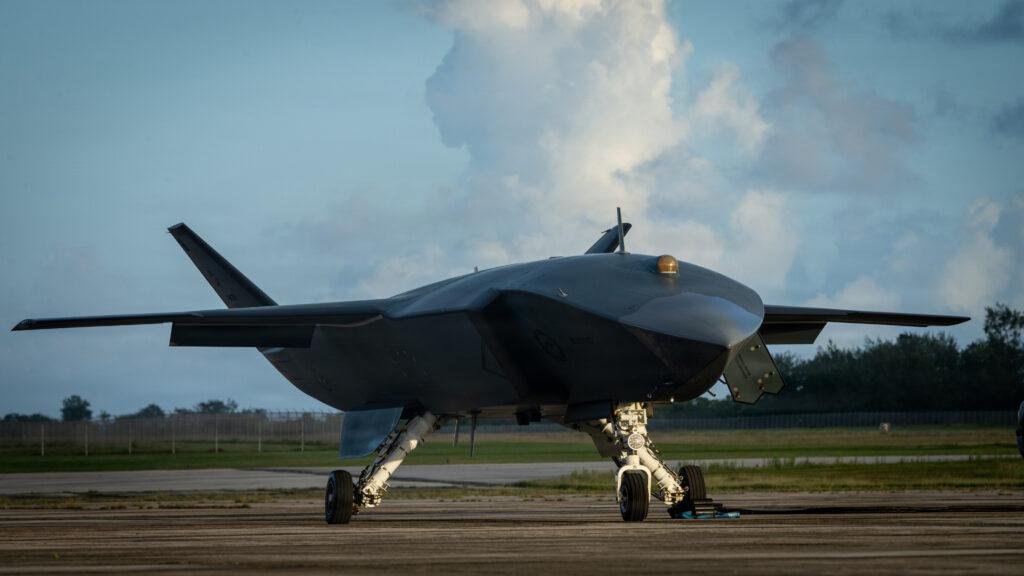
The Air Force, for its part, has been running its own separate CCA-adjacent experimentation using Boeing’s MQ-28 Ghost Bat, a design developed in Australia for the Royal Australian Air Force. A production-representative Ghost Bat flew during Exercise Valiant Shield 2026 around the Mariana Islands in June, working alongside crewed fighters as part of the Air Force’s Expeditionary Operations Unit and 21st Airborne Expeditionary Wing — a separate, Air Force-led effort rather than any confirmed Navy surrogate selection.
FAQ: Navy Surrogate CCA
What is a surrogate CCA?
A surrogate CCA is an existing uncrewed aircraft the Navy would fly to build operational experience with Collaborative Combat Aircraft concepts before its own purpose-built design is ready, rather than waiting years for a program of record to mature.
Has the Navy picked an aircraft yet?
No formal selection for an operational surrogate has been announced. The Navy has, however, already flown BQM-177A target drones fitted with Shield AI’s Hivemind autonomy software as an experimental surrogate under the EPIC project, most recently in a December 2025 capstone test.
How far behind is the Navy on CCA?
The Air Force is already in production on its Increment 1 CCA designs, and the Marine Corps is expected to order more MQ-58 Valkyries. The Navy only stood up its dedicated CCA program office in February 2026 and issued its first fleet-defining RFI on August 31, 2026.
Looking Ahead
The Navy has not announced a timeline for selecting a surrogate aircraft or for responses to its August 31 RFI. The Aviation Diary will continue tracking the Navy surrogate CCA effort and the service’s formal Increment 1 requirements as both move forward.
Sources