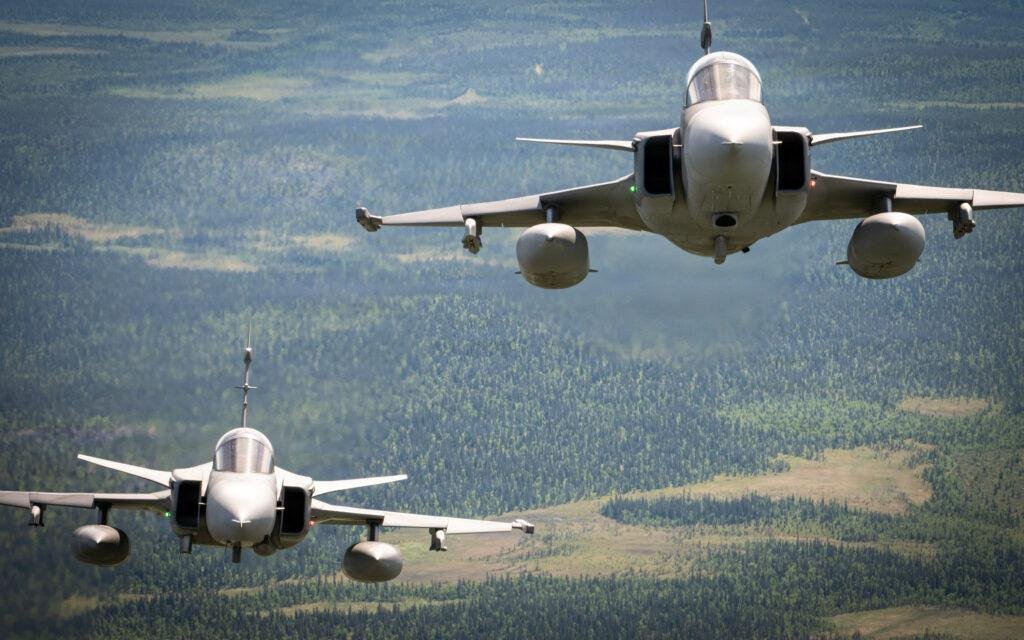
Gripen engine cooperation is expanding after Saab and GKN Aerospace signed a new agreement on October 8 covering propulsion support for Gripen E/F fighters. Both companies published statements outlining a broader role for the Swedish engine specialist.
GKN described itself as Saab’s preferred provider of engine services under the arrangement. Saab said the agreement would create the basis for greater domestic technical capability related to the Gripen E/F powerplant and allow GKN to assume additional responsibilities over time.
This is a cooperation agreement, not an announcement of a different engine for the fighter. Neither company gave a procurement value, production quantity or date on which a new support arrangement would be fully implemented.
Table of Contents
What the Gripen Engine Cooperation Agreement Covers
GKN’s Gripen engine cooperation statement described a longer-term role covering propulsion support, capability development and contributions to Saab’s international Gripen activities. That scope extends beyond routine maintenance but does not, by itself, establish that GKN will manufacture an entirely new engine.
Saab said the cooperation would allow GKN to provide growing levels of technical expertise, support capacity and related engineering input for Gripen E/F. Both statements indicate that the companies intend to work out deeper arrangements as the partnership develops.
A service-provider designation identifies which industrial company Saab expects to work with on engine matters. It should not be mistaken for a contract announcing new aircraft deliveries, a powerplant replacement or a funded programme with specified annual spending.
Why Sweden Wants More Domestic Propulsion Expertise
Saab linked the Gripen engine cooperation move to a Swedish government decision to strengthen national expertise and industrial capability relating to the Gripen E/F engine. The government has asked the companies to help build conditions for that capability, according to the manufacturer.
For an air force operating advanced fighters, engine-support expertise affects maintenance planning and the ability to sustain aircraft availability. More local engineering resources can be relevant even where the aircraft’s established engine design remains unchanged. The companies’ statements, however, do not quantify any anticipated improvement in readiness.
GKN said the partnership would support Saab’s offer to Swedish and international customers. This places the engine arrangement within the wider industrial and customer-support side of the Gripen programme rather than solely within domestic manufacturing policy.
How the Saab and GKN Relationship Developed
Gripen engine cooperation between the two companies already covers propulsion support for the older Gripen C/D, Saab said. GKN identifies itself as the type-certificate holder for the RM12 engine used in that aircraft family, making the earlier work relevant background for the new E/F cooperation.
The latest Gripen engine cooperation agreement broadens the companies’ relationship to a newer generation of fighter. Gripen C/D and Gripen E/F should not be described as identical models, and the new announcement should not be used as evidence of changes to either aircraft’s certified equipment.
GKN said it already performs engine maintenance and technical support work in Sweden. A larger prospective role in long-term capability development and customer support will depend on subsequent implementation decisions. Neither release gives a schedule of specific facilities, staffing levels or new equipment to be procured.
FAQ: Saab and GKN engine agreement
What does Gripen engine cooperation cover?
They signed a long-term agreement expanding propulsion and engine-services cooperation for Gripen E/F.
Does the agreement replace the Gripen E/F engine?
No new engine replacement was announced; the deal concerns expertise, service and capability development.
Did GKN already support Gripen fighters?
Yes. GKN has a preexisting relationship with Saab on Gripen C/D engine matters.
Looking Ahead
Next steps include defining GKN’s expanded technical role and any associated service or industrial investments. Neither company announced a completion date, so actual changes in support capacity must be assessed through later contracts and operational announcements.
Sources
- Saab — Strengthened Swedish collaboration on Gripen E/F’s engine
- GKN Aerospace — Saab engine collaboration agreement