Space Rider test investigators are examining a failed landing-system demonstration after the European Space Agency disclosed new details on Oct. 22, 2026. A full-scale model of the reusable spacecraft crashed at a Sardinian military range following a helicopter drop earlier in the month.
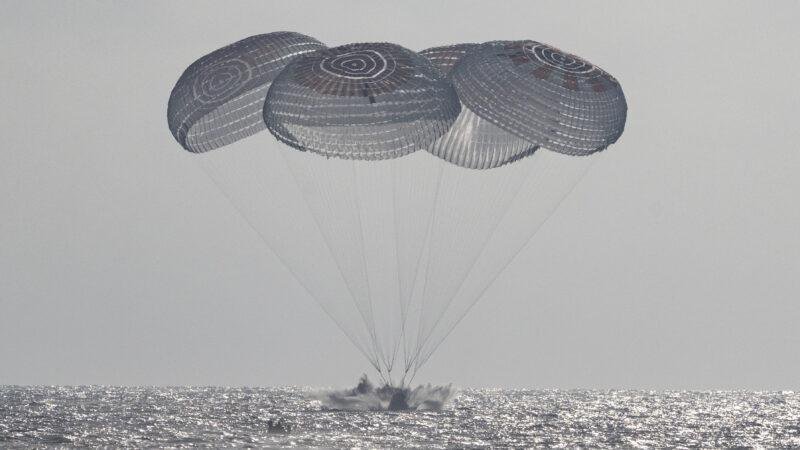
According to the account of an ESA official reported by European Spaceflight, the test model’s drogue parachute deployed successfully, but the steerable parafoil later separated. The vehicle then struck the ground instead of following a controlled descent to landing.
The failure occurred on October 6. No cause has been established, and ESA has not announced that the final orbital spacecraft suffered the same problem. The damaged article was a representative test model used to evaluate the landing sequence.
Table of Contents
Space Rider Test Sequence and the Failure
At an October 22 media briefing, ESA space transportation director Géraldine Naja described the latest findings about the failed drop test. A helicopter released the model at approximately three kilometers above a test range in Sardinia.
The first drogue parachute deployed as planned, helping stabilize and slow the model. The later parafoil is intended to provide more sustained lift and directional control, allowing the vehicle to guide itself toward a predetermined touchdown.
ESA’s account says the parafoil detached during deployment. With the principal controlled-descent system no longer attached, the model crashed. The agency recovered parts of the vehicle and established an investigation board.
Investigators have not identified why the parafoil detached. The public description does not support assigning blame to an individual component, supplier, packing method or release operation, and no definitive root-cause conclusion has been published.
Why the Parachute and Parafoil System Matters
Space Rider is intended as an uncrewed spacecraft that can conduct experiments in orbit and return them for recovery. Its reusable reentry module must endure atmospheric heating and then descend accurately to a landing site.
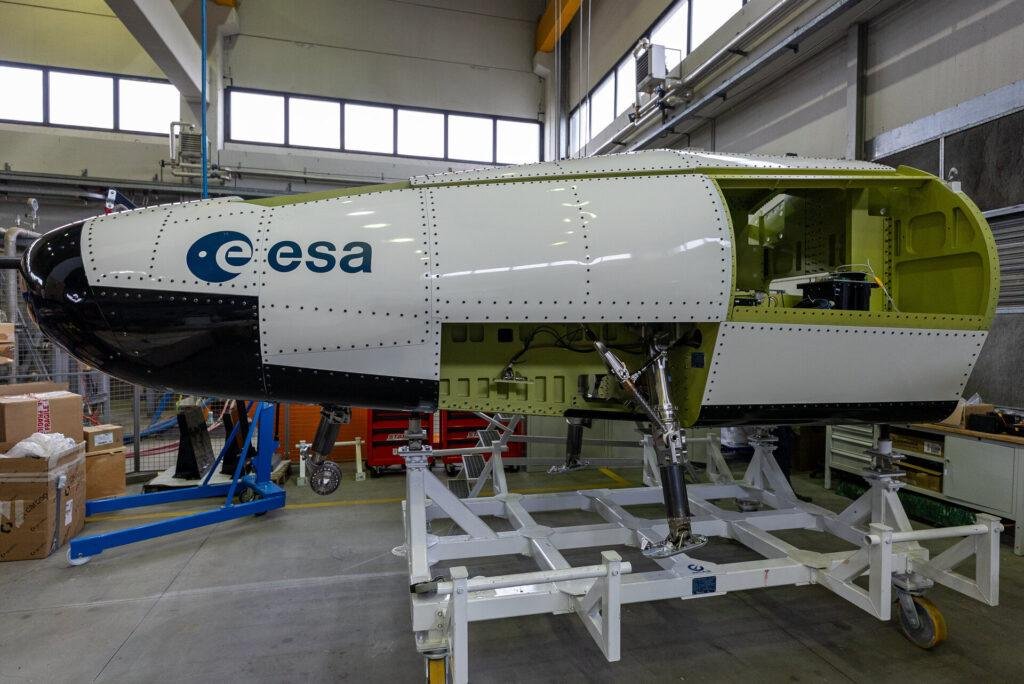
ESA’s April program update described a full-size drop-test model built in Romania and prepared for testing at the Italian Aerospace Research Centre before helicopter trials. The model represents the reentry module’s shape and mass behavior.
Earlier drop-test campaigns qualified individual elements of the parachute chain and autonomous guidance. The October test was intended to examine the complete descent sequence, making it a more integrated exercise than testing a parachute or guidance function in isolation.
A successful component test does not guarantee an integrated system will work in every configuration. That distinction explains why the agency conducts full-size drop tests before attempting to recover expensive orbital hardware.
ESA Schedule Assessment and Open Questions
ESA said its review of the failure is intended to identify causes and determine corrective work. Until that process is complete, statements about a design flaw or a specific repair would be premature.
Naja said the agency did not currently expect the incident to delay overall Space Rider development because remaining qualification activity was not on the critical path. She also acknowledged that schedules would be revisited after the investigation concludes.
The program has been presented as a European effort to recover experiments and eventually repeat orbital missions using the same reentry module. Its timetable depends on successful testing and the availability of an appropriate launcher.
Previous ESA reporting on reusable space missions, like TAD’s coverage of spacecraft technology milestones, illustrates why engineering tests merit careful attention: an announced target is not the same as a demonstrated mission result.
FAQ: Space Rider test
What failed during the Space Rider test?
The parafoil separated after the drogue parachute worked, and the full-scale test model crashed.
Has ESA identified the cause of the crash?
No. An investigation is underway, and ESA has not announced a confirmed root cause.
Did the Space Rider test failure cancel the mission?
ESA says it does not currently expect a development delay, but it will reassess the schedule after the investigation.
Looking Ahead
The Space Rider test investigation must establish what caused the parafoil separation and identify any required corrective actions. ESA has reported a first orbital flight target in the first half of 2028, subject to qualification and launcher readiness.
Sources
https://europeanspaceflight.com/esa-provides-new-details-on-failed-space-rider-drop-test/