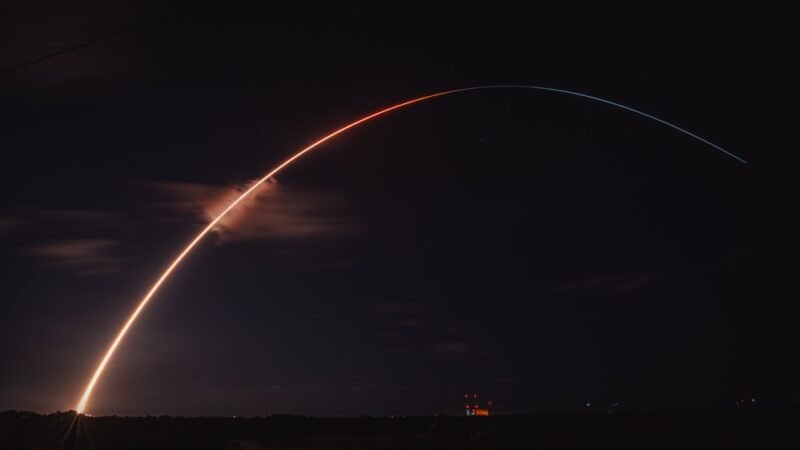
Vulcan launch operations suffered a major setback on Nov. 15, 2026, when a United Launch Alliance rocket failed to place 40 Amazon Leo satellites into orbit following an anomaly about ten minutes after liftoff from Cape Canaveral Space Force Station in Florida. ULA confirmed the outcome in a statement issued after the flight.
The rocket had lifted off from Space Launch Complex 41 at 12:40 p.m. EST for the first Vulcan mission dedicated to Amazon’s broadband constellation. Amazon subsequently recorded the payload as lost. Neither company announced a verified technical cause in its immediate assessment.
Table of Contents
Vulcan launch reaches flight before mission failure
ULA said its launch director received data showing that the vehicle experienced an anomaly roughly ten minutes into flight and did not deliver the Amazon spacecraft to their intended orbit. The statement establishes a failed orbital delivery, not the exact stage, component or sequence that caused it. Public explanations beyond that point require investigative evidence not yet released.
The mission used a Vulcan Centaur rocket to carry 40 spacecraft for Amazon Leo, the satellite network formerly known as Project Kuiper. The company had bought launches from several providers to build its planned low-Earth-orbit broadband system. The lost payload represents actual satellites, rather than an announced future booking or a failed ground rehearsal.
Amazon’s official mission update records the November 15 flight as mission LV-01 and acknowledges the lost payload. The company expressed confidence in ULA while recognizing the risks of launching on a vehicle configuration that had not previously flown this particular customer mission. Neither statement should be read as a determination of fault.
Why the loss matters for Amazon and ULA
Launch capacity is a central constraint for a broadband constellation because each successful rocket places another group of spacecraft into position for later commissioning. Losing 40 satellites also means losing the orbital capacity that this specific flight was supposed to provide. Amazon has other rockets on contract, but this failure changes the delivered tally for November.
For ULA, the outcome interrupts a return to flight after previous technical work on Vulcan. TAD previously reported the repeated Vulcan countdown postponements, before the rocket reached the pad for the Sunday attempt. A countdown delay and a subsequent in-flight loss are different operational events; the earlier postponements do not by themselves explain Sunday’s anomaly.
A failure investigation must separate what telemetry showed during ascent from interpretations made afterward. The public statement does not yet identify whether the issue involved propulsion, guidance, staging, flight software or another system. Any assertion that one of those components caused the loss would be premature.
Investigation and next-launch questions
ULA said it will work with Amazon and other relevant organizations to determine a cause, decide on corrective action and return the rocket to flight. It also promised further information as evidence becomes available. The company did not announce a specific return-to-flight date in the initial disclosure.
Amazon’s manifest includes flights with other launch providers, so not every future deployment relies on Vulcan. However, the companies still need to understand what happened to the first Amazon Leo payload launched on this vehicle before another equivalent mission can be evaluated. Any revised manifest would require a dated announcement rather than speculation.
The distinction between a confirmed mission failure and an understood root cause matters for both spaceflight reporting and customer planning. Sunday’s news is the loss of orbital delivery; the technical chain of events remains an open engineering question.
FAQ: Vulcan launch
What happened during the Vulcan launch on November 15?
ULA confirmed an anomaly approximately ten minutes after liftoff and said the rocket did not deliver its 40 Amazon Leo satellites to orbit.
How many Amazon Leo satellites were lost?
Amazon recorded 40 spacecraft aboard the LV-01 mission and said the payload was lost.
Has ULA identified the reason for the failure?
No. Its initial statement did not assign a technical cause or announce a date for the next flight.
Looking Ahead
ULA and Amazon said they will review the flight and communicate additional findings. A completed cause assessment and a confirmed return-to-flight plan had not been announced in the source material available on Nov. 15.
Sources
- Amazon Leo launch status and customer statement
- ULA statement reported by WFTV
- Spaceflight Now mission report