The T-1A Jayhawk has flown its last Air Force sortie. On August 28, 2026, the final operational aircraft departed Vance Air Force Base in Oklahoma for the boneyard at Davis-Monthan, closing out 34 years of service and ending the Air Force’s use of a dedicated jet trainer for the airlift and tanker track.
It never dropped a bomb, never went supersonic, and never appeared on a recruiting poster. What the T-1A Jayhawk did instead was teach roughly three decades of Air Force pilots how to handle something large, fast and heavy before the service handed them a real one. Nearly every KC-135, C-17 and C-130 crew flying today started in this airplane.
Table of Contents
T-1A Jayhawk Sunset at Vance Air Force Base
Vance held its farewell over two days, August 21 and 22, 2026. The 3rd Flying Training Squadron organized the program and drew former pilots, maintainers and crew chiefs from across the country, along with senior Air Force leadership.
The ceremony took place in Hangar 199, where Vance had maintained its T-1A Jayhawk fleet for more than three decades. Choosing the maintenance hangar rather than a parade ground was a deliberate touch. The people who kept the jets flying spent their careers in that building.
Two aircraft carried the weight of the day. Tail number 93-0644 led a mixed formation with a T-38C Talon and a T-6A Texan II, flying two passes over the field after the ceremony — the three aircraft representing the full span of Vance’s training pipeline. The second, 95-0071, was dedicated as a gate guard the same day.
That second airframe deserves a footnote. Delivered on July 22, 1997, 95-0071 was the 180th and final T-1A built for the Air Force. It wore the 71st Flying Training Wing commander’s markings, the name City of Enid on one side and the post-9/11 Let’s Roll emblem on the other. The last one off the line is now the one that stays.
The Last Flight to the Boneyard
The ceremony was the public goodbye. The actual ending came a week later, on August 28, when 93-0644 flew from Vance to Davis-Monthan Air Force Base in Arizona and was handed over to the 309th Aerospace Maintenance and Regeneration Group. That aircraft had been delivered to the Air Force on February 1, 1995, which put 31 years between its first day and its last.
Vance was the last base flying the type, and the retirement had been rolling toward it for two years.
- July 15, 2024 — the 99th Flying Training Squadron flew the last T-1A out of Joint Base San Antonio-Randolph
- December 17, 2024 — Laughlin Air Force Base closed 31 years of operations with a five-ship flyover
- July 28, 2025 — NAS Pensacola’s 451st Flying Training Squadron sent its last aircraft to the boneyard
- November 2025 — Columbus Air Force Base finished its final student training; its last jet reached Davis-Monthan in March 2026
- August 28, 2026 — Vance, and with it the Air Force, flew the T-1A Jayhawk for the last time
At Davis-Monthan the aircraft will be stripped for parts reclamation rather than preserved. A handful have been kept back for static display, but the fleet’s practical future is as a supply of spares.
A Squadron Older Than the Air Force Stands Down
The Vance ceremony did double duty. It closed out the T-1A Jayhawk and it inactivated the 3rd Flying Training Squadron, which is the part of the story most coverage has skipped past.
The 3rd traces its lineage to the 3rd Aero Squadron, organized on November 1, 1916 at Fort Sam Houston, Texas — before the United States entered the First World War, and more than three decades before the Air Force existed as a separate service. It is among the oldest flying squadrons in the force.
The unit that trained America’s airlift pilots for thirty years was the same one destroyed in the Philippines in 1942.
Deployed to the Philippines between the wars, the squadron was wiped out during the 1941–42 campaign. Surviving personnel were among those forced onto the Bataan Death March. The unit was not reactivated until 1973, and has been switched on and off several times since. Inactivation is not the same as disbandment, so the lineage survives on paper and the number can be reactivated later.
What the T-1A Jayhawk Actually Did
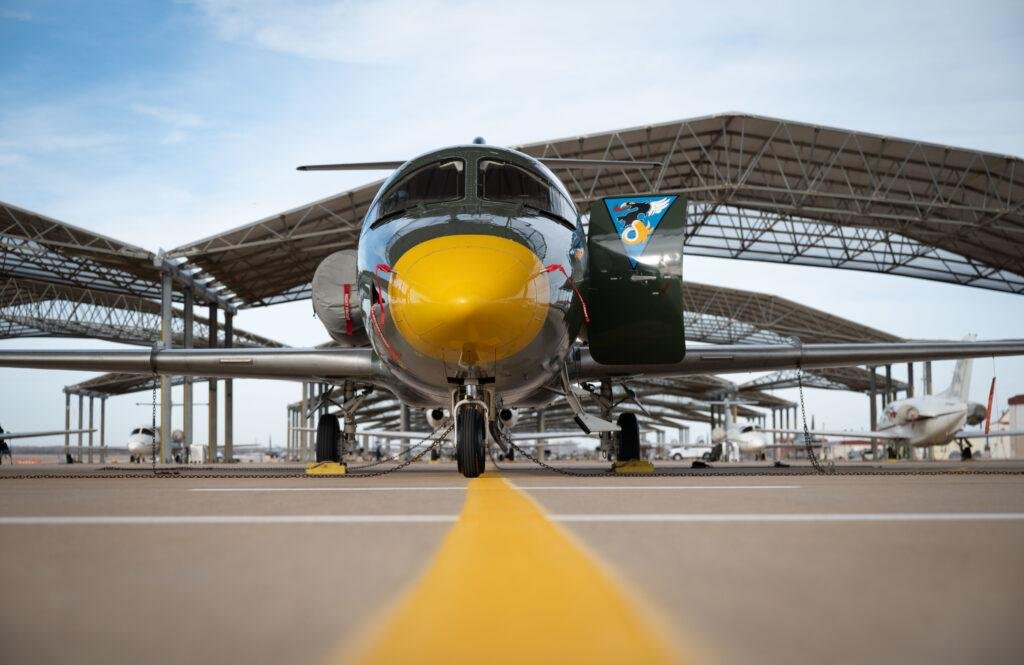
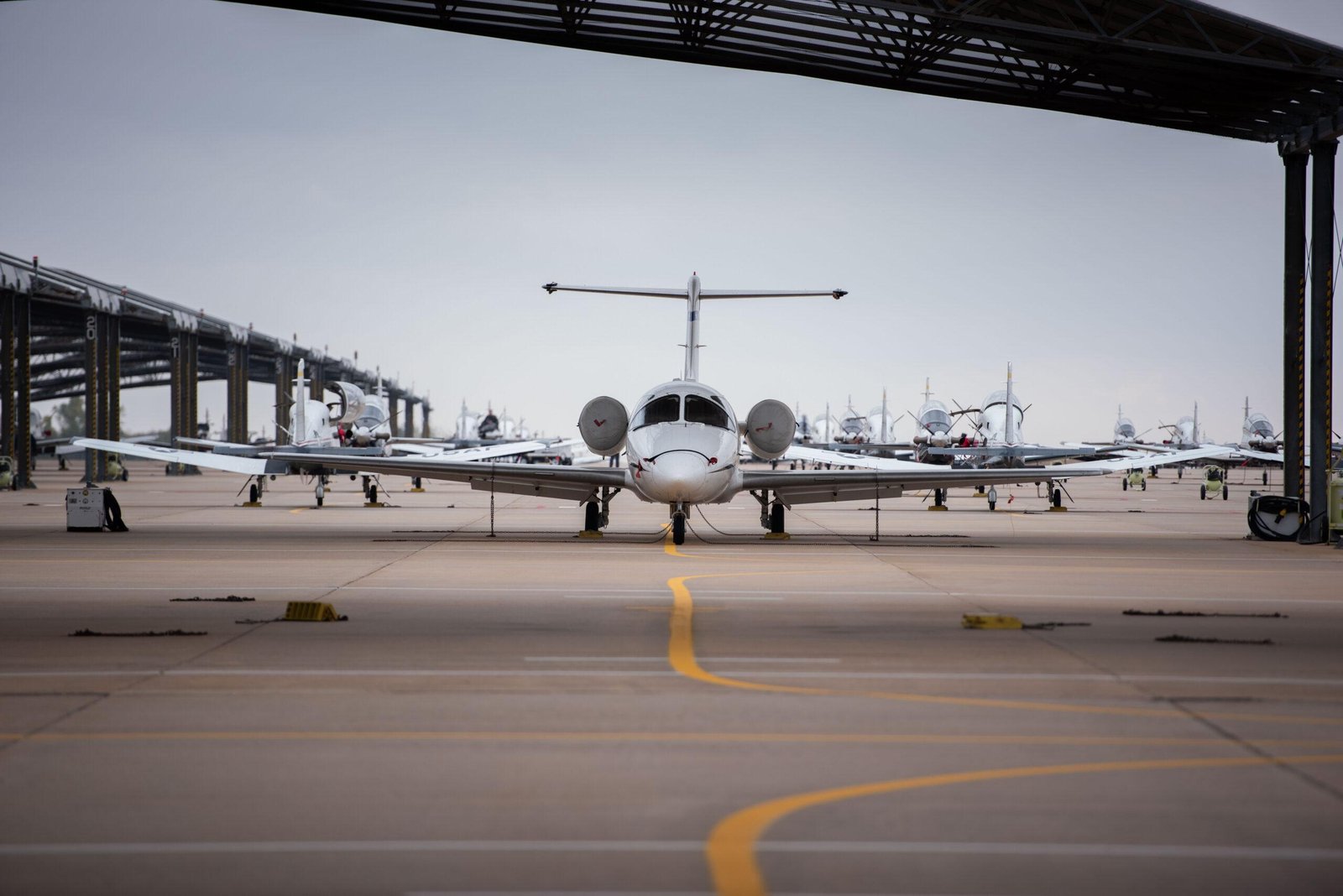
The T-1A Jayhawk is a militarized Beechcraft 400A, the same twin-engine business jet sold to corporate customers, adapted for the training role. The Air Force took delivery of its first aircraft in 1992 and began student training in 1993. Vance received its first in 1995.
- Engines: two Pratt & Whitney JT15D-5B turbofans
- Crew layout: one instructor and two students
- Role: advanced phase of Specialized Undergraduate Pilot Training, airlift and tanker track
- Total built for the USAF: 180
- Bases: Vance, Columbus, Laughlin, Randolph and NAS Pensacola
The design logic was simple. A student who has only flown a T-6 Texan II has no reference for what a heavy aircraft feels like — the inertia, the energy management, the way a crewed cockpit divides work between people. The T-1A Jayhawk provided that transition in an airframe cheap enough to fly daily.
Its safety record is the number worth remembering. Across 34 years and hundreds of thousands of training sorties, the type completed its service without a fatal accident. For an aircraft flown daily by student pilots, that is close to remarkable.
Why the Air Force Retired It Early
The T-1A Jayhawk did not age out. It was retired with service life remaining, and that is why the decision still draws argument.
Budget documents released in April 2024 laid out the reasoning. The engines were approaching their life limits, and overhauling or replacing them across a large fleet meant a substantial bill — two engines per aircraft, multiplied across scores of airframes. Retiring the type freed both that money and the instructor pilots assigned to it for what the Air Force called higher priorities.
The push started earlier than most people realize. The service first asked Congress for permission to divest 50 Jayhawks in fiscal 2023, and 48 aircraft arrived at Davis-Monthan that year.
The counterargument, made loudly by former instructors and students, is that a jet with airframe hours left and a spotless safety record should not be traded away for simulator time. Whether that criticism holds up depends entirely on how the replacement performs.
What Replaces It
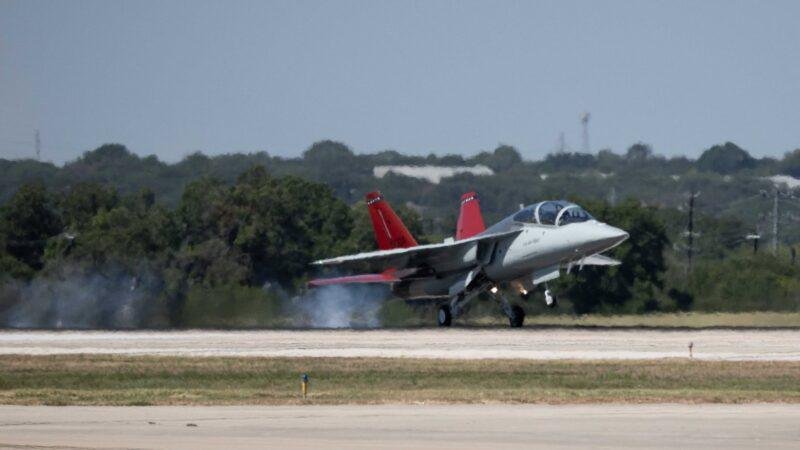
Nothing replaces the T-1A Jayhawk directly. Mobility-track students now move through a course built around simulators, with flying hours redistributed across the T-6 Texan II and the T-38C Talon, and the T-7A Red Hawk arriving to carry more of the load.
That is a real bet. Simulation has improved enormously and can drill procedures, emergencies and crew coordination far more cheaply than a jet burning fuel over Oklahoma. What it cannot fully reproduce is the pressure of doing it for real, with weather and fatigue and consequences attached.
The Air Force is not alone in rethinking the trainer question. Air forces elsewhere are moving in the opposite direction and buying new jet trainers outright, as Turkey did with the Hurjet, which flew its first production aircraft in August 2026. Whether the American approach or that one produces better pilots is a question the next decade of mobility crews will answer.
FAQ: T-1A Jayhawk Retirement
When did the T-1A Jayhawk officially retire?
The sunset ceremony was held at Vance Air Force Base on August 21, 2026, and the final operational aircraft flew to Davis-Monthan on August 28, 2026. Vance was the last base to operate the type.
What aircraft is the T-1A Jayhawk based on?
It is a military version of the Beechcraft 400A business jet, powered by two Pratt & Whitney JT15D-5B turbofans and configured for one instructor and two students. The Air Force bought 180 of them.
Why was it retired with service life remaining?
Air Force budget documents cited the cost of upcoming engine overhauls and the desire to redirect funding and instructor pilots to other priorities. The decision has been criticized by former T-1A instructors who argue the aircraft still had years of useful flying left.
What happened to the 3rd Flying Training Squadron?
The squadron was inactivated at the same ceremony. Its lineage dates to the 3rd Aero Squadron of 1916, making it one of the oldest flying units in the Air Force. Inactivation preserves the lineage, so the designation can be reactivated in future.
Looking Ahead
The measure of this decision will not show up for years. It will appear in how well the first fully simulator-trained mobility pilots handle their initial operational assignments, and whether instructors at the receiving units notice a difference.
For now the T-1A Jayhawk joins the long line of aircraft that mattered enormously to the people who flew them and barely registered with anyone else. Its record is the argument for it: 34 years, 180 airframes, thousands of pilots, and not one fatal accident.
The Aviation Diary will continue covering U.S. Air Force pilot training, trainer aircraft programs, and the aircraft moving through Davis-Monthan. More aircraft profiles are in the Aircraft Encyclopedia.
Source
- The Aviationist — Vance AFB Hosts T-1A Jayhawk Sunset Ceremony
- Air & Space Forces Magazine
- Air Education and Training Command
- AVweb
- Defence Blog