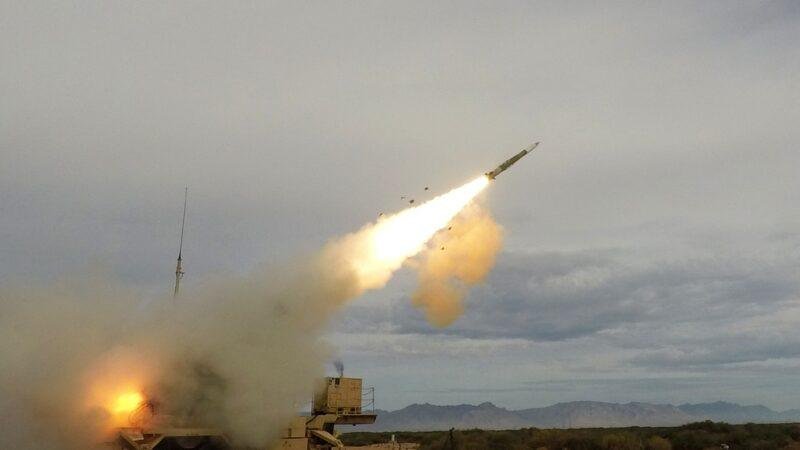
GMLRS rocket test results disclosed by Lockheed Martin on Oct. 28 describe a U.S. Army demonstration in which a rocket received new target information after launch and struck a moving target. The flight took place at White Sands Missile Range in New Mexico.
A Guided Multiple Launch Rocket System round was fired from a HIMARS launcher, the company said. A Strigo communications link and the Remote Interceptor Guidance-360 system then delivered an updated target while the rocket was airborne.
The announcement concerns a technology demonstration, not a fielding decision for every deployed rocket. Lockheed Martin has not disclosed a procurement contract, an operational deployment date or an independent Army evaluation of the new capability.
Table of Contents
GMLRS Rocket Test Changes the Target After Launch
According to the primary announcement, the rocket initially left a High Mobility Artillery Rocket System launcher and later received revised target data through Strigo and RIG-360. Lockheed Martin said the munition subsequently destroyed the moving target.
Conventional preplanned precision fires rely on target information available before a weapon leaves its launcher. Updating guidance after launch could provide additional choices when vehicles move or information changes between firing and impact, although the effectiveness depends on sensing, connectivity and weapon integration.
Lockheed Martin described the GMLRS rocket test as a program first. That is the company’s characterization of the demonstration rather than a claim that no other weapon has ever been guided toward a revised target in flight.
The release did not specify the target’s speed, the rocket’s flight distance, the size of the error at impact or whether the Army conducted a separate acceptance trial. Those missing figures limit how precisely the public can compare the result with other tests.
How the Guidance Link Fits Army Precision Fires
The GMLRS rocket test demonstrated a concept connecting a launcher, a guided rocket and an information link that can pass changes to the weapon during flight. Lockheed Martin says its Strigo datalink and Remote Interceptor Guidance-360 were integrated with internal company funding.
The communication system matters because a moving target can change location after a firing solution is calculated. A post-launch update offers a potential method of applying fresher information rather than relying solely on the coordinates set before takeoff.
That does not mean a fired rocket is independently searching for any target. The company described updated targeting information being supplied through a connected system; the release does not provide enough detail to characterize autonomous target selection.
HIMARS and the tracked M270 Multiple Launch Rocket System belong to the wider U.S. precision-fires family. The test used HIMARS, while an archival M270 photograph can illustrate the broader launcher family but must not be presented as an image of this GMLRS flight.
Possible Uses Beyond the Demonstration
Lockheed Martin says the datalink approach may also apply to Extended Range GMLRS and the Precision Strike Missile, or PrSM. These are potential future uses, not evidence that every such munition already has an approved retargeting capability.
The prospect is operationally significant because different ranges and flight times create different demands for timely target updates. System reliability, the availability of accurate sensing and defenses against interference would all be central questions in a future qualification program.
The GMLRS rocket test announcement did not establish how many rounds might be upgraded, which military units could receive new equipment, or when procurement might occur. A successful demonstration is an engineering milestone, but field deployment generally requires additional integration and military decisions.
In related company coverage, related TAD coverage examined Lockheed Martin’s financial backlog. That corporate performance story is separate from the particular GMLRS rocket test and does not establish funding or procurement for this feature.
FAQ: GMLRS rocket test
What happened during the GMLRS rocket test?
Lockheed Martin said a rocket launched from HIMARS received a new target update during flight and struck a moving target at White Sands.
Which systems sent the updated target information?
The company identified its Strigo datalink and Remote Interceptor Guidance-360 as the systems used during the demonstration.
Is the new targeting method operational across the Army?
The announcement describes a test; Lockheed Martin did not provide an operational fielding date or confirm fleetwide installation.
Looking Ahead
Future Army decisions, further qualification testing and the extent of any integration with other missiles will determine whether the demonstrated feature moves beyond trials. Lockheed Martin did not give a timetable for a production configuration or deployment.
Sources