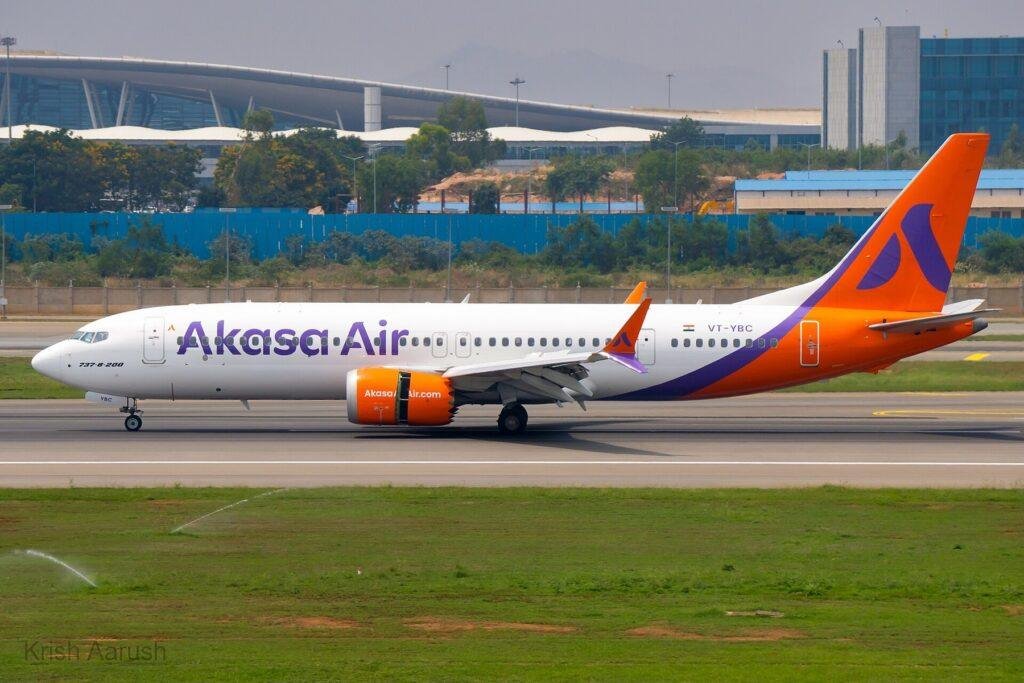
Akasa tail strike reporting on Oct. 31 identified a Boeing 737 MAX that suffered damage involving its tail after an arrival at Kolkata Airport. News reports citing the airline said the aircraft, operating flight QP1925 from Ahmedabad, was inspected following its landing and the matter was referred to aviation authorities.
Passengers disembarked safely, according to the reports. Investigators have not released a final explanation of the contact or identified a mechanical problem that caused it. The immediate story is therefore the reported occurrence and inspection, rather than a settled account of what happened in the cockpit.
Table of Contents
Akasa tail strike discovered during inspection
Reports carried by Indian news outlets said the Akasa Air flight completed its arrival at Kolkata and that an inspection found evidence of a tail strike. The Boeing 737 MAX had been operating a scheduled domestic service from Ahmedabad. The airline said relevant authorities were notified, and the aircraft was not simply returned to the next flight without an inspection.
The reports also described a go-around during the approach sequence. A go-around is an established flight maneuver in which a crew discontinues an approach and climbs away for another attempt or an alternative plan. It should not be treated, without investigation findings, as proof that the aircraft touched the ground during that earlier approach or as the cause of the later damage.
No passenger injuries were reported in the available coverage. Neither the precise point of tail contact nor the extent of structural damage was confirmed in an official investigative finding available for this article. Assertions about a hard landing, pilot technique, maintenance history or runway conditions would go beyond the evidence reviewed. The source notice or report documents the reported event.
What a tail strike means for a 737 MAX
A tail strike occurs when the aft fuselage or a tail-protection area contacts the ground during a flight operation. The event can happen around takeoff or landing, but identifying which phase was involved requires more than the discovery of marks on an aircraft. Inspection findings and flight data can help establish the timing and severity.
Aircraft manufacturers and operators have inspection and repair processes for suspected ground contact. An aircraft that appears capable of taxiing and parking may still need detailed structural examination before returning to service. The fact that passengers left the aircraft normally does not establish that the airplane was free of damage.
TAD recently reported on a separate Delta Airbus A321 tail-strike investigation. That earlier case involved its own circumstances and findings, and it is not evidence of what occurred to the Akasa aircraft. The comparison is useful only to show why an identified tail strike calls for a detailed technical review rather than immediate speculation.
Regulatory inquiry and operational implications
India’s aviation authorities may seek crew accounts, maintenance records and other operational information when an airline reports suspected aircraft ground contact. The reviewed news reports establish that the event was reported, but do not establish that a particular enforcement action or public final report has been ordered.
Questions still open include the exact moment of the contact, the inspections required, whether repairs were necessary and when the aircraft could resume service. Those are matters for the operator, technical specialists and relevant regulators. A news report should not invent an aircraft return-to-service date merely because the flight itself ended safely.
The Akasa tail strike also demonstrates the difference between a safe passenger outcome and the completion of an airworthiness assessment. Travelers want to know that an aircraft landed without injury, while maintenance teams need to establish whether any hidden damage exists. Both are essential facts, but they answer different questions. Read earlier tail-strike investigation coverage for another, separate development.
FAQ: Akasa tail strike
Where was the Akasa tail strike reported?
The aircraft was inspected after arriving at Kolkata Airport on a flight from Ahmedabad, according to reporting citing Akasa Air.
Were passengers injured in the occurrence?
The available airline-based reporting said passengers disembarked safely and did not identify injuries.
Has investigators established the cause?
No final cause was established in the reporting reviewed for this article; the circumstances require technical and operational investigation.
Looking Ahead
The next useful information would be a regulator or operator update identifying the phase of contact, the inspection outcome and the aircraft’s service status. No verified timetable for a final investigation report was available from the reviewed sources as of Oct. 31.
Sources