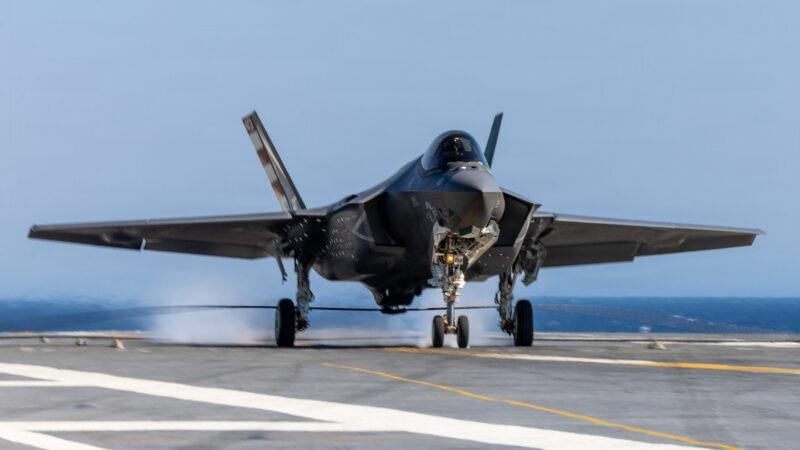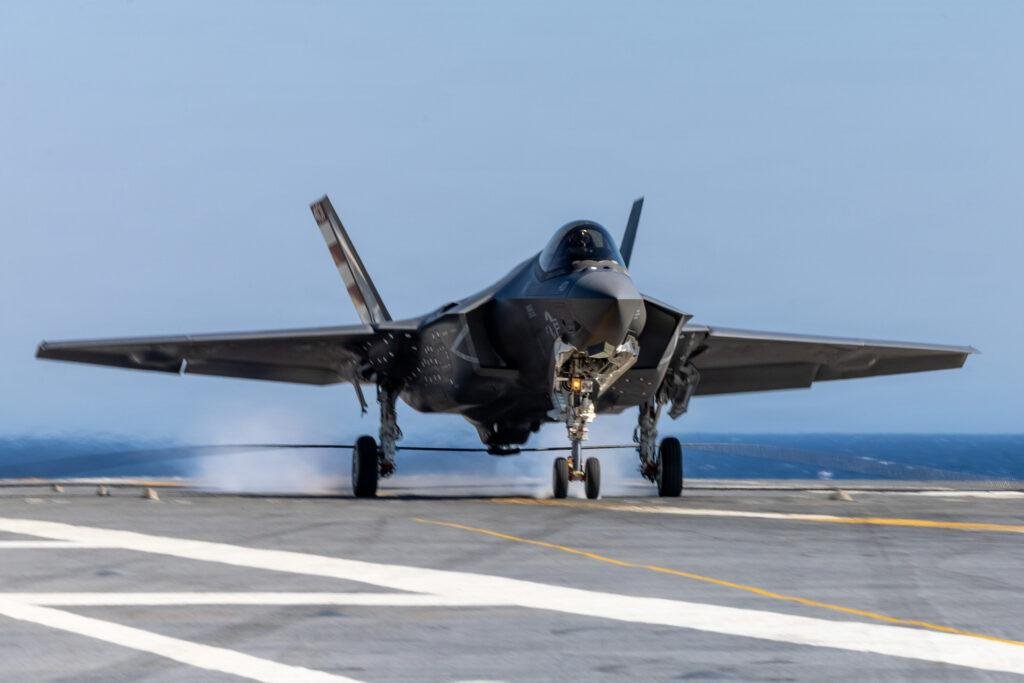
F-35C Kennedy landing coverage centers on reported flight-deck operations aboard the future USS John F. Kennedy (CVN 79), the U.S. Navy’s second Gerald R. Ford-class aircraft carrier. Photographs attributed to Navy flight operations show an F-35C Lightning II around a carrier deck, but the original event captions were not independently accessible for this report.
The distinction matters: a photograph of an approach, launch or recovery can illustrate carrier aviation without proving the full scope of a test campaign. The exact date, ship identification and reported first-landing designation should be checked against the Navy’s original release before this story is published.
Integrating the F-35C with a new carrier involves ship systems, deck teams, aviation facilities and repeatable launch-and-recovery procedures.
Table of Contents
What the F-35C Kennedy landing would demonstrate
The F-35C is the carrier variant of the Joint Strike Fighter, designed for catapult launches and arrested landings. Its carrier operations depend on coordination between the pilot, deck crew, aircraft handlers and the ship’s launch-and-recovery equipment. Unlike a land-based runway arrival, an arrested recovery requires the aircraft to engage a shipboard arresting system.
John F. Kennedy is the second Ford-class carrier, following USS Gerald R. Ford. The class incorporates a different generation of launch-and-recovery systems from the preceding Nimitz class. Each system must be evaluated as part of ship and aviation readiness; a single successful operation cannot stand in for the whole qualification program.
The F-35C first performed an arrested carrier landing aboard USS Nimitz in November 2014. The reported Kennedy event is not the aircraft type’s first landing at sea.
Carrier crew preparations and flight-deck procedures
Flight-deck preparation involves far more than the fighter itself. Sailors must handle aircraft movements within a confined working area while maintaining clear communication and keeping personnel outside hazardous zones. The aircraft also requires maintainers, support equipment and procedures adapted to shipboard operations.
One of the supplied Navy photographs shows an F-35C marked 401 with its canopy open and personnel nearby. It is useful for illustrating deck preparation, but it does not by itself show that every carrier-qualification requirement has been completed. The image’s photographer, date and exact location still need to be checked against its DVIDS record.
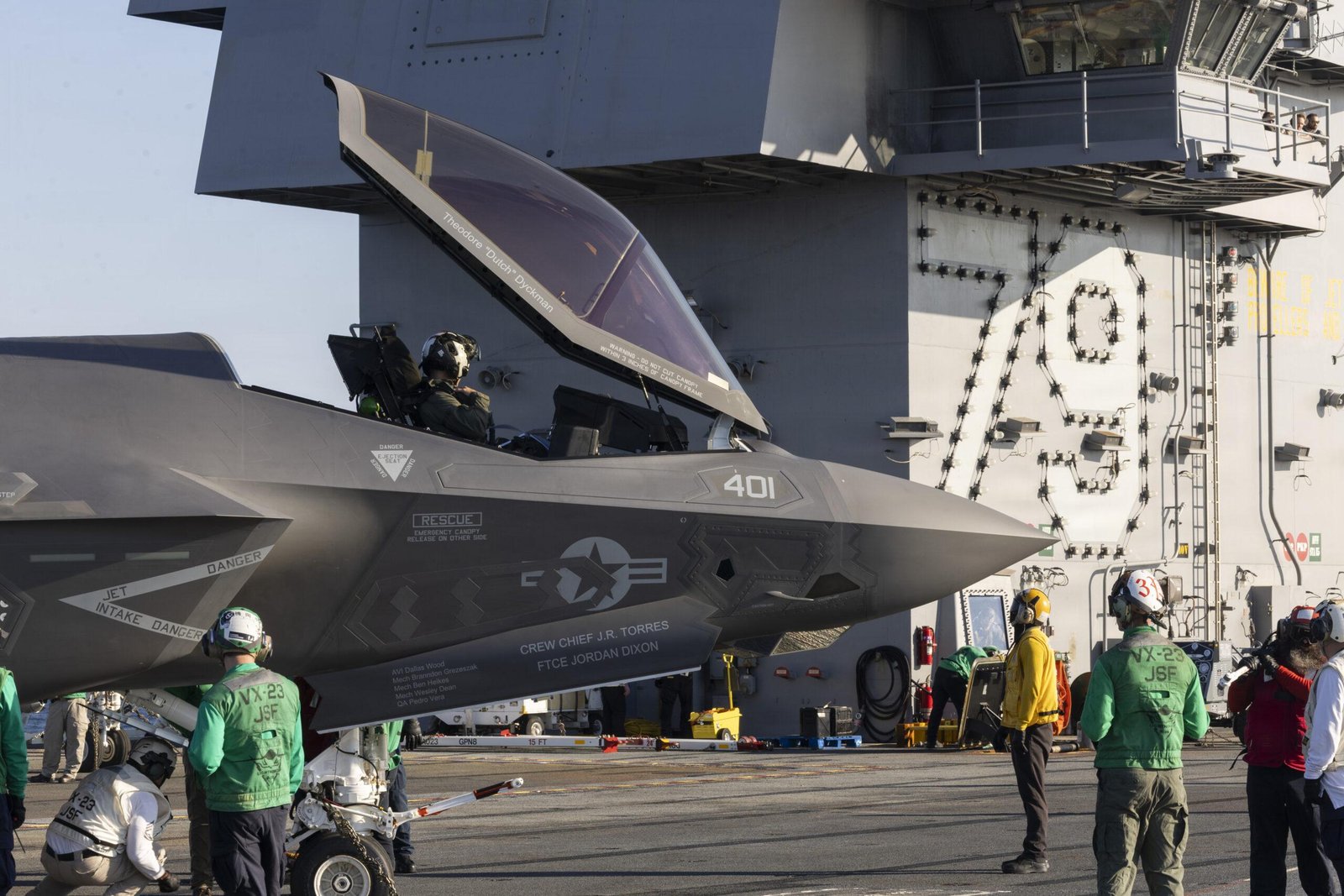
For the same reason, visual evidence should not be used to estimate sortie totals, operating tempo or arresting-gear performance. Those are measurable results that would need an official test report. The photographs are evidence of visible activity, not a substitute for instrumented trial results.
Launch operations and what the photographs show
A second supplied image shows an F-35C airborne above a carrier deck, with its landing gear extended. The picture adds a different view of the aircraft’s shipboard operations and belongs alongside discussion of testing rather than the article’s opening claim about a landing.
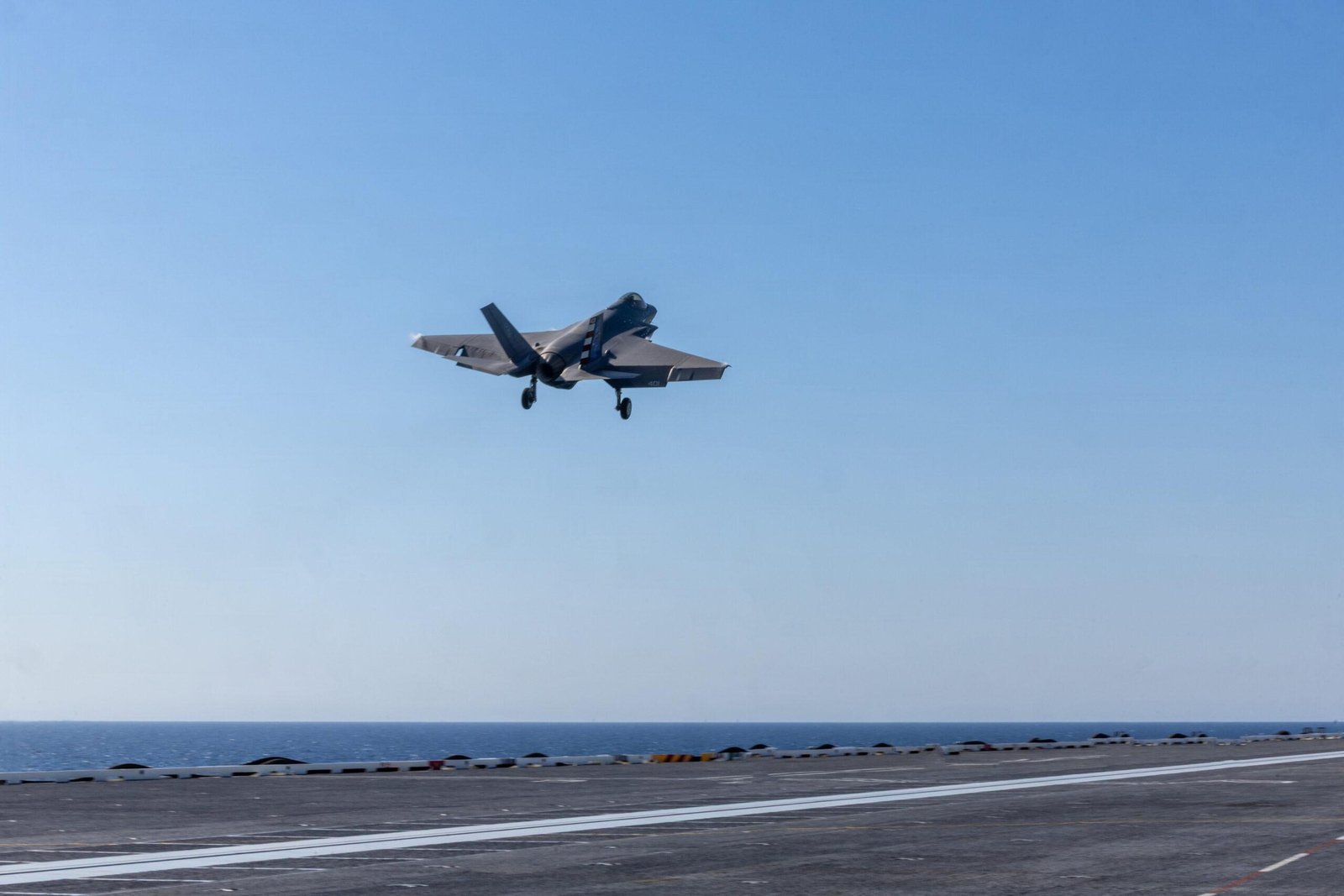
An aircraft lifting off from a carrier is not proof that a subsequent landing happened on the same flight or that every launch-and-recovery objective was met. Similarly, the sequence of photographs does not necessarily establish the order in which the events occurred. Captions should describe only the action visible in each frame.
Earlier Navy records show F-35C operations aboard USS Carl Vinson and USS Abraham Lincoln, but they cannot verify the reported Kennedy event.
What remains unconfirmed about the carrier trials
The central unresolved point is documentary, not technical: the original DVIDS record cited in the draft could not be opened during this rewrite. As a result, the exact date, photograph credits, carrier identification, squadron attribution and whether the Navy called the event a first landing remain pending verification.
Readers can follow the original DVIDS image reference cited in the earlier draft. Its caption should be checked directly before assigning a final publication date or reporting additional test results.
FAQ: F-35C Kennedy landing
Was the F-35C Kennedy landing the first carrier landing for this fighter?
No. The F-35C made an arrested landing aboard USS Nimitz in November 2014; the reported distinction here concerns the newer carrier John F. Kennedy.
Does one aircraft landing mean John F. Kennedy is ready to deploy?
No. Carrier readiness requires additional systems testing, crew qualification and formal milestones beyond an individual aircraft recovery.
What still needs confirmation about the F-35C Kennedy landing?
The original Navy photo captions must establish the exact date, carrier, photographer and scope of the reported flight operation.
Looking Ahead
The next defensible update will come from a verified Navy or DVIDS caption and any official summary of follow-on trials. A specific schedule for the next F-35C qualification milestone has not been established from the accessible source material. TAD should update this report when the Navy confirms the test scope and the ship’s subsequent readiness steps.
Sources
- DVIDS, reported PCU John F. Kennedy first F-35C landing (original record not accessible during rewrite)
- DVIDS, F-35C flight operations aboard USS Abraham Lincoln (2021 archival context)
- DVIDS, F-35C carrier operations aboard USS Carl Vinson (2021 archival context)