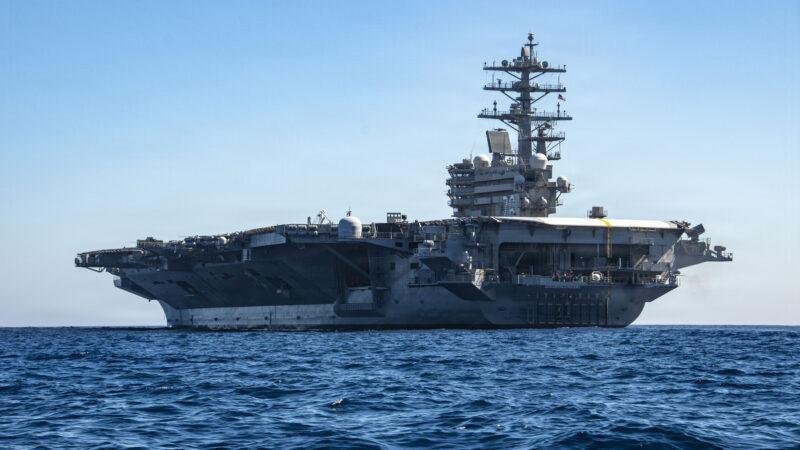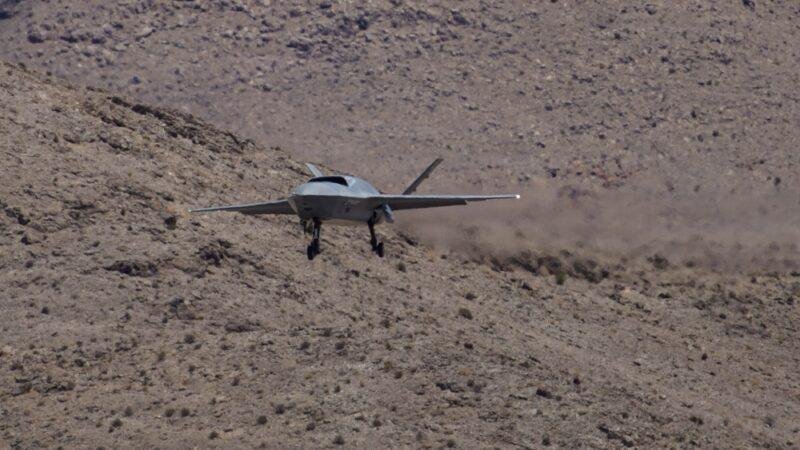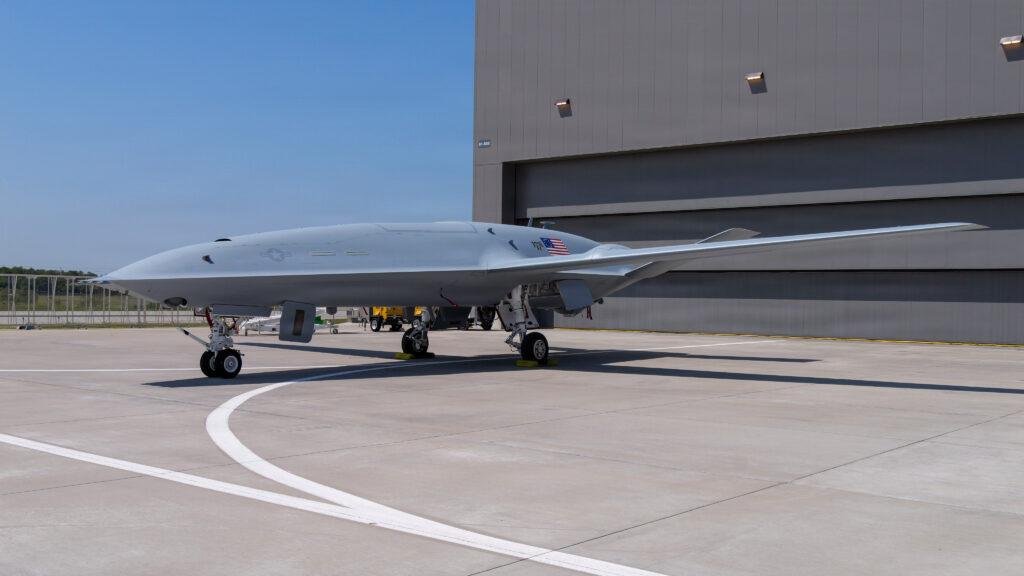
MQ-25 carrier link testing took a step forward when the U.S. Navy reported that personnel aboard USS Ronald Reagan controlled an MQ-25A Stingray test aircraft at a Boeing facility more than 2,100 miles away. The aircraft carrier was underway in the Pacific while the aircraft was at Mascoutah, Illinois, during a preliminary sea trial announced Oct. 19.
The reported achievement is a remote command-and-control connection between a ship at sea and an aircraft at a distant ground facility. It should not be confused with a carrier takeoff, a landing aboard the ship or a completed aerial refueling mission. Those tasks involve different aircraft, deck and operational requirements, and the published announcement alone does not demonstrate they occurred during this test.
Table of Contents
MQ-25 Carrier Link Operated Across a Satellite Network
Navy-sourced reporting says the ship’s Unmanned Air Warfare Center used an MD-5C Ground Control Station to communicate with the MQ-25A through a proliferated low-Earth-orbit satellite network. The term describes an architecture with multiple satellites rather than relying solely on a short direct radio connection. That infrastructure allowed shipboard controllers to establish a beyond-line-of-sight link over a considerable separation.
The aircraft was at Boeing’s aviation test location near Mascoutah, Illinois. The ship’s underway position was in the Pacific, but the Navy did not publicly identify a precise location in the reports examined. The announcement describes command and control, not a general-purpose statement that every future naval mission will have an uninterrupted satellite connection in any operating environment.
The primary announcement is available at the original source.
Why Remote Control Matters for Carrier Aviation
The MQ-25A is being developed as an unmanned carrier-based refueling aircraft. Its purpose is to support the carrier air wing by handling missions that otherwise consume crewed strike-fighter availability. The Navy expects the program eventually to extend the practical reach of carrier air operations and free additional aircraft for other tasks.
A key step toward that goal is reliable control from the ship while it moves at sea. Land-based test pilots can operate aircraft during early development, but carrier operations require integration with ship systems, procedures, communications and aviation personnel. Demonstrating the control link is therefore relevant without establishing that the full carrier-based refueling concept is already operational.
The MQ-25A Program Has Separate Production Milestones
The Navy reported an initial MQ-25A flight from Boeing’s Illinois facility earlier in 2026. In May, the program received Milestone C approval to proceed toward low-rate initial production. In September, the Navy awarded Boeing an initial production contract valued at $562 million for three Lot 1 aircraft and advance procurement for additional airframes.
The September contract announcement identified initial deliveries beginning in 2029. That expected date is a plan, and its fulfillment will depend on production and qualification work. It should not be conflated with the October satellite-link demonstration. One test checks the control architecture; another phase determines when operational units can accept and deploy aircraft.
Limits of What the Sea Trial Proved
The October demonstration reportedly established control between the carrier’s shipboard station and the MQ-25A. It did not announce an operational tanker squadron or a completed carrier landing. Reports differ on whether the aircraft was airborne at particular moments of the test, so TAD should avoid claiming an airborne phase without additional direct Navy evidence.
Future work will have to assess latency, system resilience, safety procedures and compatibility with routine deck operations. Those topics are meaningful questions for later reporting, but results should not be fabricated from the fact that a link was established. The core verified development is the Navy-reported long-distance connection from a carrier underway.
FAQ: MQ-25 carrier link
How far did the MQ-25 carrier link reach?
The Navy reported a connection exceeding 2,100 miles between USS Ronald Reagan and the aircraft at Boeing’s Illinois test facility.
Did an MQ-25 launch from USS Ronald Reagan?
No carrier launch was established by this report. The test involved remote control of an aircraft located at a land-based facility.
Is the MQ-25A already conducting carrier refueling missions?
The Navy’s announcement does not establish routine operational carrier-based aerial refueling with the MQ-25A.
Looking Ahead
The next meaningful milestones involve further sea trials, control-system integration, shipboard qualifications and delivery of low-rate production aircraft. The Navy’s published manufacturing plan points to initial lot deliveries beginning in 2029, subject to program progress. Future reports should distinguish each completed test from an intended operational capability.
For related TAD reporting, see F-35C testing aboard USS John F. Kennedy.
Sources