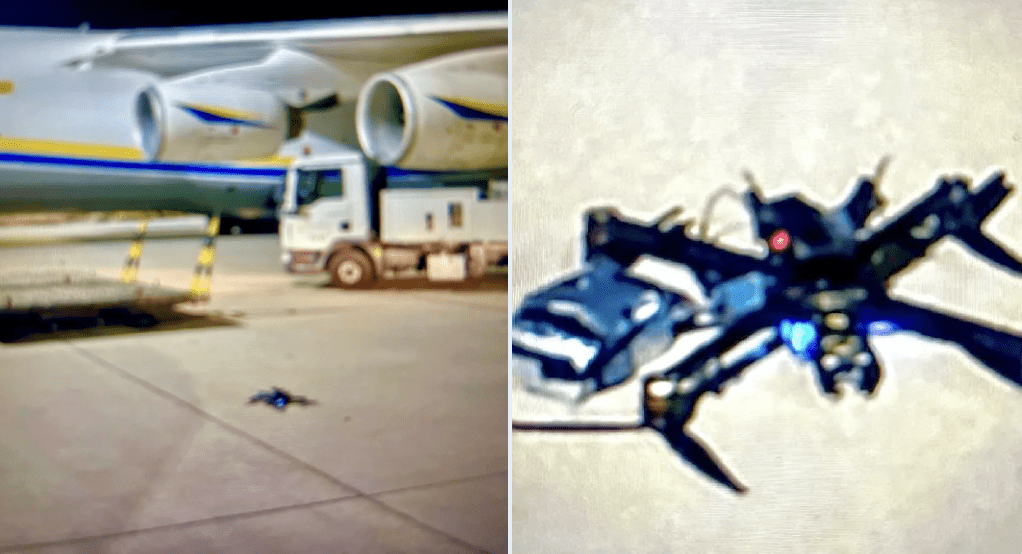
The Leipzig airport drone found overnight beside a Ukrainian Antonov, combined with a mid-air collision involving a DHL cargo aircraft, disrupted flight operations at Leipzig/Halle Airport, one of Germany’s most important cargo hubs. Police recovered the explosive-laden drone parked on the secure cargo apron, while a separate DHL aircraft struck an unidentified object during its approach and diverted safely to Hanover.
Roughly 19 flights bound for Leipzig, including at least one passenger flight, were diverted overnight as investigators worked the scene. German officials say they suspect Russia is behind a broader pattern of drone incursions targeting critical infrastructure across the country, and the Leipzig airport drone incident is being treated as part of that pattern.
Table of Contents
Explosive Drone Found Beside Ukrainian Antonov at Leipzig Airport
Shortly before midnight on Tuesday, a ground worker at Leipzig/Halle Airport discovered a drone carrying explosives parked on the secure cargo apron near the southern runway. The device had come to rest on the tarmac undetected before it was spotted, sitting directly beside a Ukrainian Antonov An-124 — one of the largest cargo aircraft in the world, operated by Antonov Airlines.
Police deployed a bomb disposal robot to the scene. According to German tabloid Bild, the explosive was of a type that can be assembled relatively easily using fertilizer and gasoline. The device did not detonate; reporting indicates its detonator malfunctioned, and the robot was used to remove it safely.
Counter-drone systems built to detect airborne threats offered little defense against a device that landed and sat undetected inside a secured perimeter.
DHL Cargo Plane Strikes Object, Diverts to Hanover
At almost the same time the Leipzig airport drone was discovered, a DHL cargo aircraft was forced to abort its landing approach because of the runway closure. While climbing away, roughly six kilometers from the airport at an altitude of about 400 meters, the aircraft struck a separate unidentified flying object.
The plane sustained minor damage to its nose section and diverted to Hanover, where it landed safely. DHL CEO Tobias Meyer confirmed the collision had affected the company’s operations. In total, around 19 flights bound for Leipzig — including at least one passenger flight — were diverted to other airports overnight.
The airport’s northern runway reopened early Wednesday morning, restoring normal flight operations, while the southern runway remained closed as investigators continued examining the scene.
Watch the Video
Flightradar24 shared footage and flight-tracking data covering the Leipzig airport drone discovery and the diversions that followed, including the aircraft affected by the overnight disruption.
Investigation and Russian Attribution
A German police counter-terrorism unit is now searching for whoever operated the drone and has appealed to the public for information about suspicious sightings near the airport in the hours before the incident.
An Interior Ministry spokesperson confirmed a drone had been found at Leipzig/Halle but said no definitive connection has yet been established between the drone discovery and the object that struck the DHL aircraft.
German officials have repeatedly said they suspect Russia of orchestrating a broader campaign of drone incursions, sabotage and disinformation targeting sites across the country, including:
- Military facilities
- Energy terminals
- Seaports
- Logistics companies
NATO has said it is aware of the incident. The Kremlin has consistently denied involvement in these types of incidents, dismissing similar accusations in the past as unsubstantiated.
Part of a Broader Pattern of Sabotage
This is not the first security scare at Leipzig/Halle. In July 2024, a parcel caught fire on the ground at the airport before it could be loaded onto a DHL plane, an incident security services treated as a suspected Russian-linked arson and sabotage plot. Drones have increasingly featured in state-linked operations well beyond Europe, as seen in The Aviation Diary’s coverage of the first U.S. combat use of sea drones against Iran.
Lithuanian prosecutors later said a related string of 2024 parcel bomb tests on DHL and DPD flights across Europe — devices triggered by timers hidden inside vibrating massage pillows — were organized and supervised by Russian citizens with ties to Russian military intelligence. Security officials in Lithuania have said the parcels were part of a test run for a plot to trigger explosions on cargo flights bound for the United States.
German airports have been on heightened alert for months following a string of unauthorized drone overflights at sensitive sites nationwide, and the Leipzig airport drone case is now the most serious of these incidents to date.
Why Leipzig/Halle Airport Is a Target
Leipzig/Halle is a natural target for this kind of activity. The airport is a major hub for logistics group DHL and also serves as a base for Ukraine’s Antonov Airlines, making it strategically significant to both commercial air cargo and Ukraine-related military logistics.
The airport plays a role in the transport of military goods, including shipments tied to the German armed forces and NATO allies — a profile that security analysts say makes it an attractive target for espionage and sabotage campaigns.
FAQ: Leipzig Airport Drone Incident
Did the explosive drone at Leipzig airport detonate?
No. Reporting indicates the drone’s detonator malfunctioned, preventing the device from going off. Police used a bomb disposal robot to safely remove it from the secure cargo apron near the southern runway.
Are the drone discovery and the DHL collision connected?
Investigators haven’t established a definitive link. An Interior Ministry spokesperson confirmed both incidents occurred but said no confirmed connection has been made between the drone found on the tarmac and the object the DHL aircraft struck in flight.
Why do German officials suspect Russia?
Germany has recorded a rising pattern of drone incursions and sabotage attempts at military sites, energy terminals, seaports and logistics companies, which officials attribute to a Russian hybrid warfare campaign. The incident also echoes a 2024 parcel bomb plot on DHL flights that Lithuanian authorities linked to individuals tied to Russian military intelligence. The Kremlin denies involvement in such incidents.
Looking Ahead
Flight operations at Leipzig/Halle have largely returned to normal, but the investigation into the drone’s origin — and whether it is linked to the object that struck the DHL aircraft — remains ongoing. Given the airport’s role in supporting Ukraine-related cargo traffic, the incident is likely to add further pressure on German and NATO officials already grappling with a rise in drone incursions across critical infrastructure.
The Aviation Diary will continue covering developments involving European airport security, Russian hybrid sabotage campaigns, and other major aviation and defense stories.
Sources
For additional information about this story: