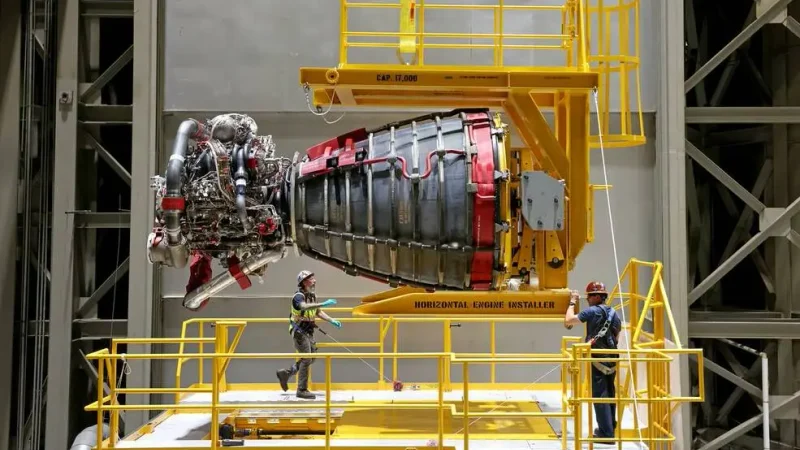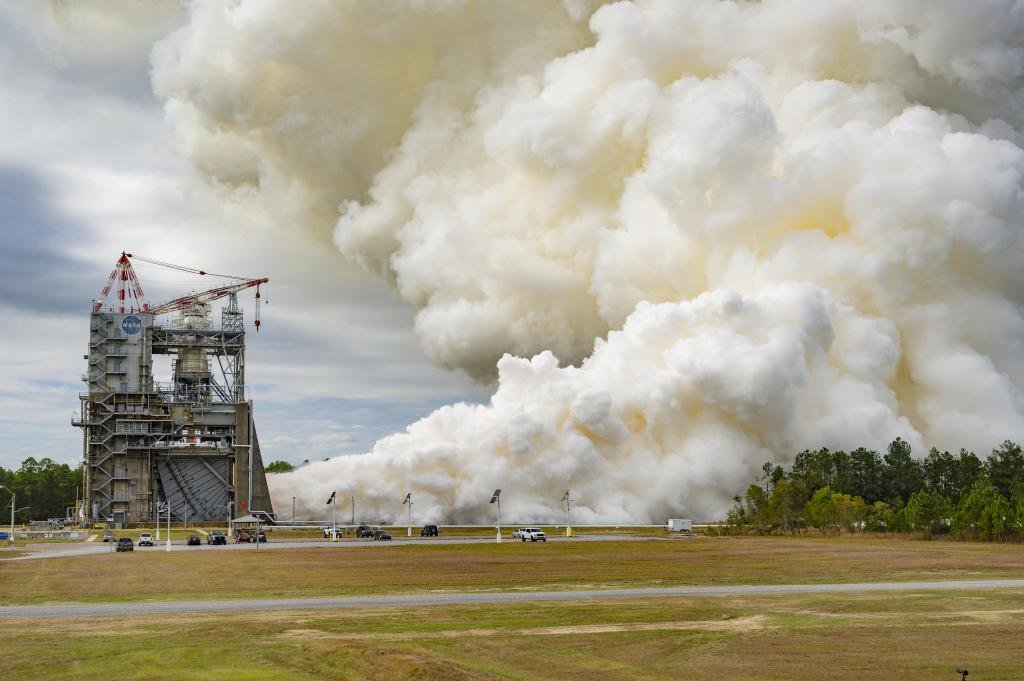
RS-25 hot fire testing at NASA’s Stennis Space Center reached the planned 200 seconds on Nov. 18, the agency reported. The test used engine No. 10001 on the Fred Haise Test Stand near Bay St. Louis, Mississippi. NASA is using the development engine to gather data for future Artemis missions.
This was a separate firing of the same test engine that ran for 500 seconds in October. The shorter duration was planned for the November run. NASA says the engine used in both tests is a development unit that will remain on the ground.
Table of Contents
What NASA reported from the November RS-25 hot fire
In its Nov. 19 account, NASA said the engine fired for three minutes and 20 seconds, the interval the test team planned. The report includes photographs from the firing and identifies the engine and stand. NASA says work with prime contractor L3Harris is intended to collect data that can improve engine performance and reliability for future missions.
Completing the planned run provides data from that operating window. The public report does not contain the underlying measurements, test traces or a component-by-component assessment. It establishes that the firing reached its scheduled duration. Evaluating the data and applying it to flight hardware are separate steps.
NASA identified a test team with personnel from the agency, L3Harris and Nova Space Solutions. The work took place at the Stennis stand used for the earlier run, giving the teams another set of ground-test data from the same development engine rather than from a different flight unit.
How November compares with the October firing
The October NASA account describes a 500-second run on Oct. 21 using engine 10001. TAD covered that firing as an earlier milestone in the engine’s test work. The November report documents a different event for the same engine at the same test stand, with a different planned duration.
The difference between the two durations is useful for tracking each event, but the agency did not release enough detail in its November report to compare the full test profiles. The public record supports two completed runs with the November test conditions left largely undocumented in the latest announcement. Neither duration alone establishes whether a specific change has been accepted for flight.
Where the development engine fits in Artemis
NASA says the development engine will not fly. It can therefore continue to serve as a ground-test unit while the program prepares engines intended for missions. NASA says RS-25 engines undergo testing and have to be proven flightworthy at Stennis before use.
The agency put the test in the context of Artemis IV, its planned 2028 lunar landing mission.
Its account did not say that the November firing changed the mission schedule. An RS-25 hot fire can support future flight hardware through the data it produces without assigning the particular engine in the photograph to a mission. The latest report does not name a flight engine or an Artemis launch that directly depends on this specific run.
FAQ: RS-25 hot fire
How long did the November RS-25 hot fire last?
NASA reported a 200-second firing on Nov. 18, matching the planned duration.
Was this the engine that ran in October?
Yes. NASA identified development engine 10001 in the Oct. 21 and Nov. 18 reports. The October firing lasted 500 seconds.
Will engine 10001 fly on Artemis?
NASA says engine 10001 is a development unit and will remain on the ground. Its test data supports work on future Artemis engines.
Looking Ahead
The next public indication of how the November RS-25 hot fire informed the program would be a test update or a disclosed change to future flight hardware. NASA’s announcement did not specify the next firing date for engine 10001 or identify a new flight assignment.
Sources
- NASA’s November Stennis test report
- NASA’s October Stennis test report
- TAD coverage of the October 500-second test
- Featured photo credit — NASA photo by Danny Nowlin (NASA editorial-use guidelines)