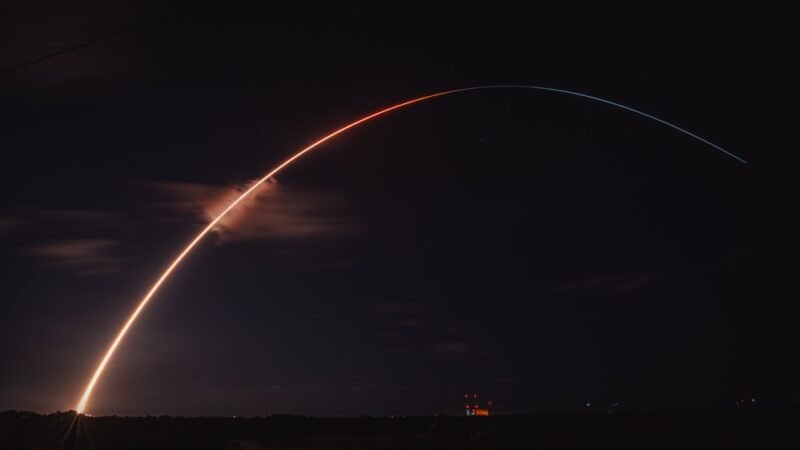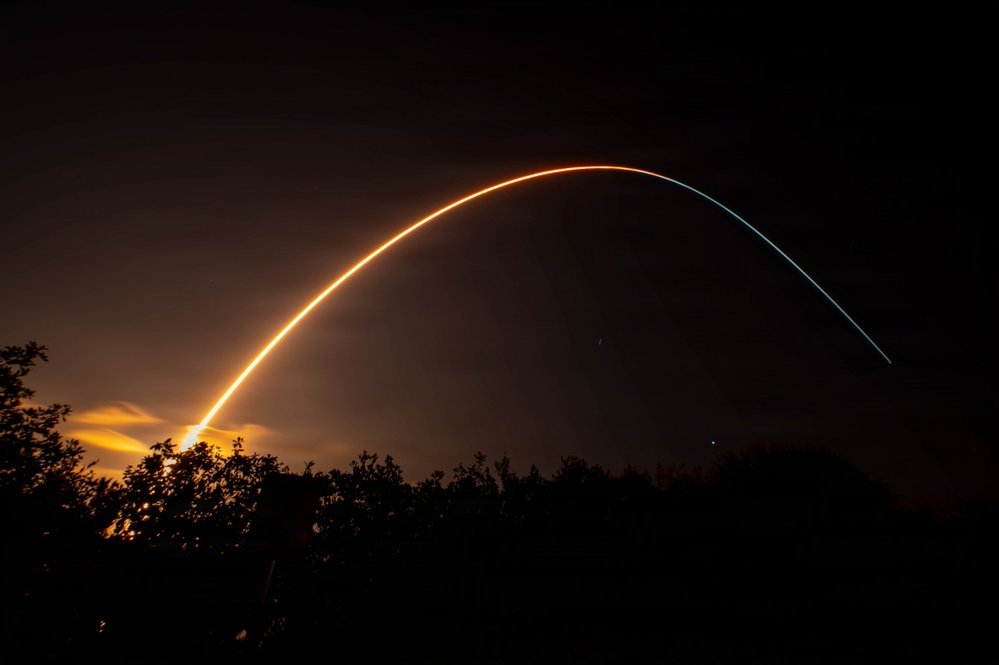
The Vulcan failure that destroyed 40 Amazon Leo satellites on Nov. 15 began with “low booster performance” just after liftoff, United Launch Alliance said in an update posted Nov. 17. That shortfall forced stage separation “when the vehicle was low in altitude and below minimal velocity to reach orbit,” the company said.
The update is the first technical detail since TAD reported the loss of the Vulcan mission and its 40 Amazon Leo satellites. ULA said the FAA will oversee the ULA-led investigation and approve its final report, including any corrective actions, according to the update.
Table of Contents
What ULA said about the Vulcan failure
ULA said it appears to have lost telemetry and the mission about 10 minutes into flight, per its Nov. 17 statement. The Vulcan second stage appears to have started nominally and its RL10 engines operated as planned, but the stage “was unable to recover from the performance loss,” ULA said.
“All indications are that the solid rocket booster performance was nominal, following nozzle improvements implemented for this launch,” the company added. ULA said it is “very early in the process” and that it wants to avoid speculation until the investigation is complete, according to the same update.
Investigators focus on the liquid-fueled core stage
ULA chief executive Mark Peller said the investigation is focused on the liquid-fueled core stage, SpaceNews reported from his Nov. 17 remarks. “We do know that we had a significant shortfall in booster, or first-stage performance,” Peller said at a panel hosted by the Washington Times, Breaking Defense reported.
Peller said the GEM 63XL solid rocket boosters built by Northrop Grumman appeared to perform as expected, according to Breaking Defense. The core stage is powered by two BE-4 engines supplied by Blue Origin, Ars Technica noted.
Two sources told Ars Technica that preliminary data point to the launch-vehicle side, possibly the systems that feed methane and liquid oxygen to the engines, rather than the engines themselves, the outlet reported. Ars stressed that the information is preliminary and that no definitive conclusions should be drawn, in the same report. ULA’s Nov. 17 update did not name a root cause.
National security launch capacity takes another hit
The failure is likely to trigger a lengthy investigation that could ground the rocket for months, Breaking Defense reported. Ars Technica reported the setback is likely to sideline Vulcan for at least half a year, citing its own assessment.
Aside from Vulcan, SpaceX’s Falcon 9 and Falcon Heavy are the only rockets currently authorized to carry critical payloads under the Space Force’s National Security Space Launch Phase 3 Lane 2 program, with Blue Origin’s New Glenn grounded since a May launch pad explosion, Breaking Defense reported. The Space Force had grounded Vulcan in late February over solid rocket booster problems and by Oct. 1 had reassigned six NSSL missions to SpaceX, according to the same report.
Amazon had more than a dozen Amazon Leo launches on the 2027 manifest, Ars Technica reported. The Nov. 15 mission was Vulcan’s fifth flight since its January 2024 debut, the outlet said.
FAQ: Vulcan failure
What caused the Vulcan failure?
ULA has not named a root cause; it said early indications show low booster performance just after liftoff, per its Nov. 17 update.
Who is investigating the Vulcan launch failure?
ULA is leading the investigation, and the FAA will oversee it and approve the final report, ULA said.
Did the solid rocket boosters cause the failure?
ULA said all indications are that solid rocket booster performance was nominal after nozzle improvements, according to its statement.
Looking Ahead
The next milestone is ULA’s FAA-approved investigation report and any corrective actions, which the FAA must approve. Blue Origin is separately seeking to return New Glenn to flight as early as January, Ars Technica reported.
Sources
- United Launch Alliance: Vulcan Leo 1 updates (Nov. 15 and Nov. 17, 2026)
- Ars Technica: The data is very preliminary, but Vulcan failure may not be due to BE-4 engines (Nov. 17, 2026)
- Breaking Defense: Vulcan failure deepens concerns over US military launch capacity (Nov. 16, 2026, updated)
- SpaceNews: ULA CEO says Vulcan failure probe focused on liquid core booster (Nov. 17, 2026)