The Silent Anvil torpedo is the U.S. Navy’s answer to a problem that has shaped anti-submarine warfare for decades: an aircraft hunting a submarine has to fly almost directly over the target before it can drop a weapon. A request for information released by Naval Air Systems Command on August 25 asks industry whether it can build a Silent Anvil torpedo the size of a Small Diameter Bomb that glides quietly toward a submarine from well outside that envelope, then enters the water and finishes the job on its own.
The Silent Anvil torpedo program is early. No contract has been awarded and no design has been selected. But the requirements the Navy published say a great deal about how the service expects to fight beneath the surface over the next decade, and about which aircraft it wants doing the fighting.
Table of Contents
Silent Anvil Torpedo Explained: What the Navy Asked For
The Navy refers to the Silent Anvil torpedo by the abbreviation SAA-LT. Naval Air Systems Command posted the request for information to SAM.gov on behalf of the service’s strike weapons program office, with the notice issued through Portfolio Acquisition Executive (PAE) Munitions, the organization responsible for naval aviation munitions programs.
According to the notice, SAA-LT is a next-generation anti-submarine warfare standoff delivery system intended to counter emerging undersea threats and widen the pool of manned and unmanned aircraft that can carry out anti-submarine missions. In plain terms, the Navy wants a glide weapon: something released well away from the target that flies unpowered toward a search area, enters the water at a controlled angle, and then acoustically homes on whatever it hears down there.
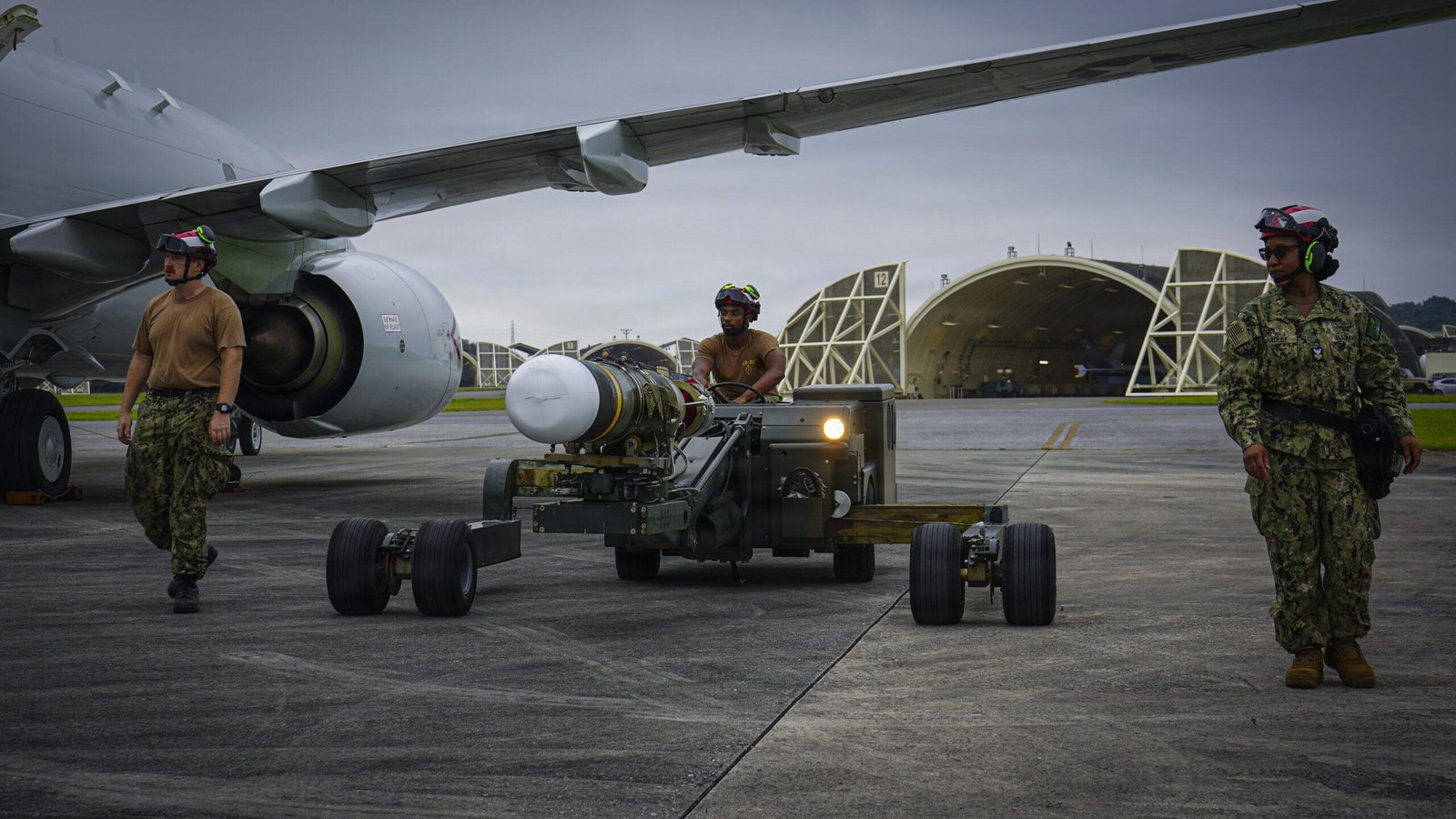
The RFI breaks the weapon into two halves. The torpedo itself would carry an acoustic sensor, a warhead, a command-and-control section and an electric propulsion system. The flight portion would add a wing kit, a radio with an aperture, and guidance and control. Acoustic homing is the same principle that guides existing lightweight torpedoes, and it is the same job the Navy already asks of helicopters like the Sikorsky MH-60R Seahawk. What changes with Silent Anvil is everything that happens before the weapon gets wet.
Two Development Paths on the Table
The request for information leaves the Silent Anvil torpedo architecture open and asks industry to respond along one of two lines.
- A complete end-to-end weapon. A vendor designs both the glide body and the torpedo it carries, delivering a single integrated round.
- A wing kit standoff design. A vendor builds an unpowered glide wing kit that carries a government-furnished torpedo to the target area, adding standoff range to a weapon the Navy already owns.
The second option has obvious appeal. Strapping wings and guidance onto proven munitions is one of the more reliable shortcuts in modern weapons development, and the Air Force demonstrated the economics of it years ago when fins and satellite guidance turned unguided bombs into precision weapons at a fraction of the cost of new designs.
Keeping both Silent Anvil torpedo paths open also protects the schedule. If a clean-sheet torpedo runs into trouble, a wing kit built around existing inventory still delivers most of the operational benefit.
Small Diameter Bomb Size, Torpedo Job
The physical requirements are unusually specific for a document at this stage, and they explain a lot about the Navy’s intent. The service asked for a compact, lightweight form factor comparable to the GBU-39 Small Diameter Bomb, in order to maximize carriage options across as many aircraft as possible.
- Maximum weight: 268 pounds
- Maximum length: 70 inches
- Maximum diameter: 7.5 inches
- Carriage: compatible with the standard BRU-61/A bomb rack, internally or externally
- Launch speeds: Mach 0.25, 0.50 and 0.85
- Template release altitude: 10 feet to 60,000 feet
For the wing kit version specifically, the Navy set water entry conditions of 45 to 90 degrees at a velocity between 40 and 120 feet per second. The performance goal it stated for the weapon overall is blunt: maximize aerial flight endurance while minimizing aquatic immersion time. Time in the water is time a submarine can hear you coming.
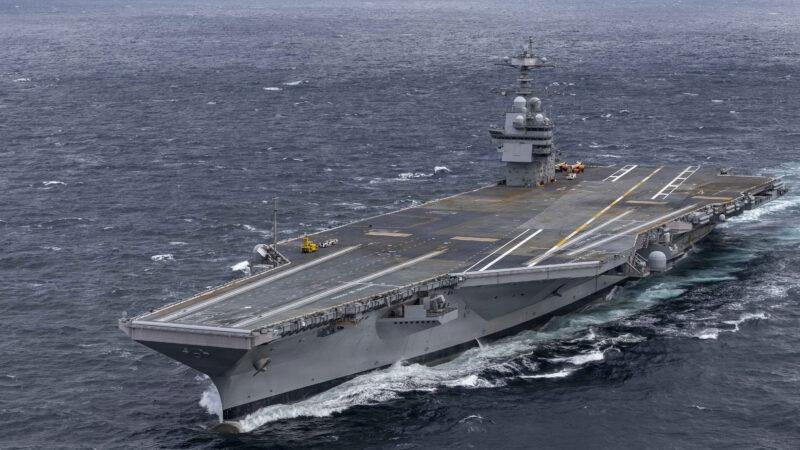
That BRU-61/A requirement is the detail worth sitting with. It is the rack used to carry Small Diameter Bombs in fours, and building the weapon around it means the Silent Anvil torpedo could ride in internal weapons bays as well as on external stations. The Navy also wants it compatible with storage and handling aboard aircraft carriers.
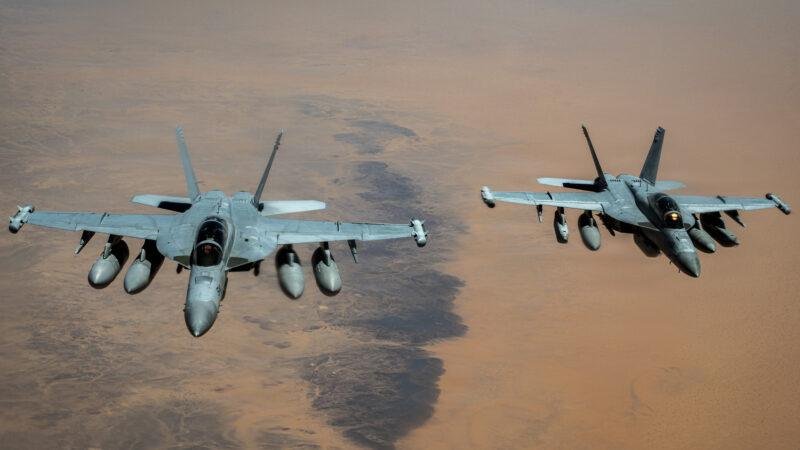
Put those two requirements together and the picture sharpens. This is not just a weapon for the maritime patrol community. It is one the Navy wants uncrewed aircraft and carrier-based fighters such as the F-35C to carry, which would move anti-submarine warfare out of the hands of a small specialist fleet and into the everyday inventory of the carrier strike group.
Why Standoff Range Matters in Anti-Submarine Warfare
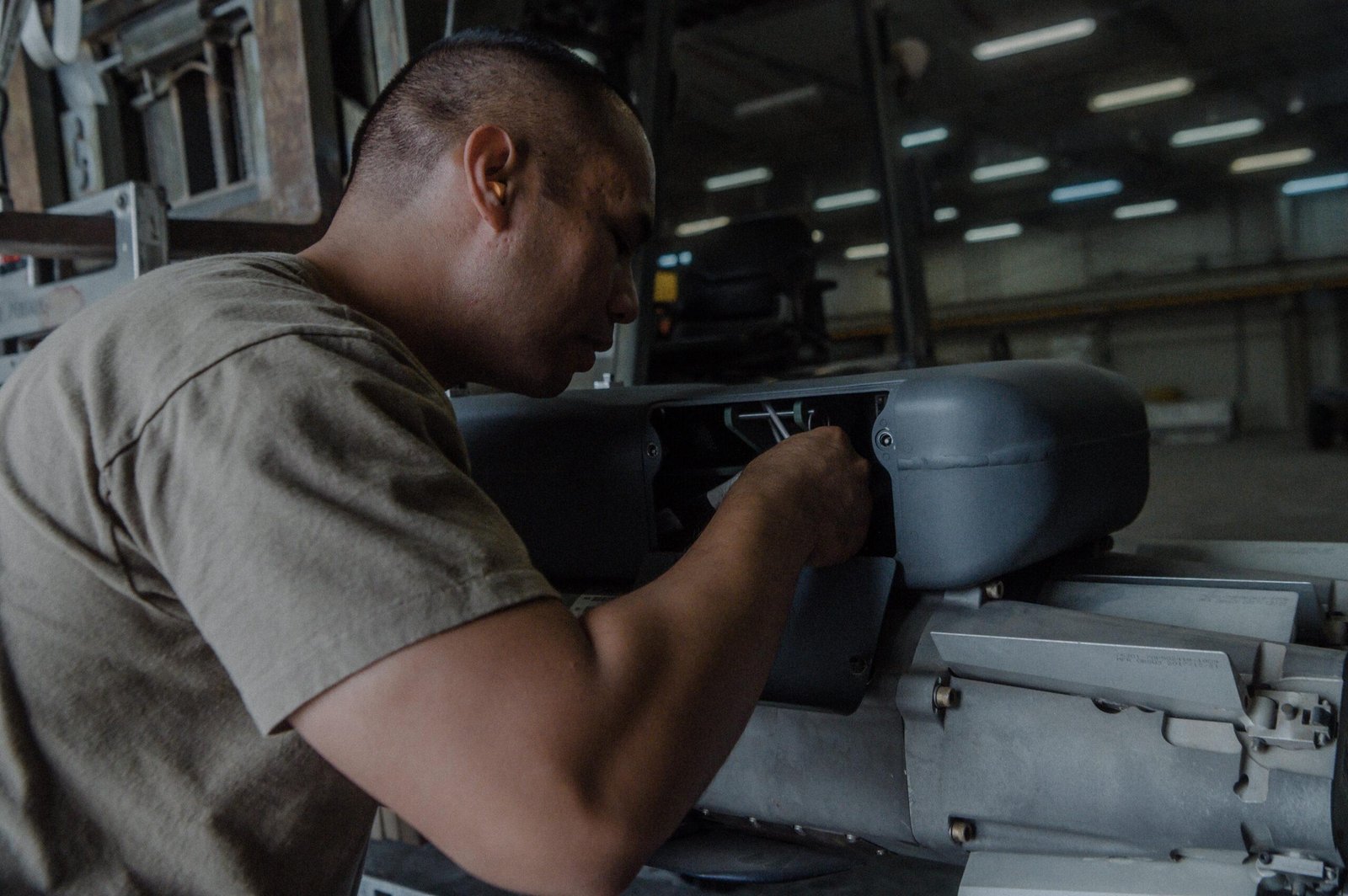
A lightweight torpedo dropped from an aircraft has to land close to its target. The Mk 54, the Navy’s current lightweight anti-submarine torpedo, has a range in the neighborhood of 5.7 miles once it is in the water. Everything before that release point is the aircraft’s problem, which means the launch platform has to fly into the area where a submarine is operating.
Against a submarine alone, that exposure was historically acceptable. Against a submarine escorted by surface combatants carrying long-range surface-to-air missiles, it is a much harder proposition. A large, slow patrol aircraft orbiting inside that envelope is a target.
“The Government is seeking industry input on the maximum standoff glide range achievable.”
Naval Air Systems Command request for information, August 25, 2026
That sentence is the most revealing line in the document. The Navy did not specify a required standoff distance, which amounts to an admission that it wants to know what physics and current engineering will allow before it writes a firm requirement.
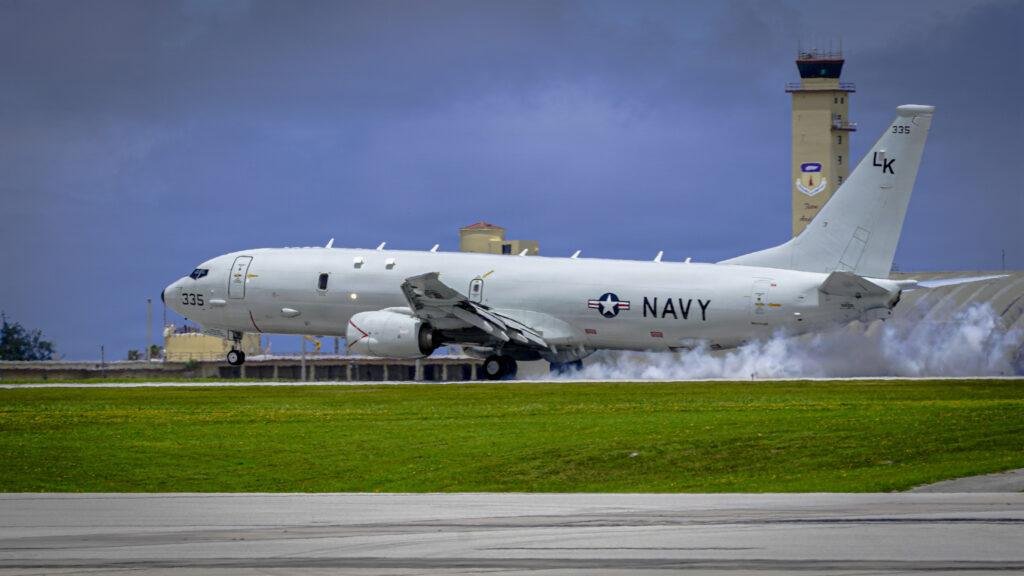
The 60,000-foot upper altitude points somewhere specific. It sits above the operating ceiling of the P-8A Poseidon and closer to what a high-altitude platform like the Northrop Grumman MQ-4C Triton can reach. Glide range scales with release altitude, so the higher the launch, the further the weapon travels before it touches water.
How It Compares to HAAWC and the Mk 54
The Navy has been here before, at smaller scale. The High Altitude Anti-Submarine Warfare Weapon Capability, known as HAAWC, adds a glide kit to the Mk 54 so that a P-8A can release the torpedo from altitudes as high as 30,000 feet rather than descending to low level. HAAWC works, and it proved the basic idea of flying a torpedo to the water instead of dropping it there.
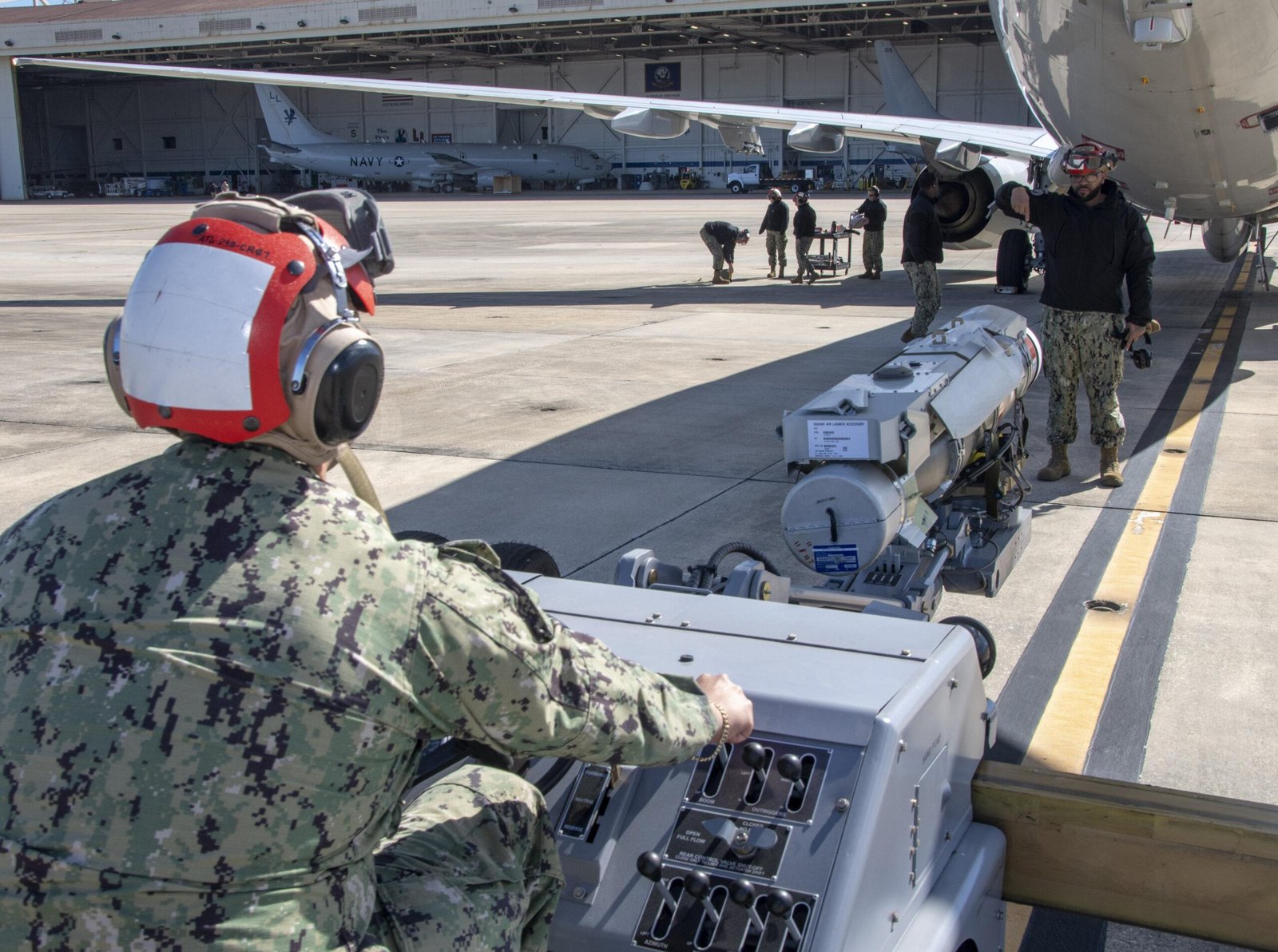
The Silent Anvil torpedo goes further in three directions. It doubles the ceiling. It shrinks the package to Small Diameter Bomb proportions so that fighters and drones can carry it, rather than restricting it to a converted airliner. And it opens the door to an entirely new torpedo rather than a kit bolted onto a legacy weapon.
There is a longer arc here worth noticing. Carrier decks once routinely launched dedicated submarine hunters. The Grumman Tracker, and later the S-3 Viking, flew the mission from the flight deck for decades before the Navy retired fixed-wing carrier ASW aircraft and handed the job to helicopters and shore-based patrol aircraft. A weapon that lets a strike fighter prosecute a submarine contact from standoff range is, in a roundabout way, an attempt to get that capability back without buying a dedicated aircraft for it.
The context driving the requirement is not subtle. China’s submarine fleet has grown in size and sophistication, including large long-range uncrewed submersibles, and the Navy has a parallel Long Range Anti-Submarine Warfare effort aimed at greater distances. The Silent Anvil torpedo is the tactical end of that same problem.
Schedule, Quantities and Next Steps
The timelines the Navy set for the Silent Anvil torpedo are aggressive by defense acquisition standards.
- An end-to-end prototype demonstration within 18 months of an agreement award
- Roughly 180 all-up rounds delivered within three years of a successful demonstration
- A sustained production rate of at least 60 units per year
- An industry day on September 17 in Lexington Park, Maryland
- Vendor responses due September 29
The Defense Department has signaled it may use a naval aviation systems consortium to award one or more other transaction agreements for the prototyping effort, a mechanism designed to move faster than a conventional procurement and to bring in companies that do not usually bid on major weapons programs.
A Silent Anvil torpedo request for information is market research, not a commitment. The Navy can read the responses and decide the technology is not mature enough, or that the wing kit path is the only affordable one, or that the whole thing should wait. What the document does establish is that the requirement has been written down with real numbers attached, which is usually the step that precedes a program rather than the step that ends one.
FAQ: Silent Anvil Torpedo
What is the Silent Anvil torpedo?
The Silent Anvil torpedo is a proposed U.S. Navy anti-submarine weapon, abbreviated SAA-LT, that would be released from an aircraft or drone, glide unpowered toward a target area, enter the water, and then home acoustically on an enemy submarine. It is currently at the request for information stage, with no contract awarded.
Which aircraft could carry it?
The Navy has not named platforms, but the requirements point the way. Compatibility with the BRU-61/A rack and a size envelope matching the GBU-39 Small Diameter Bomb would allow carriage by carrier-based fighters, uncrewed aircraft with internal bays, and maritime patrol aircraft such as the P-8A Poseidon. The 60,000-foot release altitude also implies high-altitude platforms.
How is it different from HAAWC?
HAAWC is a glide kit fitted to the existing Mk 54 torpedo and released from a P-8A at up to 30,000 feet. The Silent Anvil torpedo is smaller, is intended for release from as high as 60,000 feet, and may involve an entirely new torpedo rather than a kit on a legacy weapon.
How far can it glide?
The Navy has not said. The Silent Anvil torpedo RFI explicitly asks industry what maximum standoff glide range is achievable rather than setting a number, so the answer will come from the responses due at the end of September.
When could it enter service?
No fielding date has been announced. The Navy has asked for a prototype demonstration within 18 months of an award and approximately 180 rounds within three years of that demonstration, but those milestones only begin once an agreement is signed.
Looking Ahead
The September 17 industry day and the September 29 response deadline will be the first real indication of whether the Silent Anvil torpedo has industry behind it. Watch for which companies show up. An established torpedo manufacturer arguing for the wing kit path signals one outcome, while a field crowded with newer munitions firms proposing clean-sheet designs signals another.
Either way, the underlying shift is already visible in the requirements document. The Navy is trying to make anti-submarine warfare something any aircraft in the air wing can do, from a distance, instead of a specialty reserved for a handful of large aircraft that must fly into harm’s way to be useful.
The Aviation Diary will continue tracking the SAA-LT program, U.S. Navy anti-submarine warfare developments, and naval aviation weapons procurement.
Source
- Naval Air Systems Command — SAA-LT request for information, SAM.gov, August 25, 2026
- USNI News
- DefenseScoop
- Military Times
- Stars and Stripes