
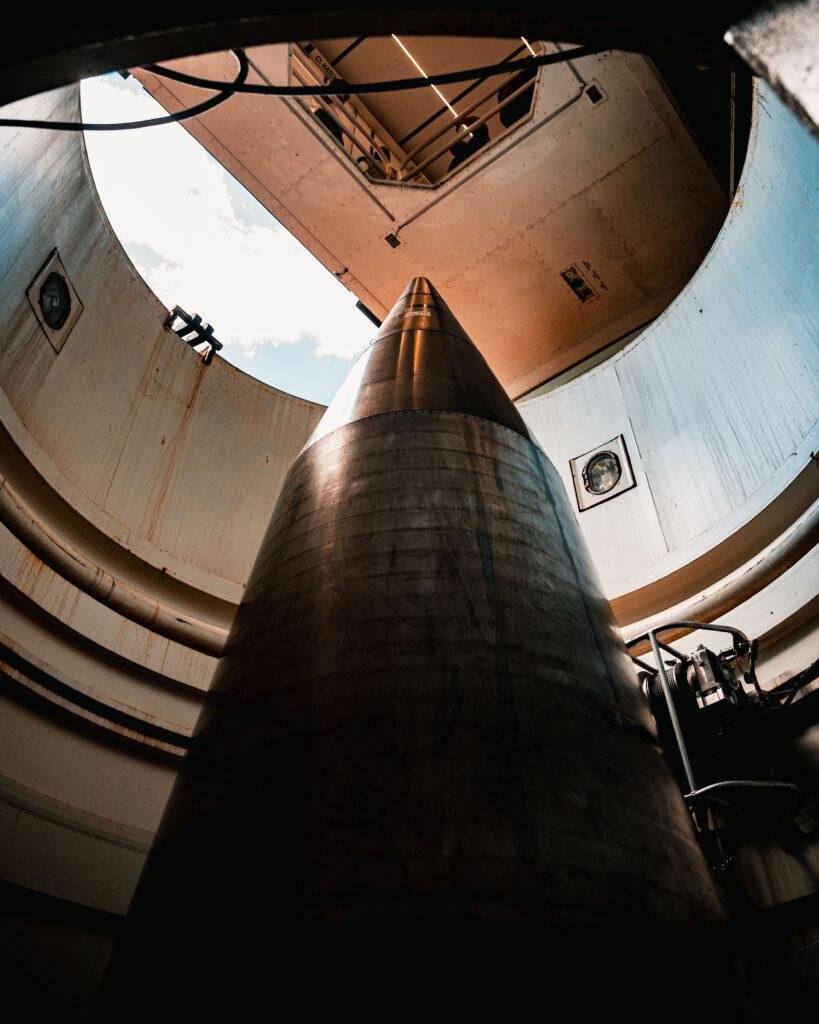
The F.E. Warren PCB contamination that halted Minuteman III test equipment traces back to a single routine inspection. An airman checking an AN/PRM-10 test oscillator set found residue on one of its components, reported it, and was later confirmed to have been exposed to polychlorinated biphenyls — a chemical the EPA has classified as a probable human carcinogen and banned in the United States since 1979.
What followed was a three-day inventory sweep that found the same residue on six of the command’s eight test kits.
The equipment in question has been in service since the Minuteman III system itself was new. Air Force Global Strike Command has now pulled it from every base that flies the mission, and the incident lands squarely inside a health investigation the service has been running since 2023.
Table of Contents
F.E. Warren PCB Contamination: What Happened
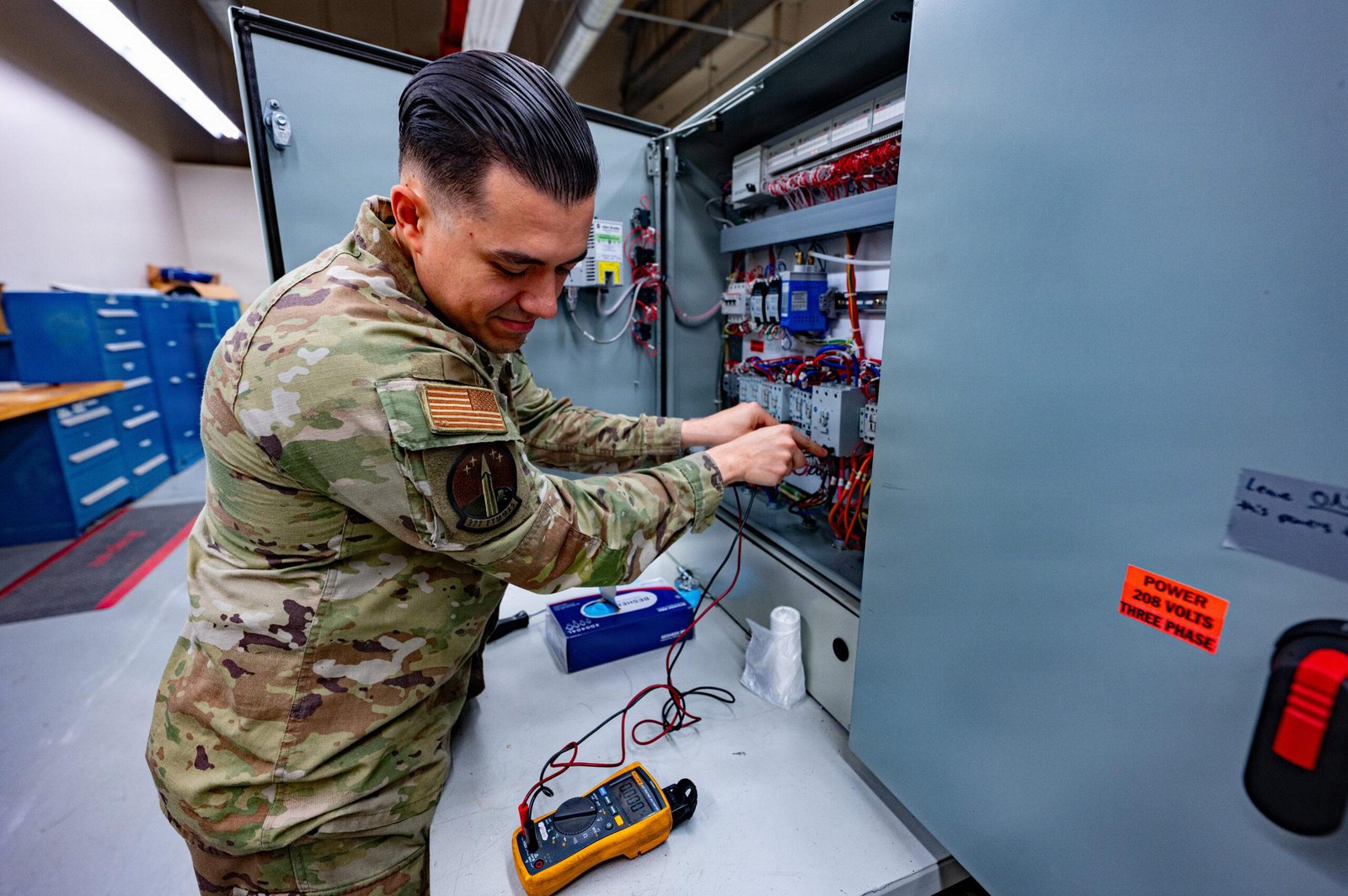
In August, an airman assigned to F.E. Warren Air Force Base in Cheyenne, Wyoming, was performing a routine inspection of an AN/PRM-10 test oscillator set when they discovered residue on one of the kit’s components. The AN/PRM-10 is a signal generator used to examine the communications systems that support the Minuteman III intercontinental ballistic missile force.
The airman was exposed to the material, reported it, received medical attention, and returned to duty with no adverse effects.
Laboratory testing on the residue confirmed the presence of polychlorinated biphenyls. Air Force Global Strike Command said in its statement that PCBs were commonly used in electrical devices at the time the AN/PRM-10 equipment was originally developed to maintain the Minuteman III system, which entered service in the early 1970s.
Maj. Gen. Colin Connor, commander of 20th Air Force, issued the order to stop using the equipment on August 26.
“Twentieth Air Force takes the responsibility to protect our Airmen very seriously. As our Airmen are our greatest asset, their safety and health are my top priority.”
Maj. Gen. Colin Connor, Commander, 20th Air Force
From One Kit to Six of Eight
Confirmation on the first unit triggered a wider check. The 20th Air Force ordered a one-time inspection of every AN/PRM-10 kit across Air Force Global Strike Command, covering the command’s entire inventory.
That review was completed within three days.
- Total AN/PRM-10 kits inspected: 8
- Kits with potential PCB residue: 6
- Time to complete the inventory sweep: 3 days
- Kits confirmed contaminated by lab testing at time of announcement: 1, with samples from the rest pending further testing
With three-quarters of the fleet showing potential contamination, the 20th Air Force ordered an immediate, command-wide suspension of the AN/PRM-10 rather than waiting on the remaining lab results. Units are transitioning to a modern, PCB-free replacement tester.
Before the equipment was pulled entirely, the F.E. Warren PCB response had already included updated safety warnings, handling precautions, and mandatory personal protective equipment requirements for locations where legacy testers remained in use.
Air Force Global Strike Command and 20th Air Force are now working with the Minuteman III systems program office to dispose of the withdrawn kits and to identify whether any other pieces of legacy test equipment might also contain PCBs.
Why 1970s Chemicals Are Still Turning Up
Polychlorinated biphenyls were used for roughly 50 years in electrical, heat transfer, and hydraulic equipment because of the compound’s insulating properties, high boiling point, and resistance to catching fire.
Those same properties made PCBs useful in exactly the kind of ruggedized test equipment the Air Force built to maintain its nuclear missile force during the Cold War.
The United States banned PCB manufacturing in 1979 after evidence mounted that the compound was toxic. The Environmental Protection Agency has since concluded PCBs are a probable cause of cancer in humans, alongside negative effects on the immune, reproductive, developmental, and neurological systems.
The problem is that PCBs do not break down easily and can persist in equipment and the environment for decades after manufacturing stopped.
That is the situation the Air Force is managing at its three ICBM bases. Much of the underlying infrastructure — silos, launch control centers, and legacy support equipment — was built more than 50 years ago, before PCBs were phased out.
Some of it is still in daily use, because replacing an entire nuclear weapons support architecture is neither fast nor simple.
A Recurring Concern Across the ICBM Force
This is not an isolated finding. The F.E. Warren PCB case follows an Air Force investigation into contamination at its nuclear bases dating to at least 2023, when it checked three ICBM installations, including F.E. Warren, specifically for the chemical.
No harmful levels were found at F.E. Warren at that time, but the same review did find harmful levels at two locations at Malmstrom Air Force Base in Montana.
That 2023 effort sits inside a larger investigation: the Missile Community Cancer Study, run by the Air Force School of Aerospace Medicine. The study began after at least nine service members who had worked at Malmstrom were reported to have developed non-Hodgkin lymphoma.
That number grew to 36 total cancer cases reported across missileers at Malmstrom, F.E. Warren, Minot, and Vandenberg: 10 non-Hodgkin lymphoma, 2 Hodgkin lymphoma, and 24 other cancer types, with 8 of those service members having died. Most had served at Malmstrom between 1997 and 2007.
The study looks at every ICBM wing and everyone who works there — missileers, maintainers, and security forces — drawing on active-duty medical records, Department of Veterans Affairs cancer registry data, mortality data, and public cancer registries.
As of the most recent public findings, the Air Force says it has not identified a current risk factor that fully explains the pattern. The AN/PRM-10 finding does not answer that question either, but it adds one more confirmed source of a carcinogenic chemical inside the same working environment the study is examining.
No Mission Impact, the Air Force Says
Air Force Global Strike Command has been explicit that pulling the AN/PRM-10 from service has not disrupted the ICBM mission. Gen. S.L. Davis, who commands AFGSC, framed the response as standard vigilance rather than crisis management.
“We remain vigilant for issues like these and will continue to aggressively and immediately take the appropriate actions.”
Gen. S.L. Davis, Commander, Air Force Global Strike Command
The command says U.S. ICBM forces remain safe, secure, and effective in protecting the homeland. F.E. Warren, Malmstrom, and Minot are the three bases that operate the Minuteman III force — the same three bases behind the recent MH-139 Grey Wolf helicopter fielding — and the AN/PRM-10 suspension applies command-wide, not only to F.E. Warren.
The timing places this alongside a broader transition already underway. The Air Force is working through the Sentinel program to eventually replace the Minuteman III system, and the aging infrastructure this incident highlights is part of the case for why that replacement effort exists.

FAQ: F.E. Warren PCB Contamination
What is the AN/PRM-10 test oscillator set?
It is a signal generator used to test the communications systems that support the Minuteman III intercontinental ballistic missile force. The equipment dates to the era the Minuteman III system itself was developed, in the early 1970s.
Was the airman who found the residue seriously hurt?
According to Air Force Global Strike Command, the airman reported the exposure, received medical attention, and returned to duty with no adverse effects. PCB exposure risk generally depends on the level and duration of contact, which is part of why the Air Force moved to inspect the rest of the inventory rather than treating the case as isolated.
Does this affect the readiness of the Minuteman III force?
Air Force Global Strike Command says there has been no mission impact. The AN/PRM-10 is support and test equipment, not part of the missile system itself, and units are transitioning to a PCB-free replacement tester.
Looking Ahead
Samples from the remaining AN/PRM-10 kits are still being tested, and the Air Force has not said how many of the six flagged units will ultimately be confirmed contaminated.
The service is also reviewing other legacy test systems across the ICBM enterprise to see whether the same chemical shows up elsewhere. That is the detail most worth watching in this F.E. Warren PCB story: it may turn out to be one data point in a wider equipment audit rather than a closed case.
The Missile Community Cancer Study remains ongoing, and findings like this one will likely keep feeding into it as the Air Force works to determine whether there is a common environmental factor behind the cancer cases reported across its ICBM bases. The Aviation Diary will continue tracking the F.E. Warren PCB contamination findings, the Missile Community Cancer Study, and the broader Minuteman III-to-Sentinel transition.
Source
- Air Force Global Strike Command — official statement
- Stars and Stripes
- Air & Space Forces Magazine
- Task & Purpose
- Federal Practitioner — Missile Community Cancer Study background