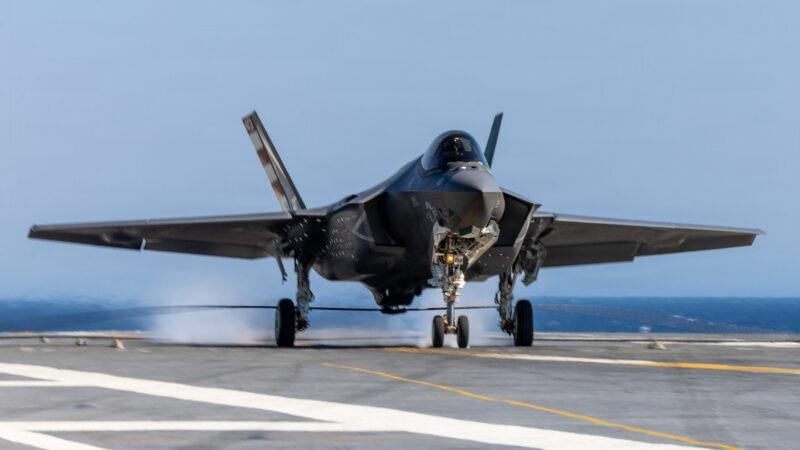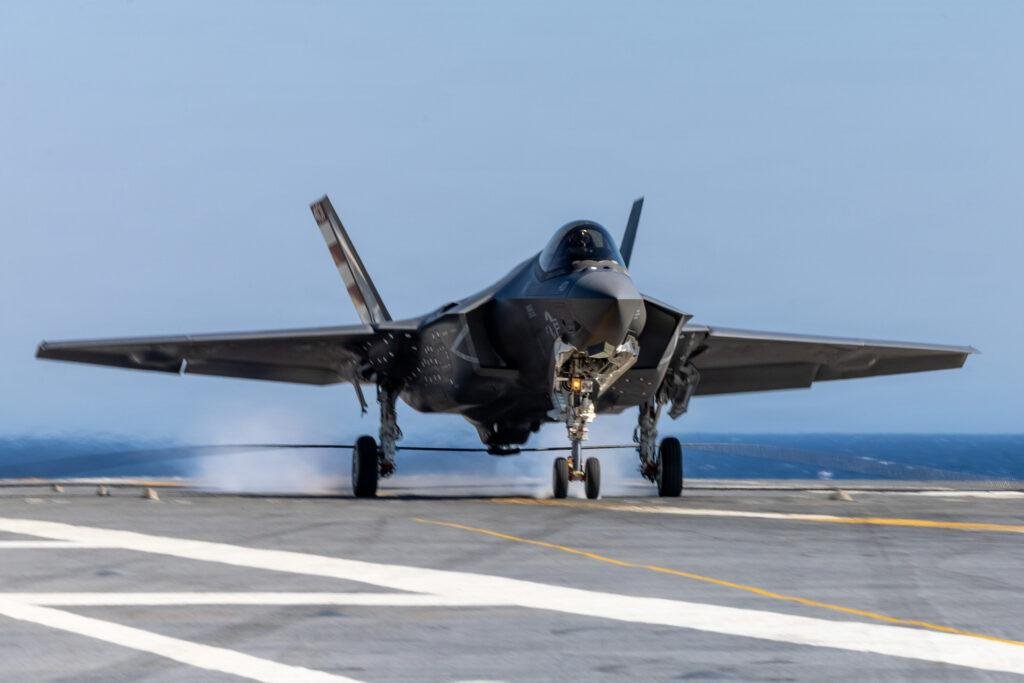
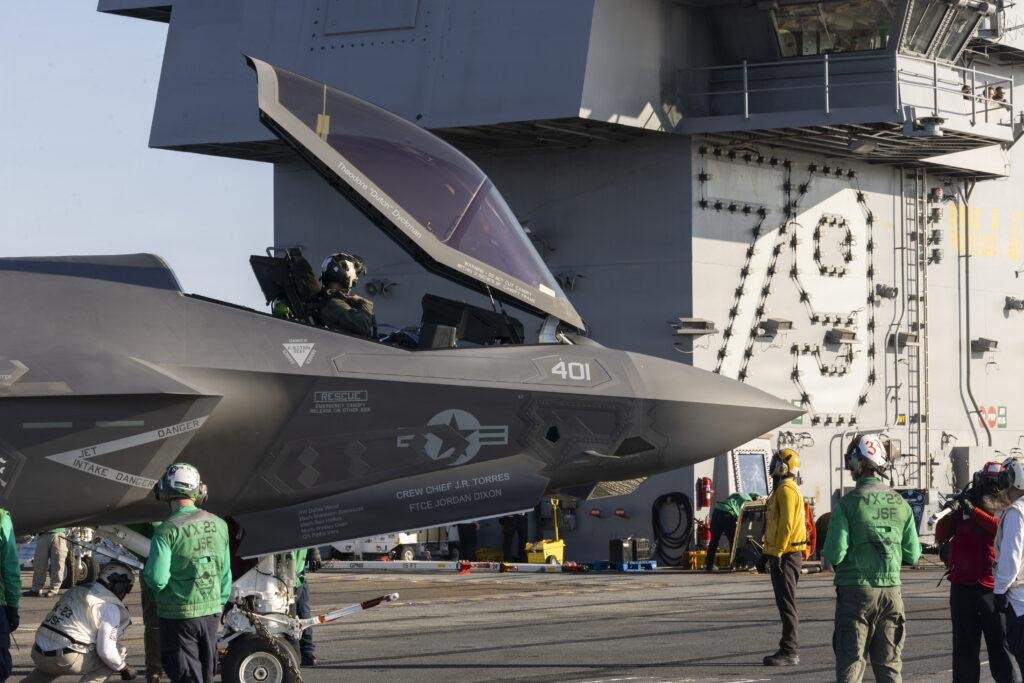
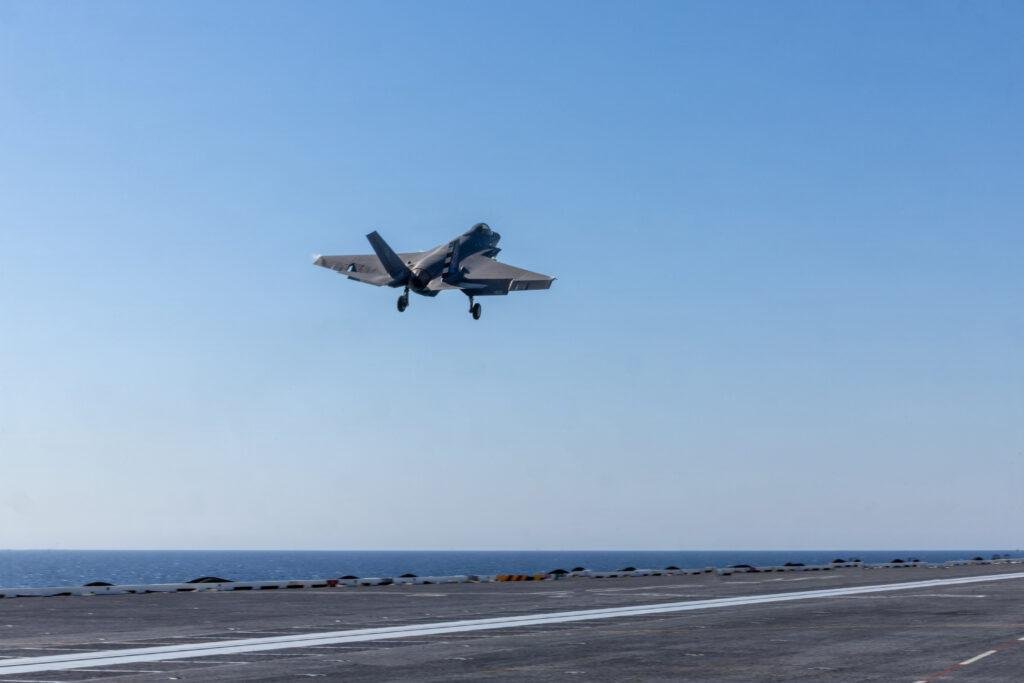
F-35C Kennedy landing trials reached a milestone on Oct. 13 when a U.S. Navy fighter completed an arrested landing aboard the future aircraft carrier John F. Kennedy in the Western Atlantic. The event marked the first F-35C landing on a Ford-class aircraft carrier, according to Navy imagery and reporting by USNI News.
The carrier-based version of the F-35 also conducted a catapult-assisted launch during the test period. The aircraft came from Air Test and Evaluation Squadron 23, known as the Salty Dogs. These were developmental flight-deck operations, not evidence that the carrier has completed every acceptance requirement or deployed on a combat mission.
John F. Kennedy, designated CVN-79, is the second carrier in the Gerald R. Ford class. Its systems continue to undergo qualification and acceptance work before formal delivery to the Navy, making the carrier-aircraft compatibility milestone significant for the ship’s readiness program.
Table of Contents
F-35C Kennedy Landing Demonstrates Recovery Equipment
A carrier arrested landing requires the airplane’s tailhook to engage an arresting wire so the ship’s recovery system can bring it safely to a stop on a short flight deck. The F-35C is built for carrier operations, with structural and flight-control features suited to catapult launches and arrested recoveries.
The Oct. 13 exercise tested how the aircraft and ship operate together. It should not be confused with the F-35C’s first-ever carrier landing, which occurred aboard USS Nimitz in 2014. The newer milestone is specifically the first F-35C landing on the Ford class and aboard the Kennedy.
USNI News reported that the Navy also launched the fighter using the carrier’s catapult system. Successful launch and recovery trials support technical evaluation, but they do not by themselves certify every flight-deck procedure, every aircraft type or full operational readiness.
The USNI News account includes U.S. Navy photography and video of the event. For additional independent reporting, Janes described the recovery on Oct. 13.
Why the Ford-Class Milestone Matters
The Gerald R. Ford-class design introduces a series of systems intended to support flight-deck and carrier operations. Two central elements are advanced aircraft launching and recovery equipment and weapons elevators used to move ordnance between spaces on the ship. Their testing has been an important part of the carrier program.
Kennedy has undergone shipyard and at-sea activities as it moves toward delivery. The F-35C landing is a visible test of the ship’s ability to handle a fifth-generation carrier fighter, but the aircraft’s presence does not establish that all ship systems have passed their final trials.
Unlike a normal airline runway landing, a carrier recovery depends on coordinated flight-deck crews, ship systems, pilots and safety procedures in a moving maritime environment. Demonstrating compatibility is therefore an incremental qualification event with implications for later training and operational plans.
Readers following naval aviation can find related programs through The Aviation Diary’s military aviation section.
Delivery and Operational Status Remain Separate
The future carrier has not yet entered the same service posture as a deployed warship. Reporting around the test describes preliminary acceptance activities while the shipbuilder and Navy work toward formal handover. The exact completion schedule should be checked against the Navy’s latest official program updates rather than inferred from a successful jet recovery.
The F-35C is already an operational carrier fighter on other Navy ships. The significance of the Kennedy event lies in pairing that aircraft with the new carrier and its equipment, not in introducing the aircraft type to U.S. naval aviation for the first time.
No number of future deployed F-35Cs was announced as a result of the October test. Claims about combat deployment, operational certification or a new squadron assignment require further Navy confirmation.
FAQ: F-35C Kennedy Landing
When did the F-35C Kennedy landing occur?
The Navy flight-test event took place on Oct. 13, 2026, in the Western Atlantic.
Was it the first F-35C landing on any carrier?
No. It was the first for the Ford class; the F-35C had previously made carrier landings aboard other ships.
Does this mean Kennedy is fully operational?
No. The ship still has formal delivery and other readiness requirements beyond this successful flight test.
Looking Ahead
Further carrier-aircraft testing, systems qualification and formal delivery remain the milestones to monitor. Navy program updates will determine the accepted ship status and subsequent operational timeline.
Sources
- USNI News, Oct. 14, 2026: F-35C Lands on New Navy Carrier Class
- Janes, Oct. 14, 2026: Kennedy Marks First F-35C Recovery
- U.S. Naval Air Systems Command: First F-35C Carrier Landing in 2014